


Cómo elegir conectores y prensaestopas impermeables para un proyecto de caja de protección para exteriores
We make waterproof enclosures at BOWO, and most of the leak problems customers bring back to us are not the box. They are the cable entries. A customer recently wrote to us about an outdoor LED controller: a 2-pin and a 3-pin cable, no more than 10A per line, installed in a rainy, tropical climate. The enclosure was the easy part. The connections were where the work was.
Below are the four ways to get cable in and out of a box, and what we machine so the protection rating actually holds.
Four Ways to Make the Connection
| Method | Use it for | What we do on the box |
|---|---|---|
| Cable gland | Permanent, hard-wired entries | Machine the hole to the gland thread size |
| Waterproof pigtail (xConnect / Ray Wu style) | Low-voltage LED lines that get disconnected | Machine a round cutout for the pigtail socket |
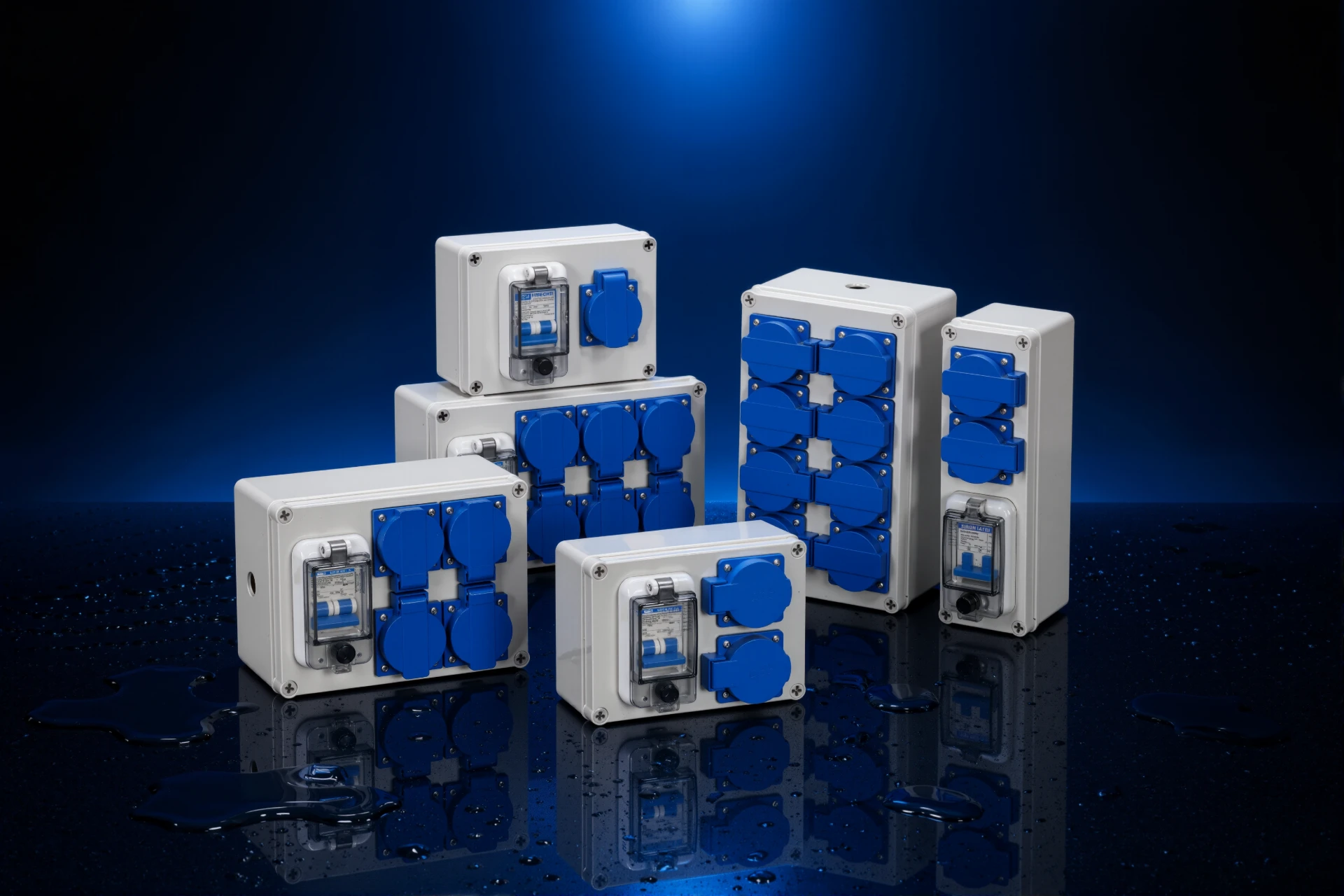
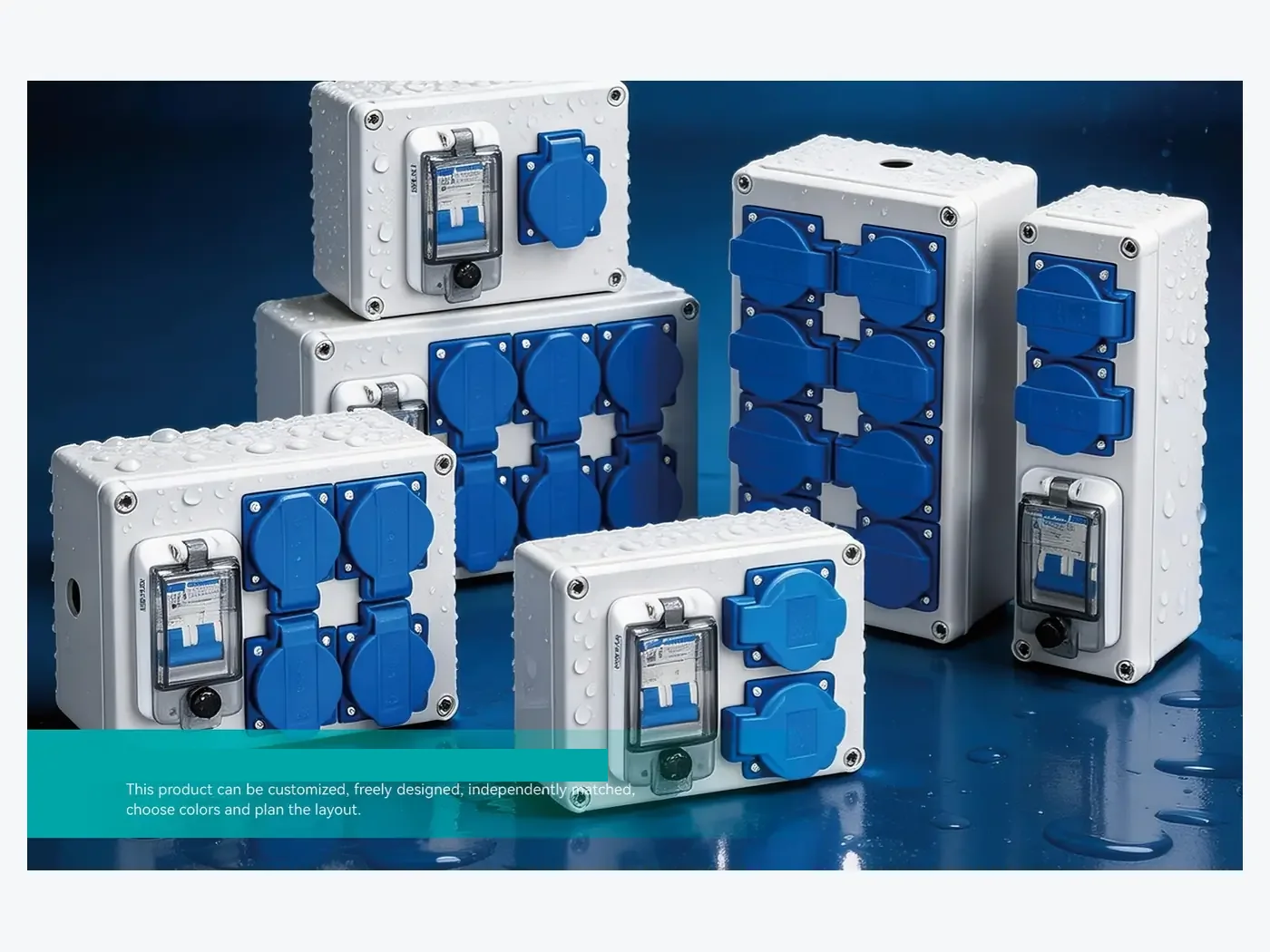
| Circular connector (PowerCON True1, aviation/GX) | Mains power that disconnects regularly | Machine a round panel cutout to the socket drawing |
| Industrial connector (Harting-style) | Repeated disconnect, heavier loads | Machine a cutout to the connector's mounting drawing |
For a small LED controller, we usually recommend cable glands for the permanent power feed and waterproof pigtails for the lines that move. It keeps the cost down and the box easy to service.
Cable Glands: The Cheapest Way to Stay Sealed
A gland only seals when it matches the cable. If you tell us the cable outside diameter, we machine the entry to that size so the compression seal grips the cable and closes the gap. Two rules we repeat to every customer: do not put entries on the top face, and do not leave an unused hole open. Top entries collect water; unused holes let it straight in.
For a power cord that can be pulled, use a gland with a locking nut or fit a strain-relief clamp inside the box.
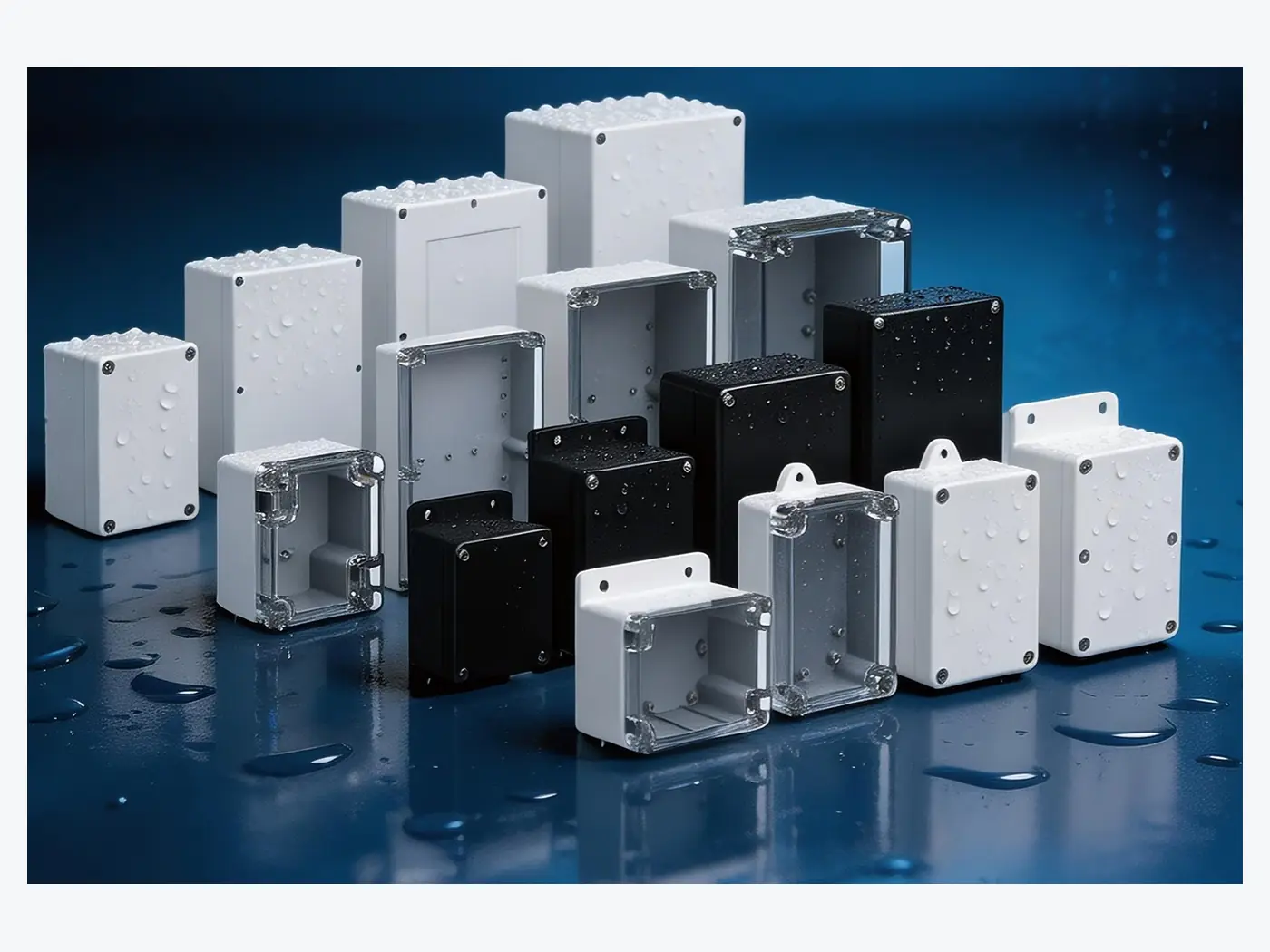
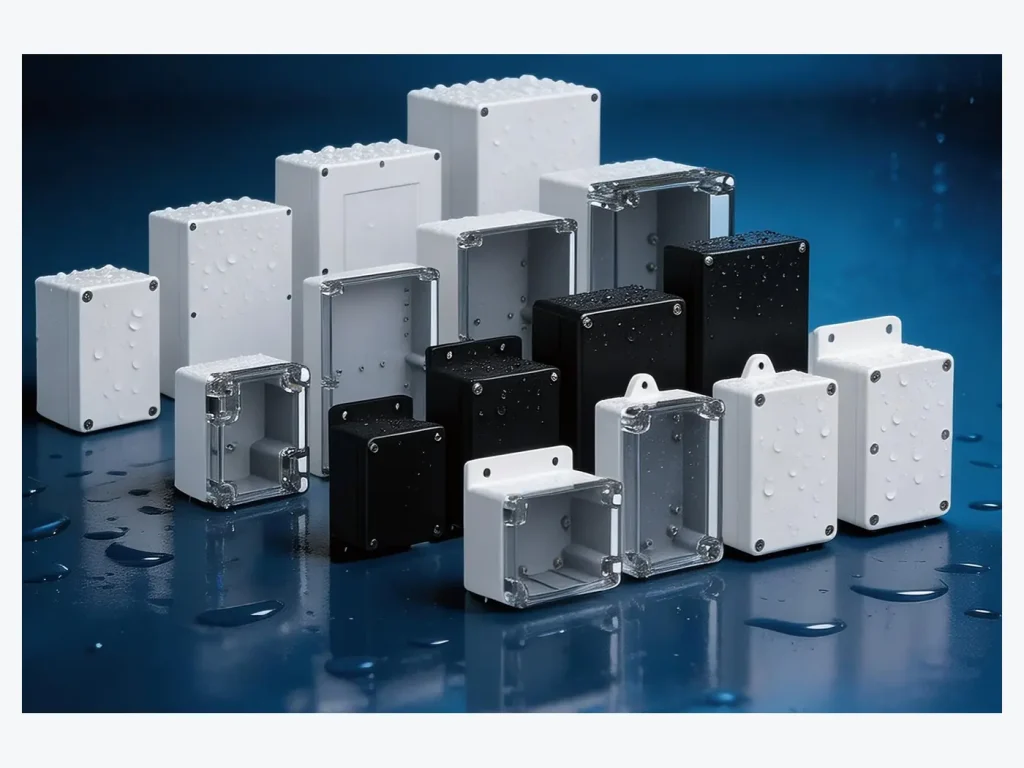
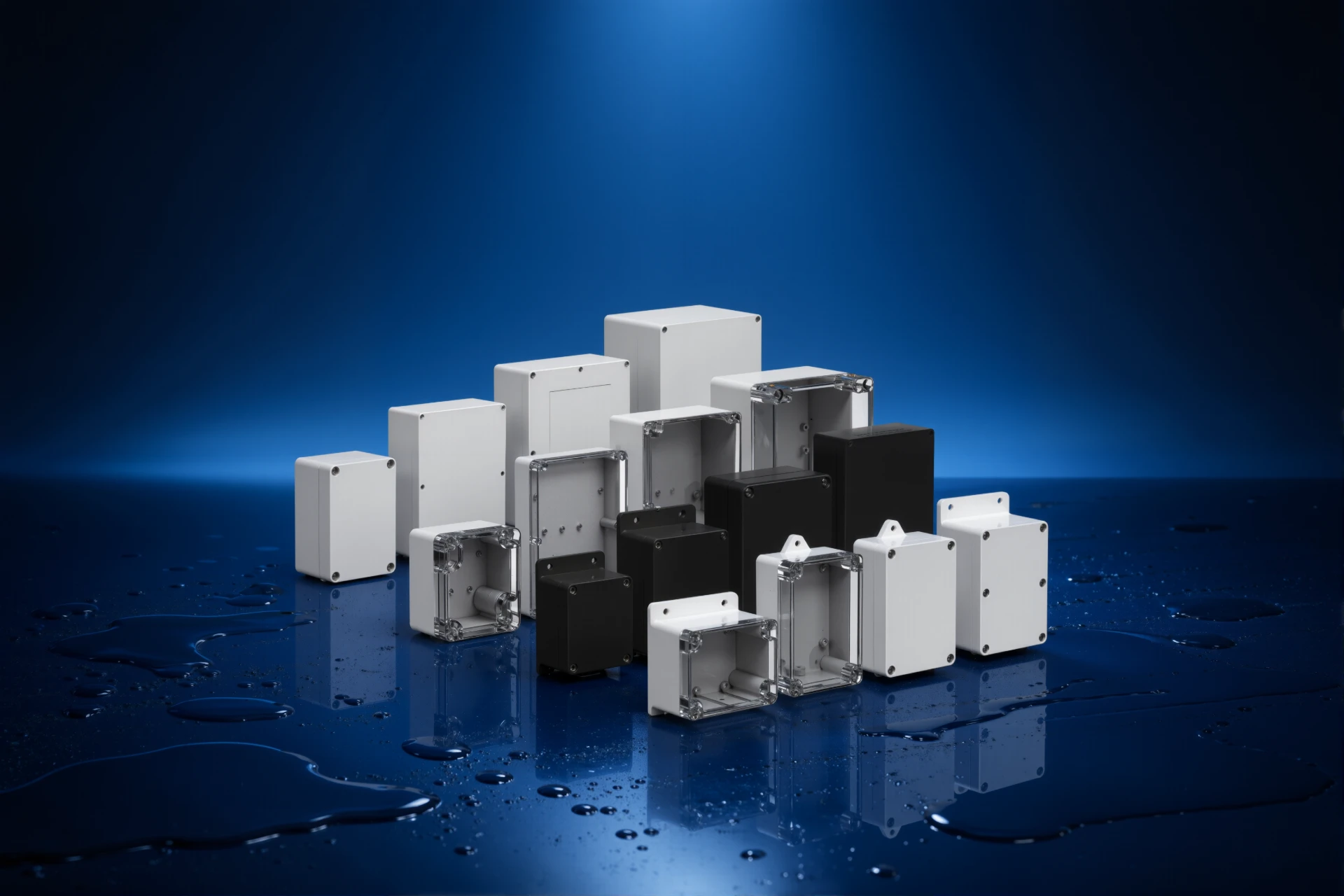
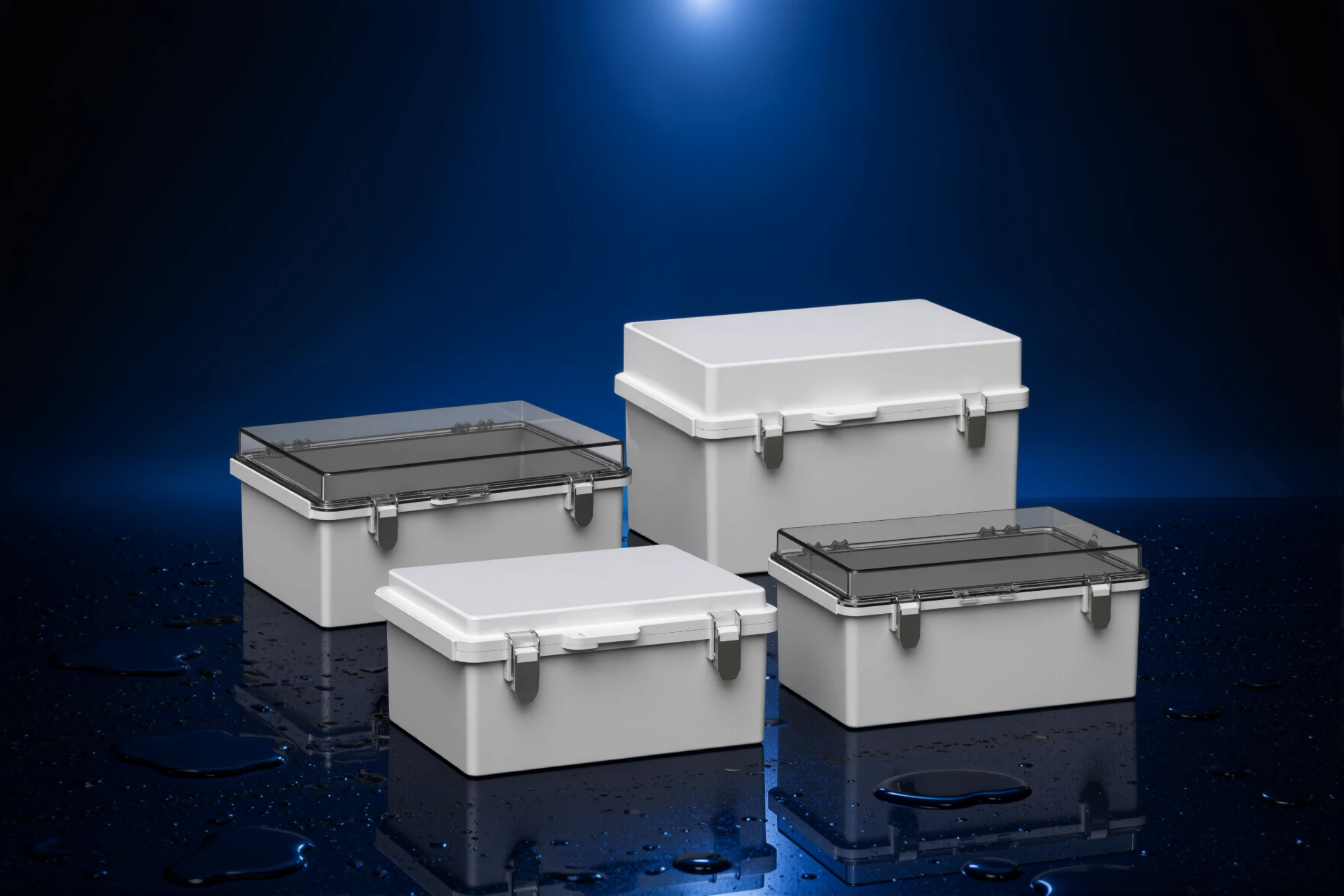
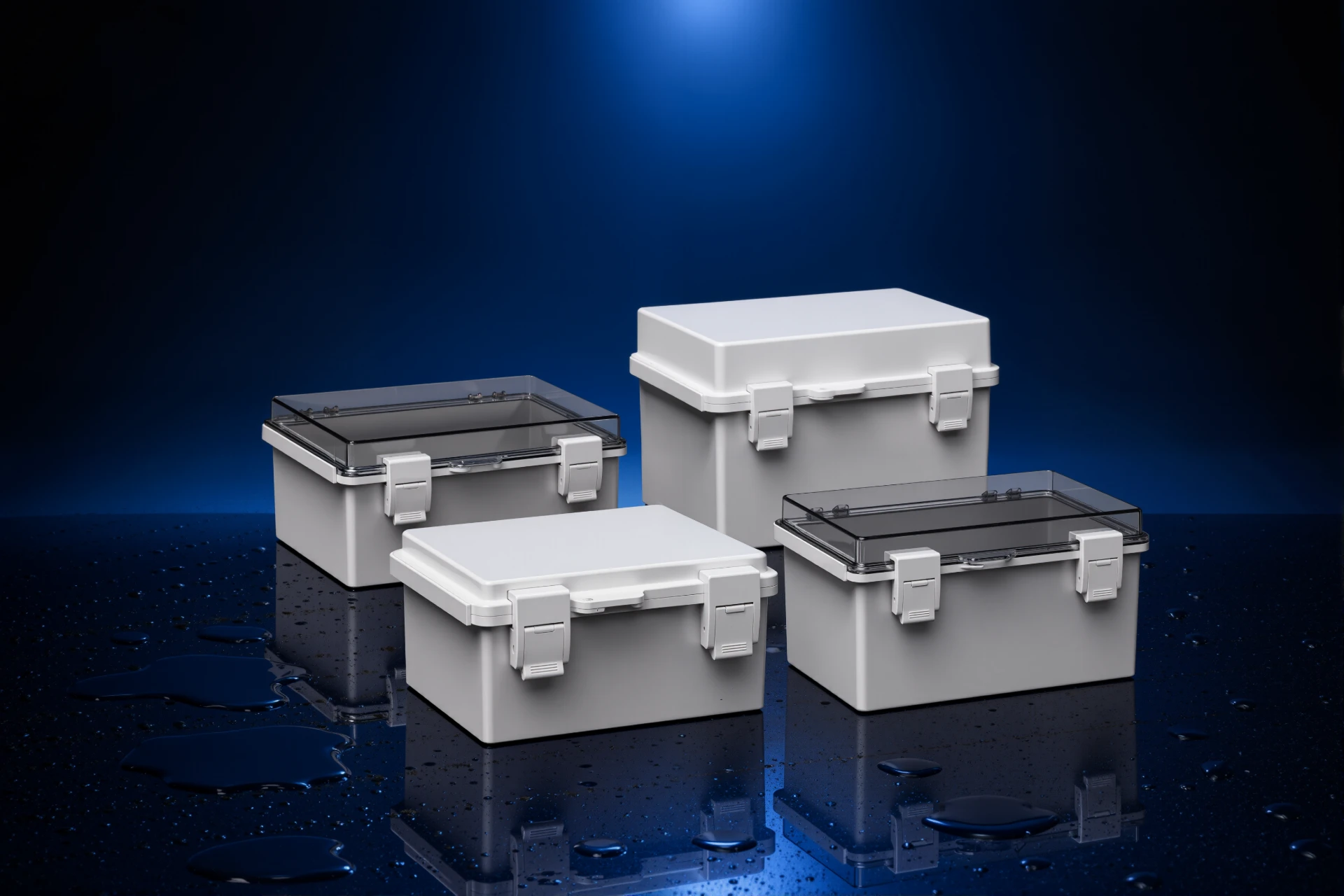
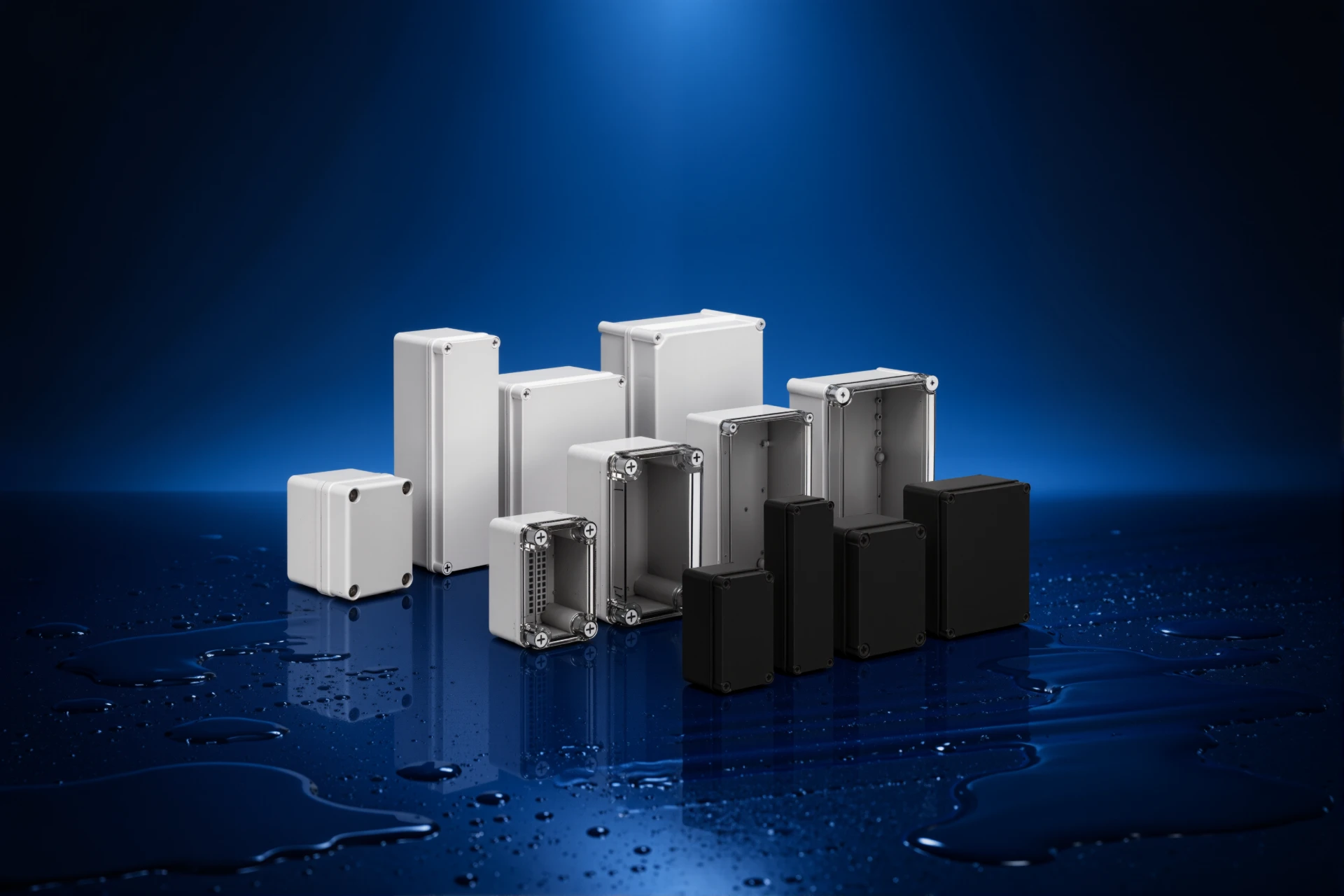
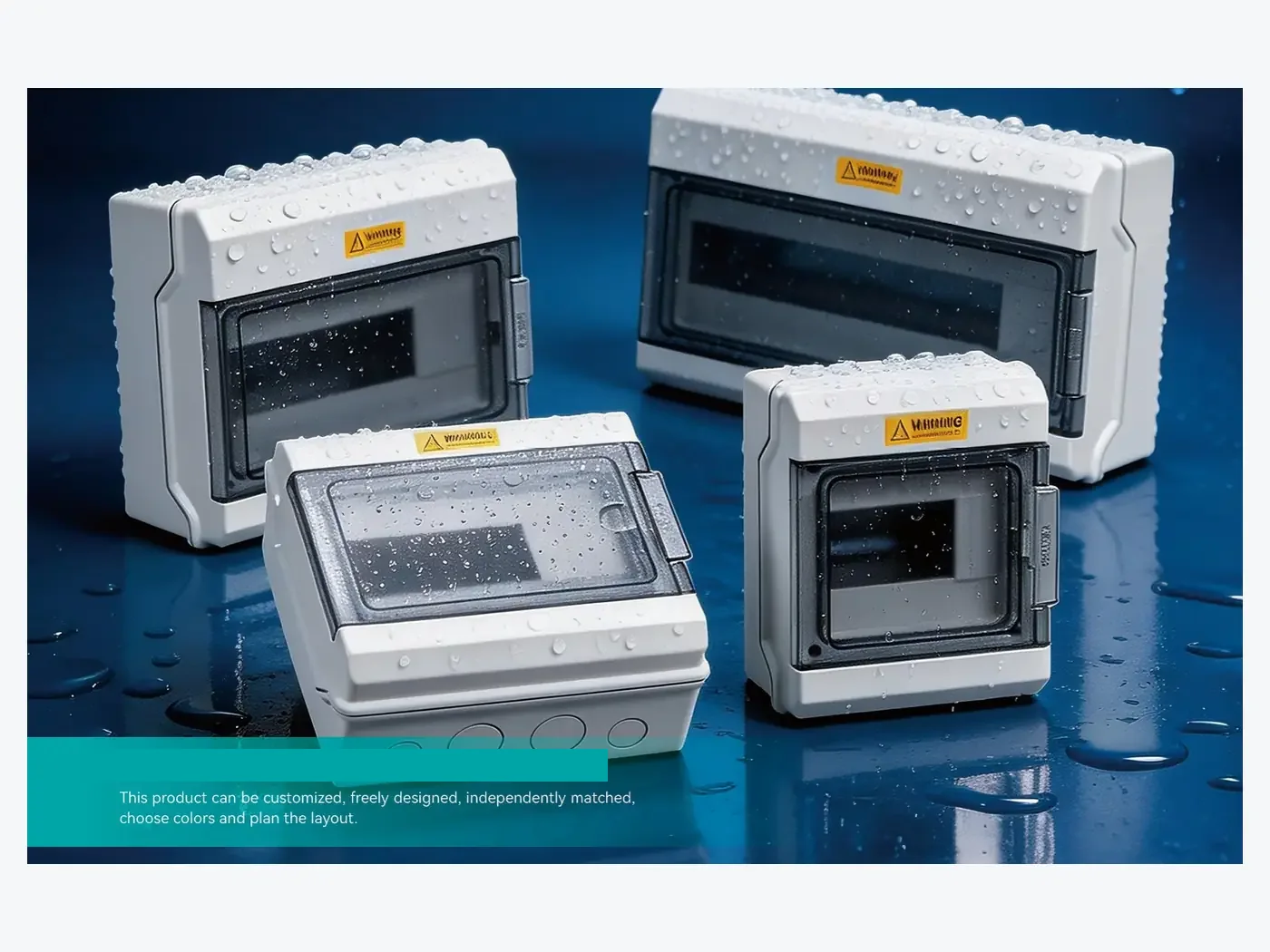
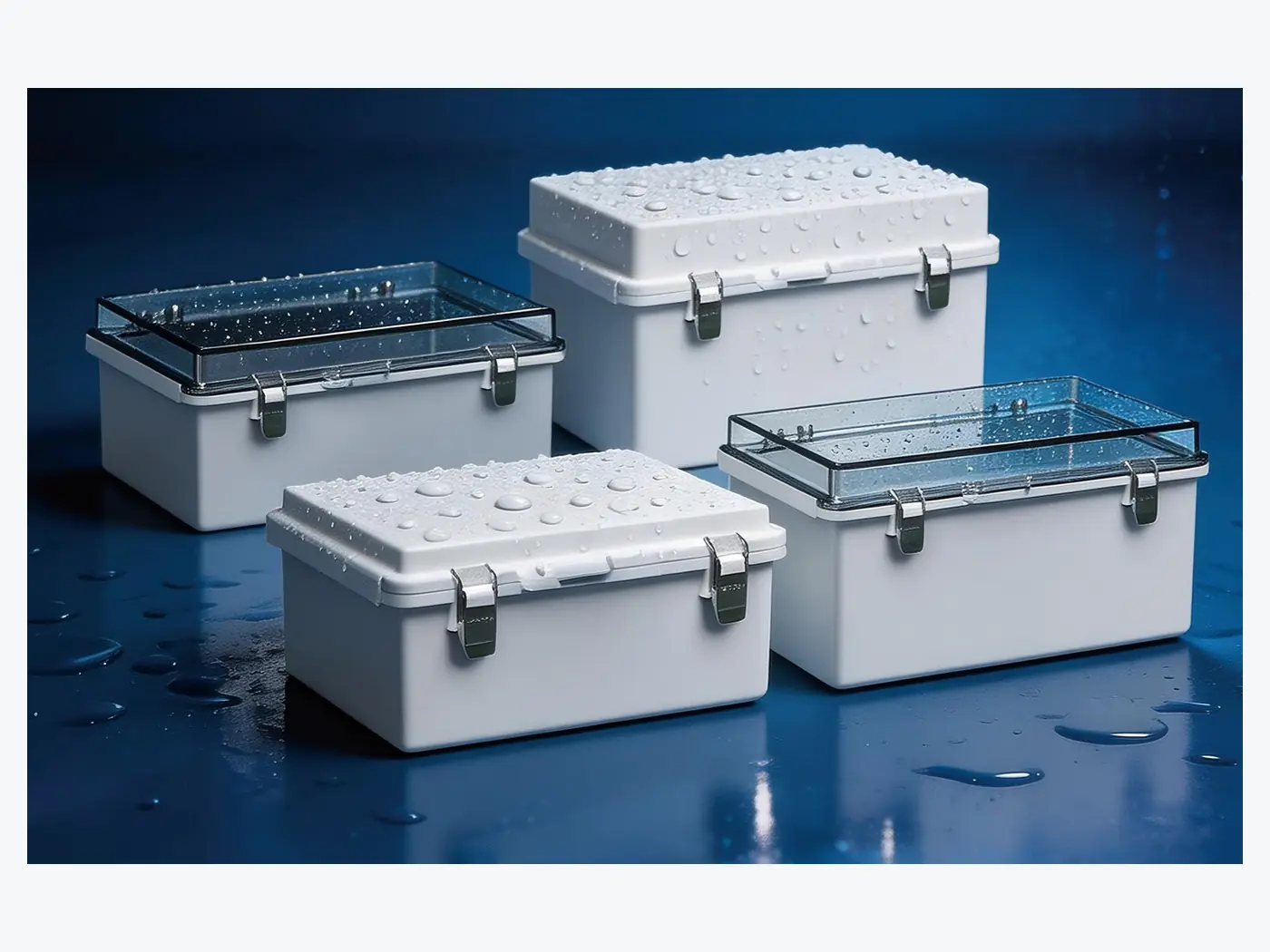
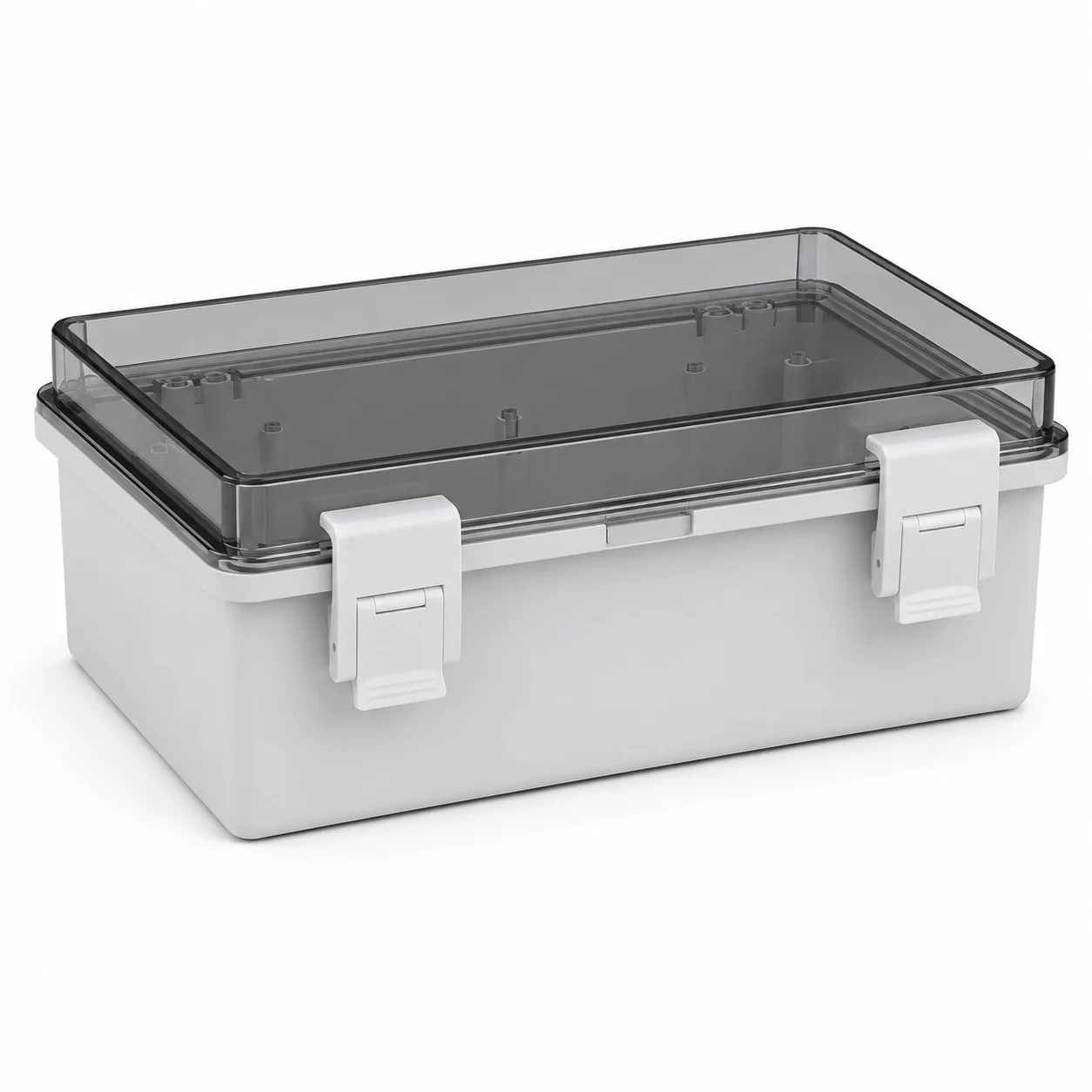
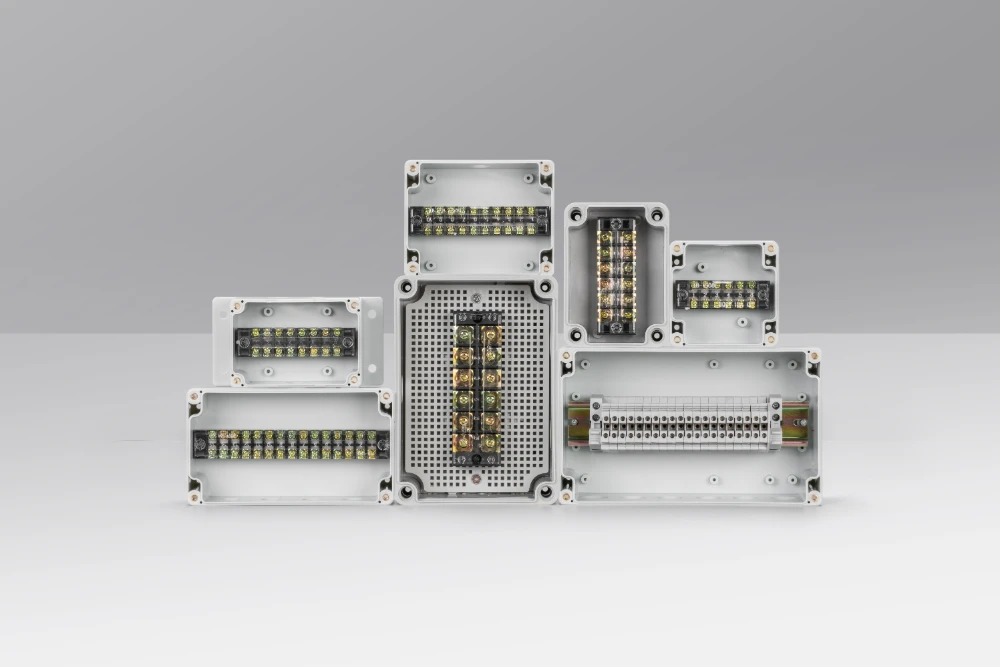
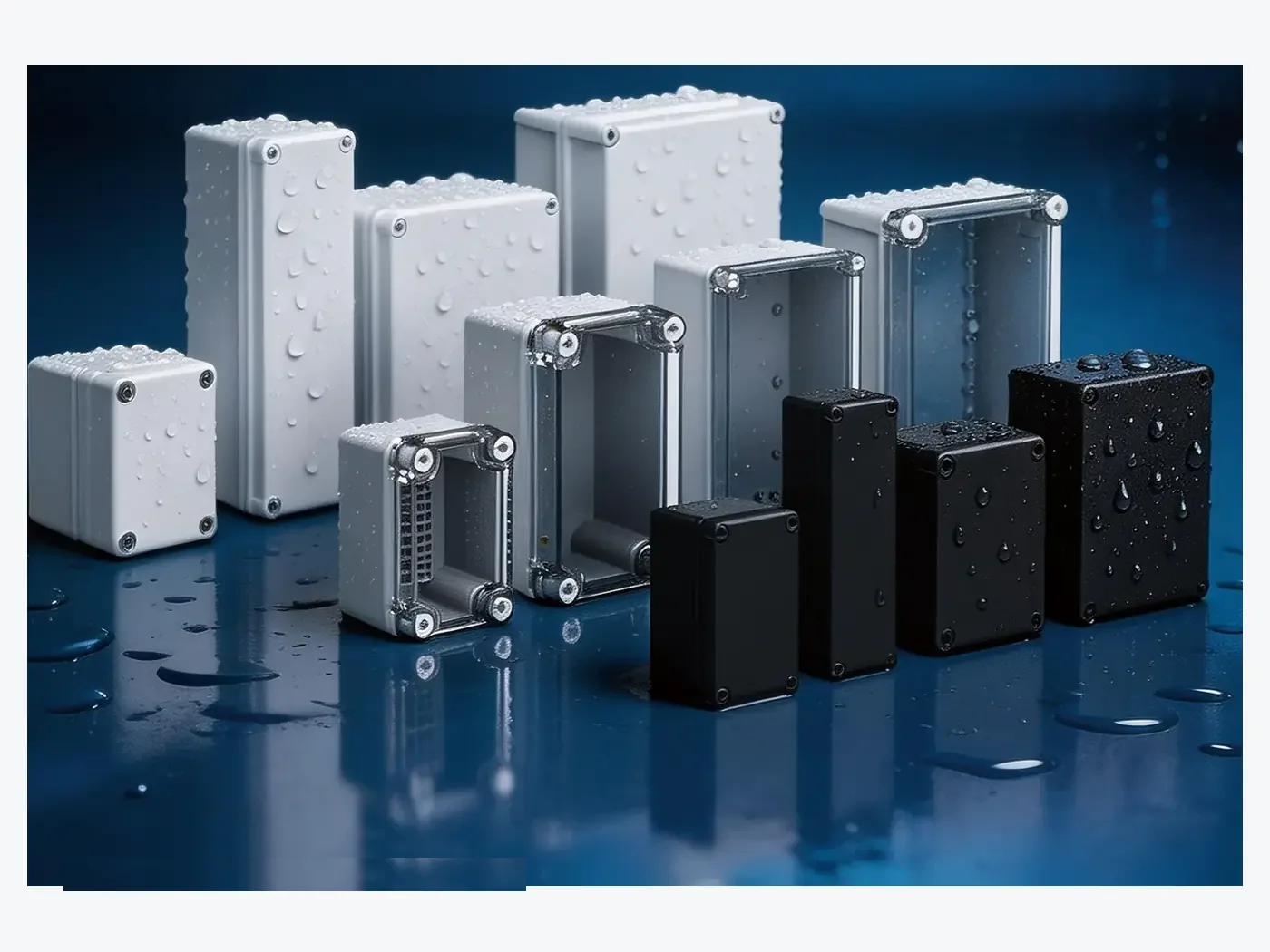
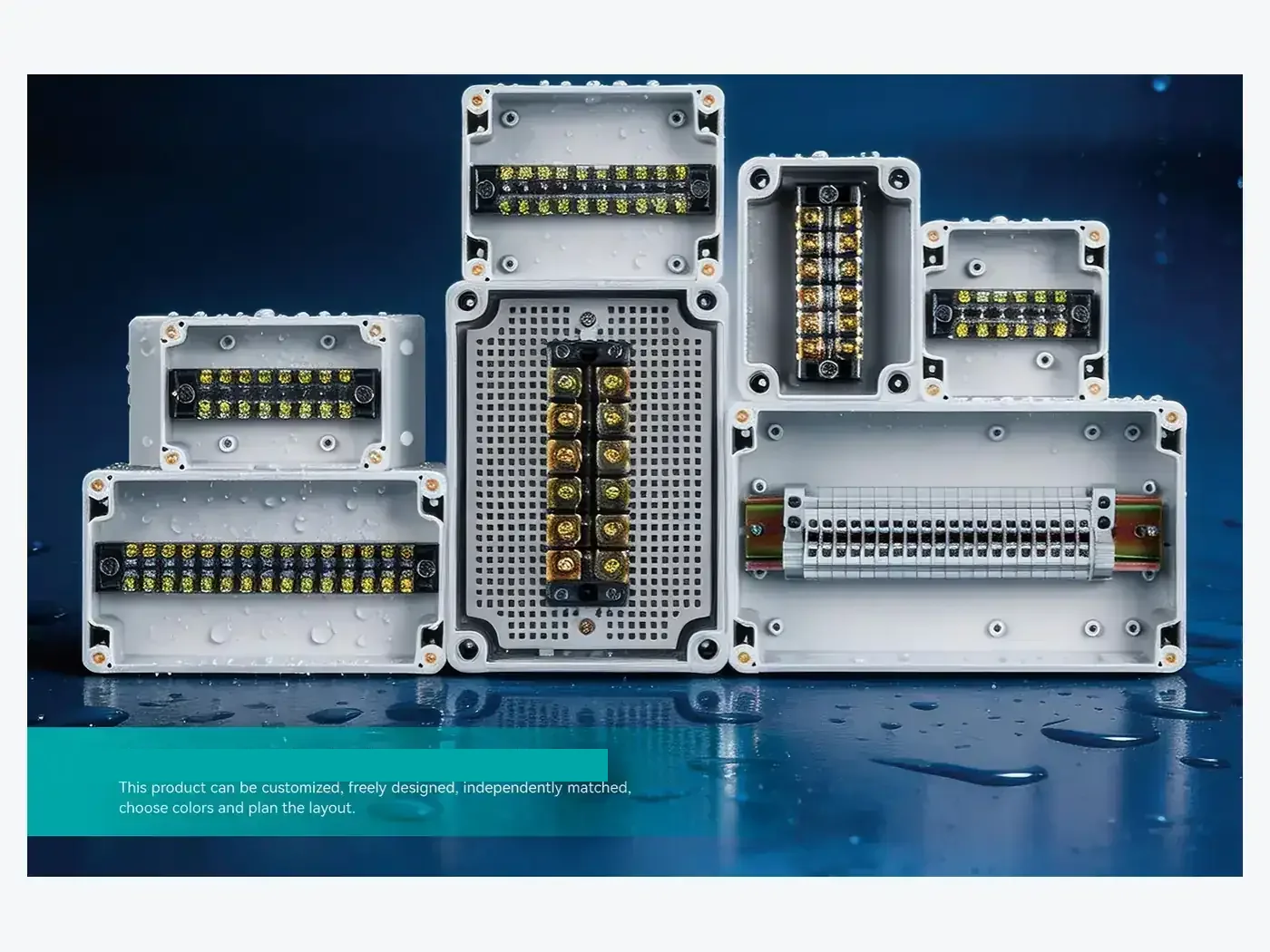
Our Caja de conexiones estanca IP66 de la serie F is the enclosure we machine most often for outdoor electronics. We cut the cable entries to your drawing, so the glands fit the cable rather than the other way round.
Pigtails and Circular Connectors for Removable Lines
Waterproof pigtails are pre-wired and cheap, and they are fine for low-voltage lines up to about 10A when the conductor is 16 AWG or larger. If a line carries mains voltage and needs to disconnect, a locking circular connector such as PowerCON True1 is the safer choice. Check the stated IP and current rating before you trust a cheap copy; we have seen knock-off connectors with ratings that do not match the real part.
How We Keep the IP Rating When We Cut the Holes
We machine every entry to the gland or connector drawing on CNC, so the cutout is round, clean, and sized to the seal. Unused holes are blanked with plugs and sealed. We recommend entries on the bottom or lower side, and we use ABS or polycarbonate bodies with UV-stable gaskets for outdoor use.
For more on where entries should go and how to size them, see our waterproof enclosure cable entry design guide y el cable gland selection guide.
Five Checks Before You Order
- List every cable entering and leaving the box, with outside diameter and current.
- Mark which cables are permanent and which disconnect.
- Assign glands to permanent entries, pigtails or circular connectors to removable ones.
- Confirm each connector's IP and current rating against the environment and load.
- Keep entries low, strain-relieve the cables, and do a final seal check.
Send us the enclosure size, the cable outside diameters, the entry drawing, and the quantity. We machine the entries to match and confirm the right IP66 or IP67 model.