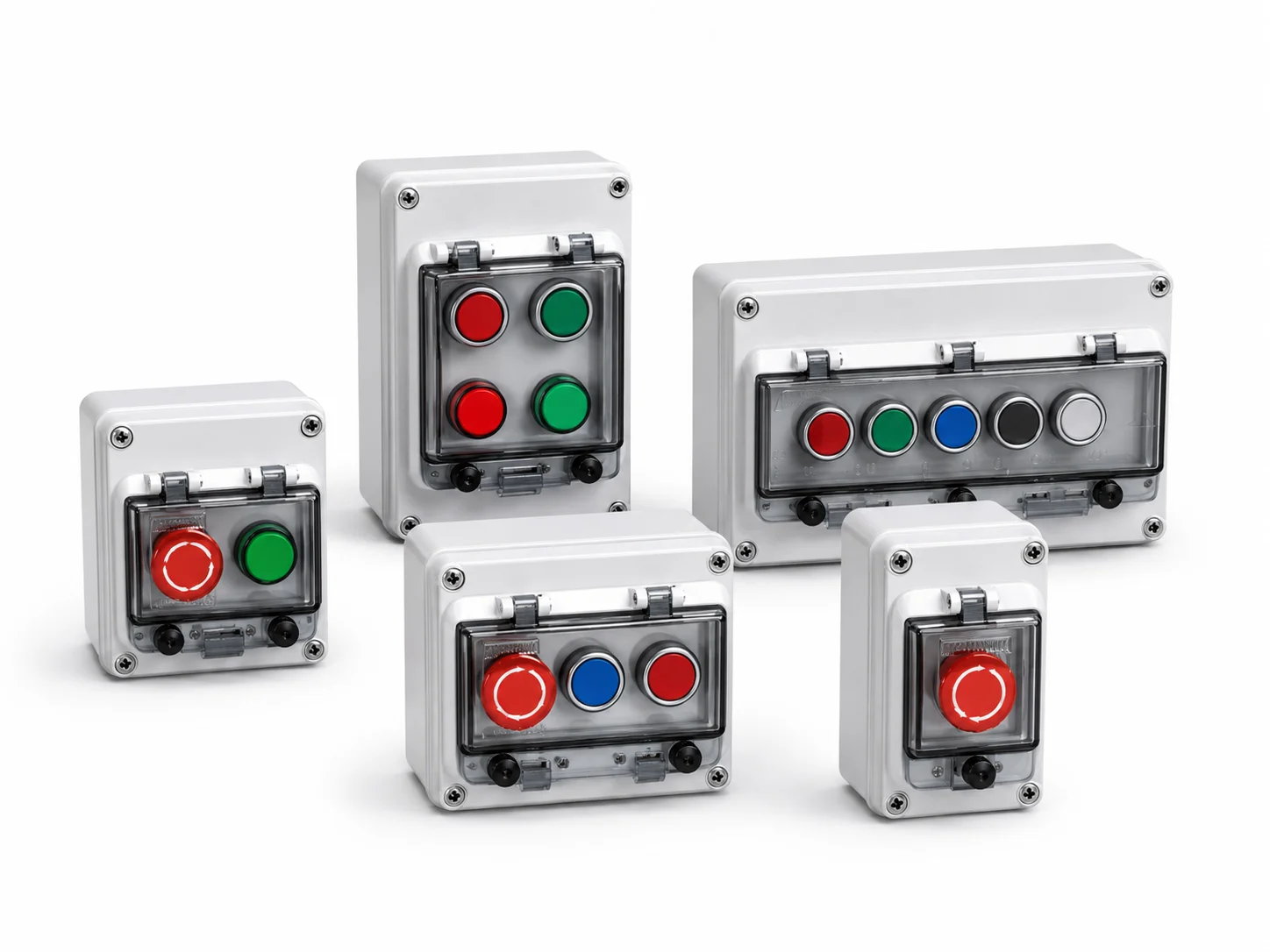
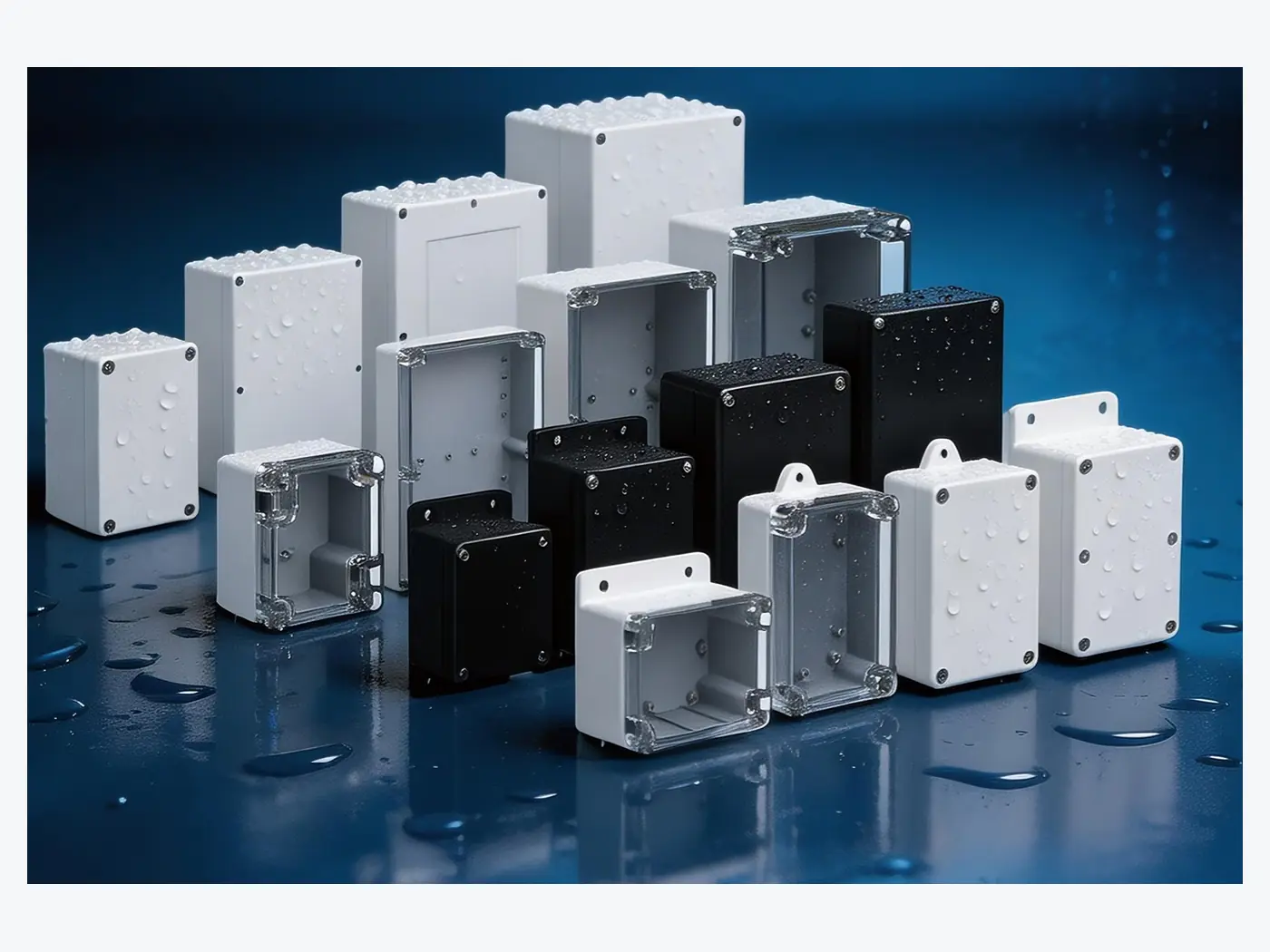
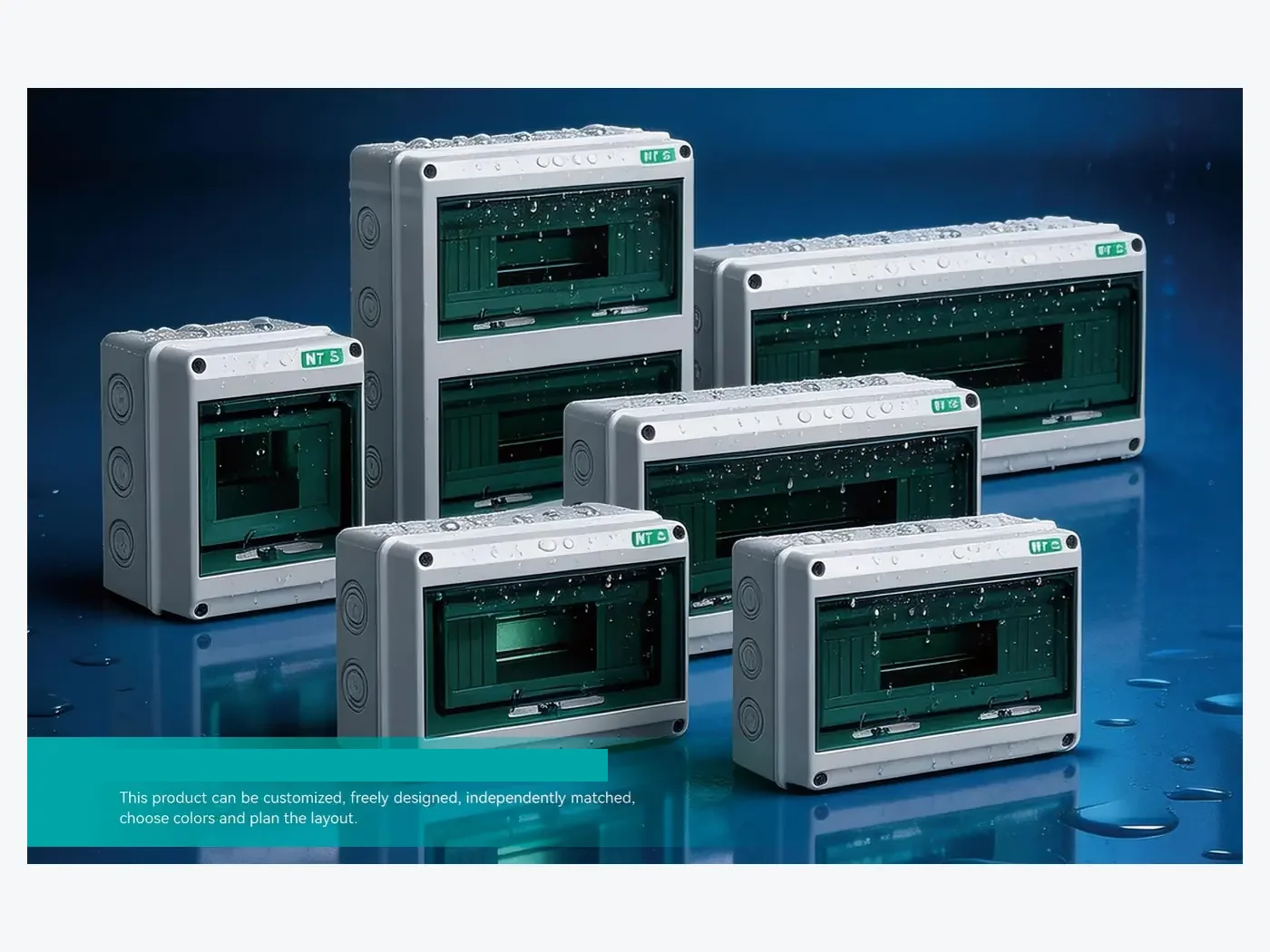

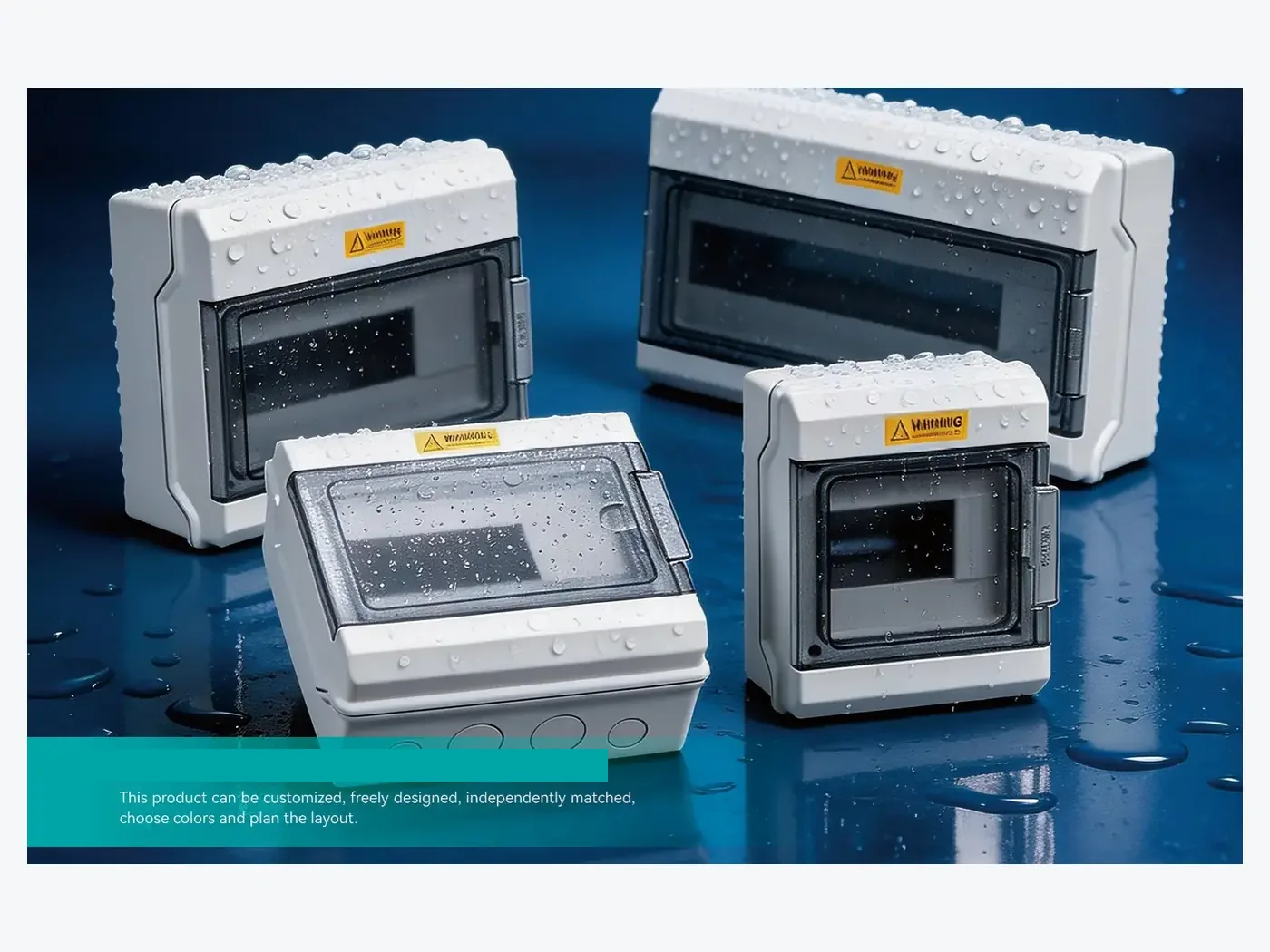

Why Two Waterproof Junction Box Quotations Can Differ Even With the Same IP Rating
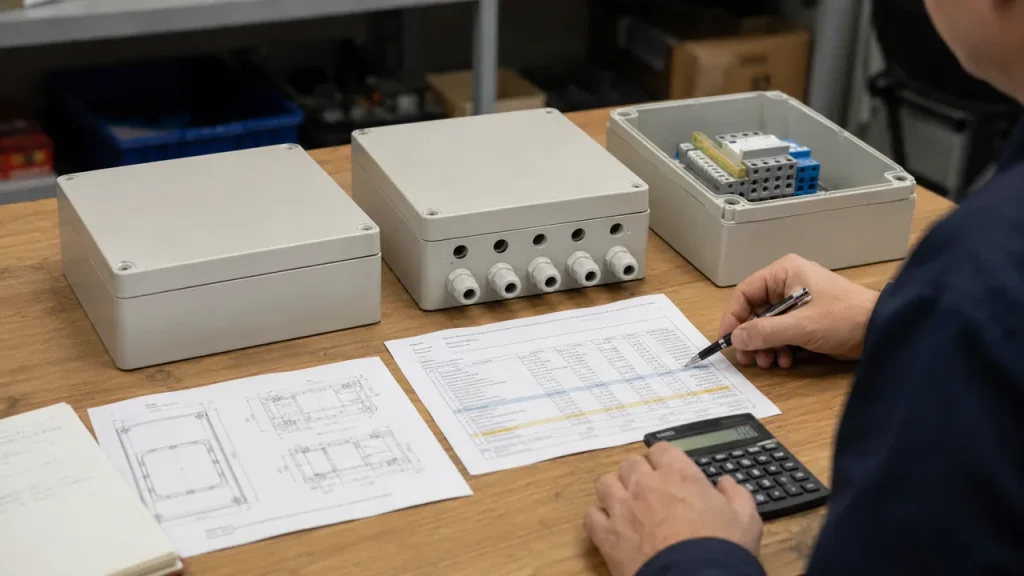
You send the same RFQ to three suppliers:
IP67 waterproof junction box, ABS, 200 × 150 × 100 mm, grey, 5,000 pcs.
All three quotations appear to be for the same product.
They are not necessarily quoting the same thing.
The IP rating is only one part of the enclosure specification. It does not define the exact material configuration, wall and cover structure, gasket arrangement, machining scope, included accessories, inspection requirements, packaging or production assumptions behind the price.
This is why two waterproof junction box quotations can differ even when the datasheets show the same enclosure size and the same IP rating.
For a purchasing team, the useful question is not:
Why is Supplier B more expensive?
It is:
Are Supplier A and Supplier B actually pricing the same scope?
That distinction matters because the lowest unit price can become more expensive once machining, cable glands, DIN rail, terminals, labeling or additional inspection are added later.
First Check Whether the Quotations Are Actually Comparable
A typical quotation request might contain only:
- IP67
- ABS
- 200 × 150 × 100 mm
- Grey
- 5,000 pcs
That is enough to identify a general enclosure type, but not enough to establish a complete commercial specification.
Consider this illustrative comparison:
| Quotation Scope | Supplier A | Supplier B | Supplier C |
|---|---|---|---|
| Enclosure | ABS box | ABS box | ABS box |
| IP requirement | IP67 | IP67 | IP67 |
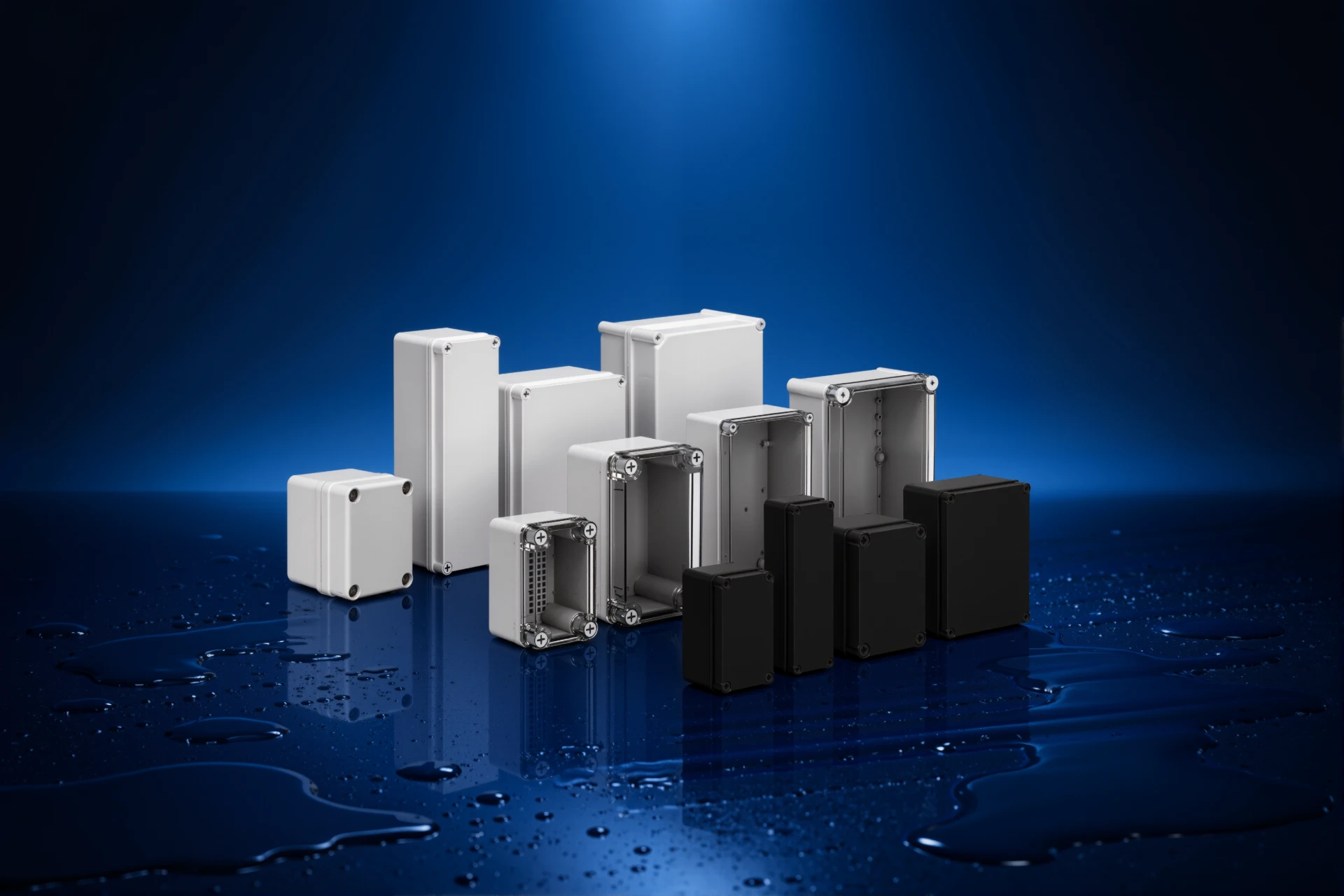
| Cover | Opaque | Opaque | Transparent PC |
| Cable openings | None | 6 CNC holes | 6 CNC holes |
| Cable glands | None | None | Included |
| DIN rail | None | Included | Included |
| Logo | None | Laser marking | UV printing |
| Packaging | Bulk carton | Individual packing | Individual packing + label |
| Inspection | Standard | Drawing check | Drawing + packaging check |
On the first line, all three suppliers appear to be quoting an IP67 waterproof box.
By the bottom of the table, they are clearly quoting three different commercial products.
This is the first rule we use when reviewing an enclosure RFQ:
Compare scope before comparing unit price.
A standard IP67 waterproof junction box can be the starting platform, but once machining, accessories and OEM requirements are added, the final quotation must reflect the actual configuration being purchased.
The Price Gap Often Starts With Details That Never Appear in the RFQ
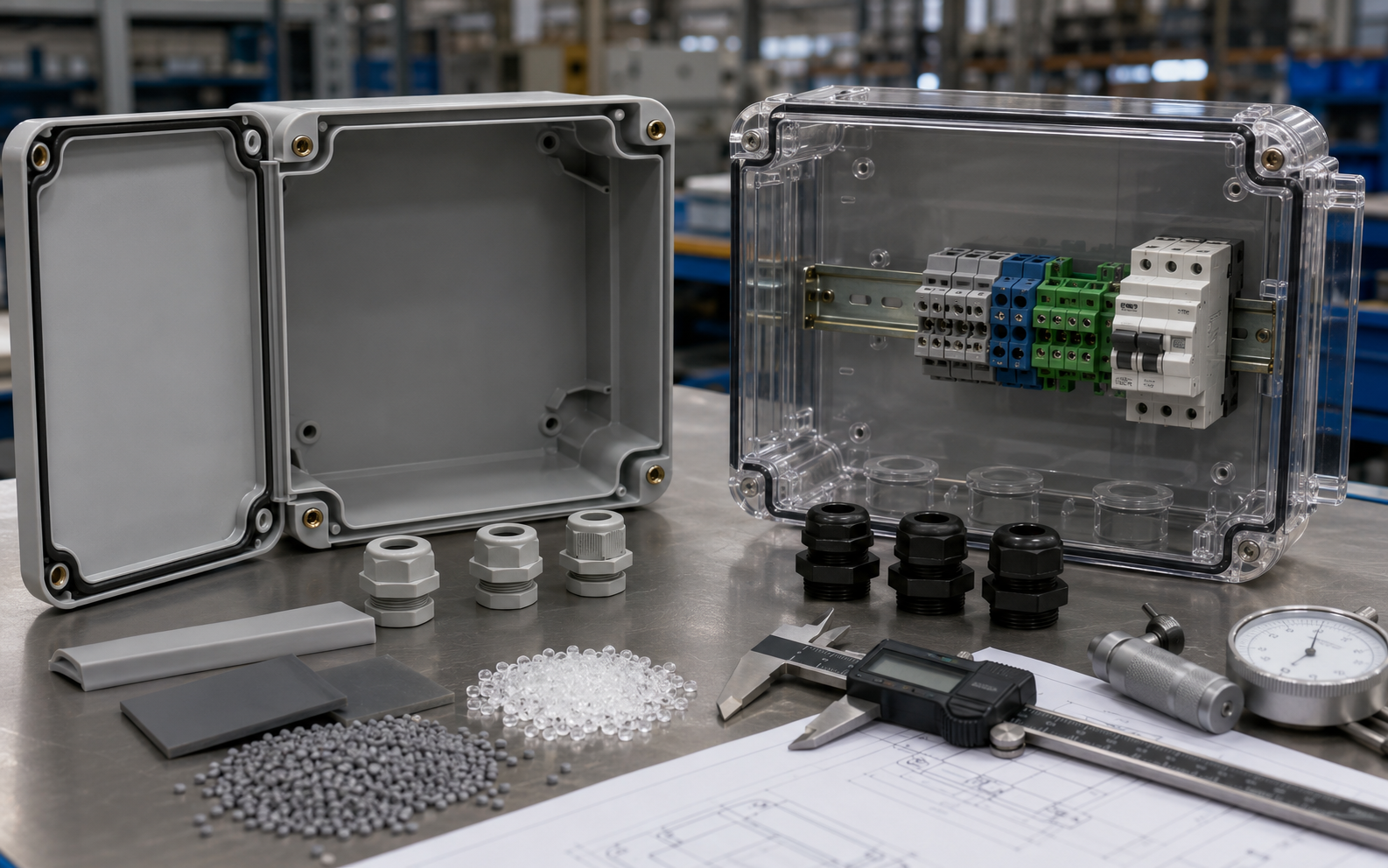
“ABS” Is Not Always a Complete Material Specification
Buyers often assume that two quotations stating “ABS enclosure” use equivalent material specifications.
That should not be taken for granted.
For an ordinary indoor electrical connection, a standard material configuration may be sufficient. An enclosure installed outdoors on industrial equipment may need different consideration for temperature, sunlight, mechanical stress or the surrounding operating environment.
The relevant question is not whether one supplier calls its material “better.”
It is whether both suppliers have priced against the same application requirement.
A useful RFQ therefore gives the supplier more than the word ABS. It should also state where the enclosure will be installed and what environmental conditions matter.
That prevents one supplier from quoting a basic catalogue configuration while another builds additional material requirements into the price.
A Similar Outside Size Does Not Mean the Same Enclosure Structure
Two 200 × 150 × 100 mm boxes can look nearly identical in a spreadsheet.
The molded structures can still be different.
For example:
- Cover thickness and geometry
- Internal reinforcement
- Screw bosses
- Mounting points
- Gasket groove
- Hinge arrangement
- Latch structure
- Internal usable depth
- Wall-mounting design
These differences affect tooling, material consumption, molding and assembly.
They can also affect how the enclosure works in the customer's equipment.
Take a box that will be opened only during initial installation. A screw-fixed cover may be entirely appropriate.
Now take a control enclosure that maintenance technicians must open regularly. A hinged cover and latch system may justify a different structure and cost.
Both may meet the required ingress-protection specification, but they are not functionally equivalent products.
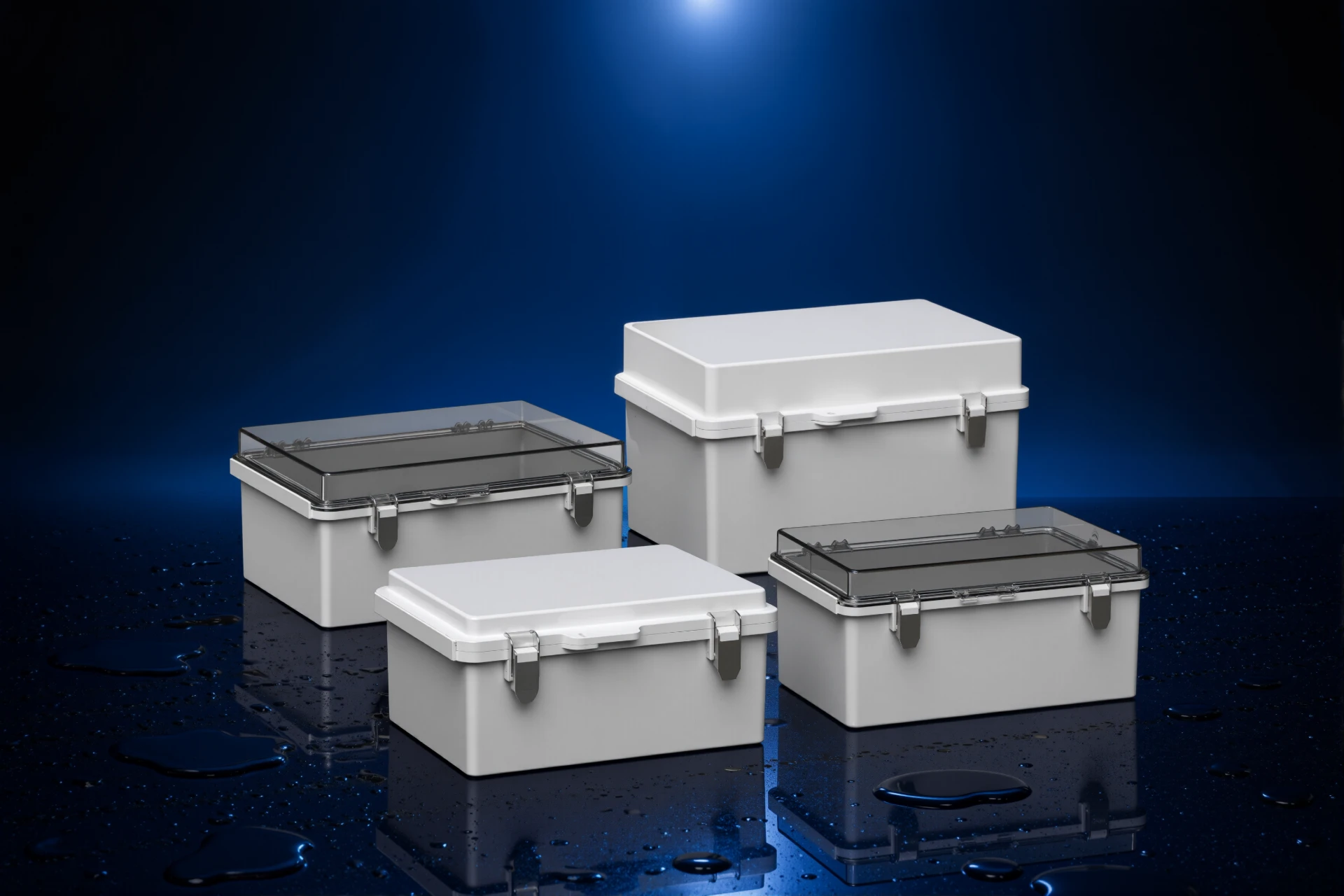
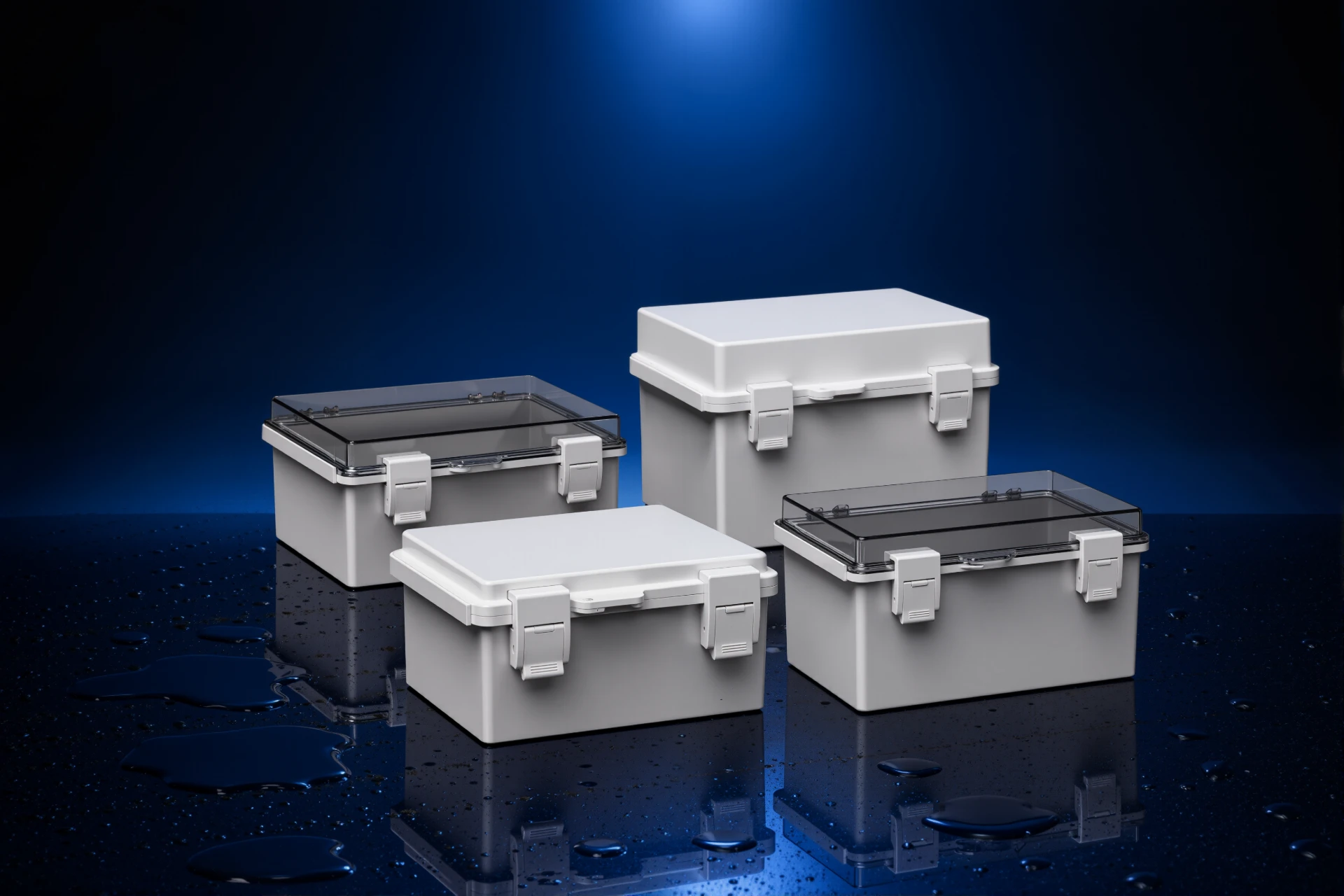
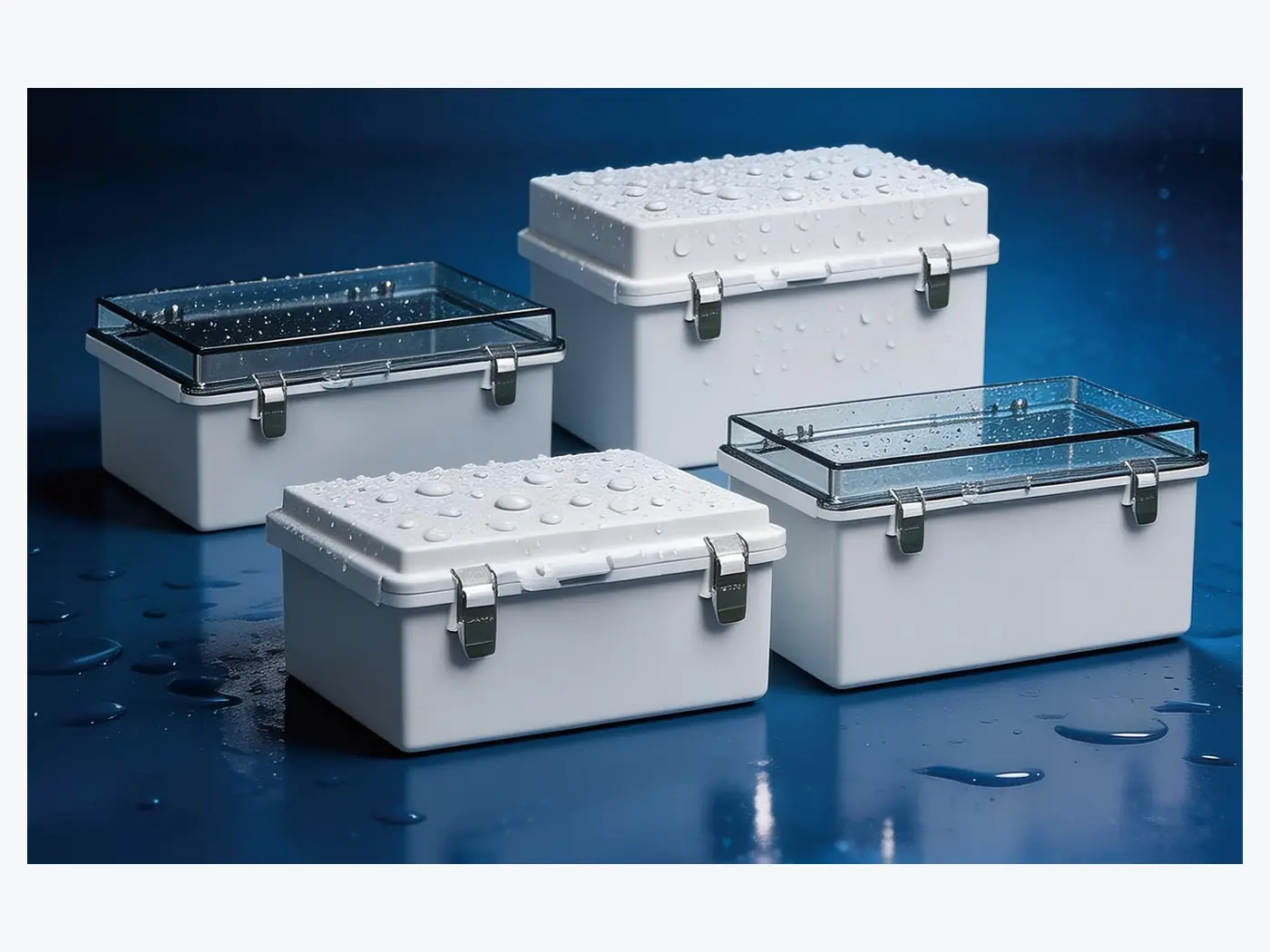
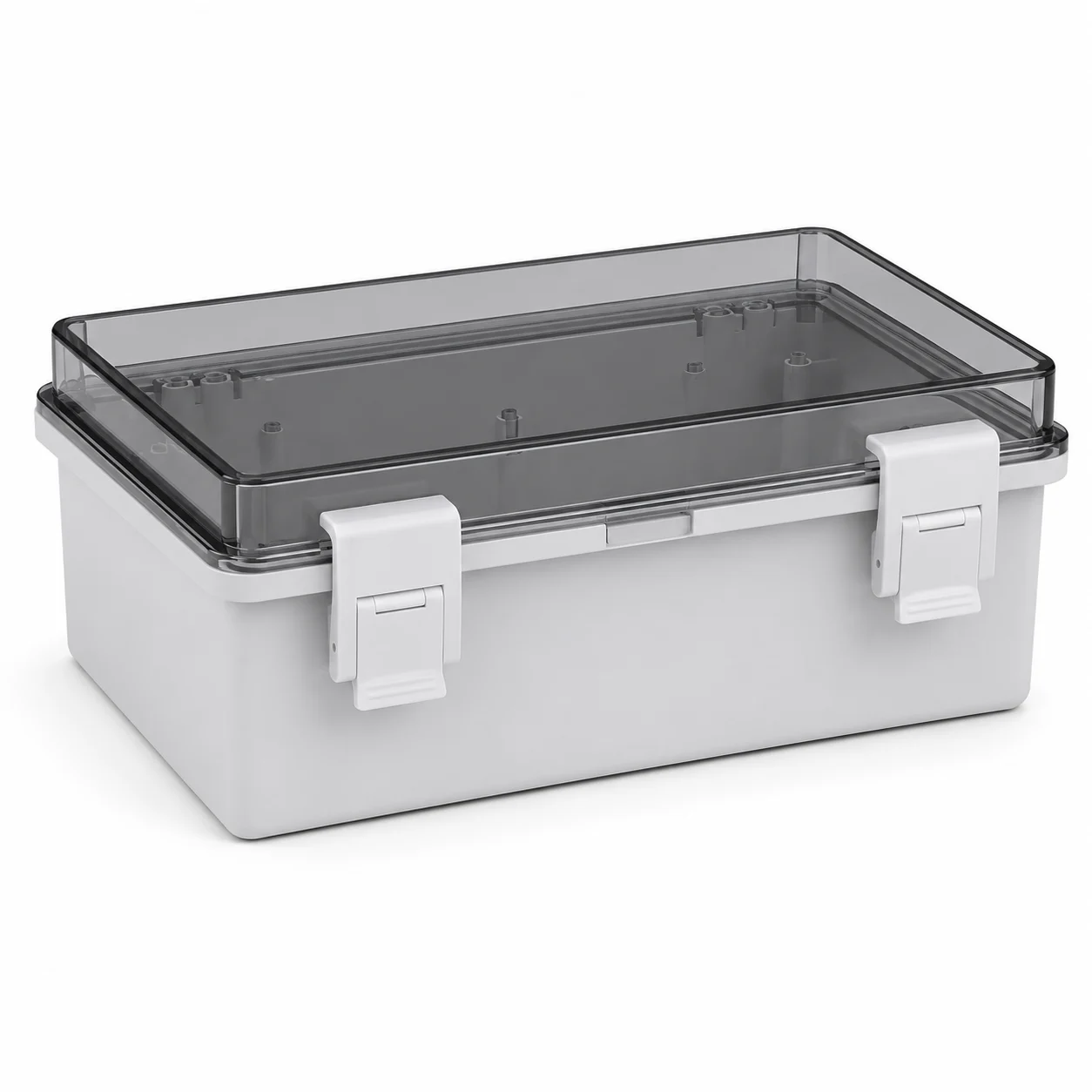
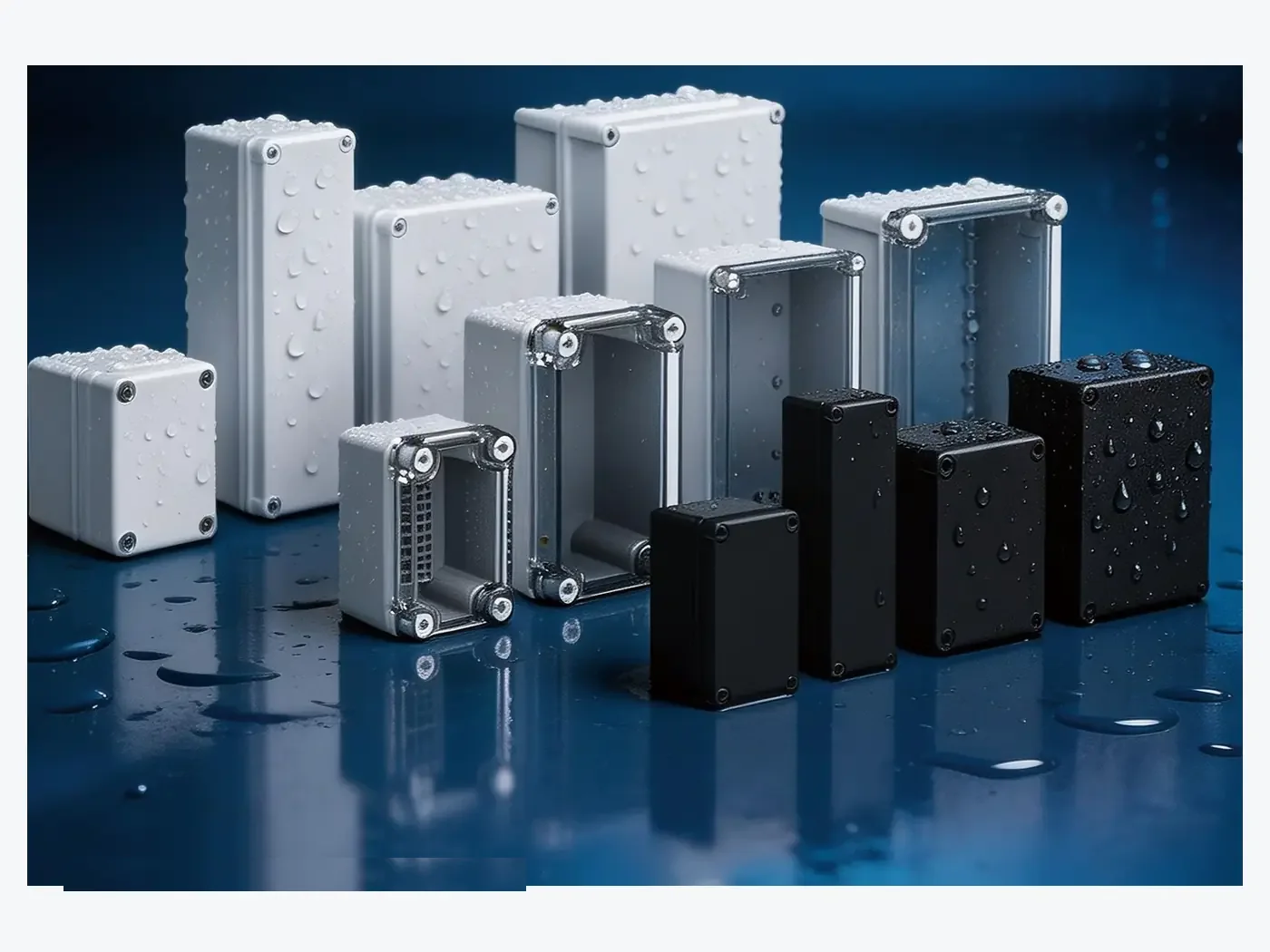
For applications requiring repeated access, a hinged waterproof junction box should be compared with another enclosure offering a similar access and closure arrangement—not with the cheapest screw-cover box of the same nominal size.
CNC Machining Is One of the Most Common Reasons a “Same Box” Stops Being the Same Quote
This is where quotation comparisons often become distorted.
RFQ A
- 200 × 150 × 100 mm ABS enclosure
- IP67
- 2,000 pcs
RFQ B
- 200 × 150 × 100 mm ABS enclosure
- IP67
- 2,000 pcs
- 6 × M20 cable-entry holes on the bottom
- 2 × M16 holes on the left side
- 1 rectangular opening on the cover
- 4 internal mounting holes
The base enclosure can be identical.
The manufacturing work is not.
For a custom junction box, machining cost is not simply:
Number of holes × fixed price
The real cost is influenced by:
Setup + fixture + machined surfaces + cycle time + inspection + production quantity
A few round holes on one face may be relatively straightforward.
A project with several hole diameters, machining on three or four sides, rectangular cutouts, close positional tolerances or several versions of the same enclosure requires more setup and process control.
This is why “please drill several holes according to our sample” is a poor basis for comparing quotations.
A dimensioned drawing is much better.
At minimum, the drawing should define:
- Hole diameter or cutout dimensions
- X/Y position
- Machined face
- Quantity
- Relevant tolerance
- Drawing revision
Then every supplier can quote the same manufacturing task.
Small Orders and Mass Production Do Not Have the Same Cost Structure
Quantity affects more than the material purchasing price.
Suppose a customized enclosure requires:
- CNC programming
- Fixture preparation
- Sample approval
- Logo setup
- Packaging preparation
Those activities may be required whether the order contains 500 pieces or 10,000 pieces.
The difference is how the preparation cost is distributed.
For a small batch:
Setup cost ÷ 500 pcs = relatively high unit impact
For a larger production run:
The same type of preparation ÷ 10,000 pcs = much lower unit impact
The same logic can apply to:
- Custom colors
- Printing
- Special labels
- Packaging
- Tooling
- Dedicated inspection
This explains why comparing a quotation based on 500 pieces with another supplier's 10,000-piece price is not useful.
For OEM purchasing, a better RFQ normally includes three quantities:
- Sample quantity
- Initial production quantity
- Estimated annual demand
That allows the supplier to see both the immediate order and the likely production scale.
Accessories Can Create a Large Difference Without Changing the Enclosure Itself
An enclosure quotation should clearly state what is included.
One supplier may be quoting:
Empty plastic enclosure only.
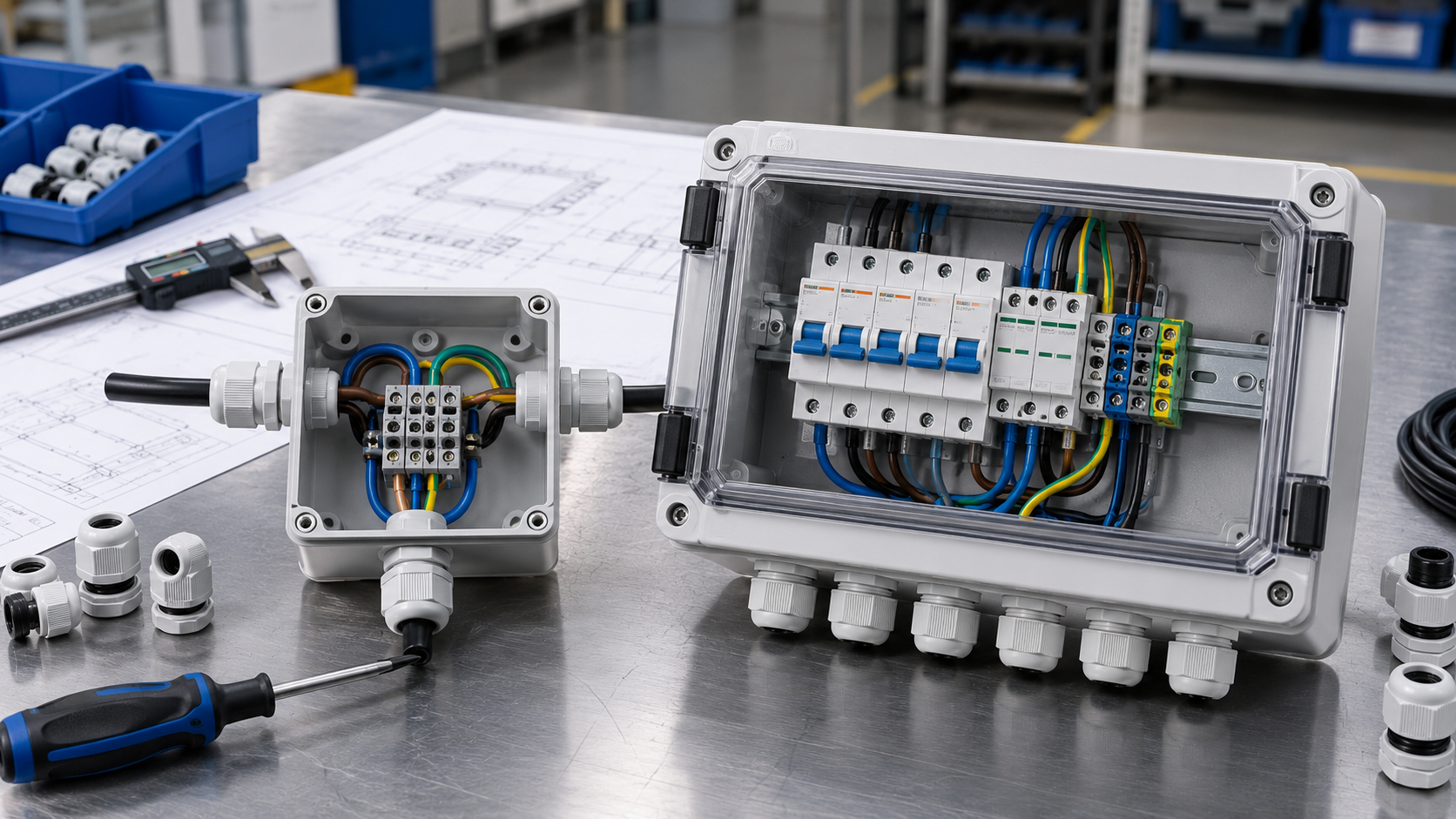
Another may be quoting:
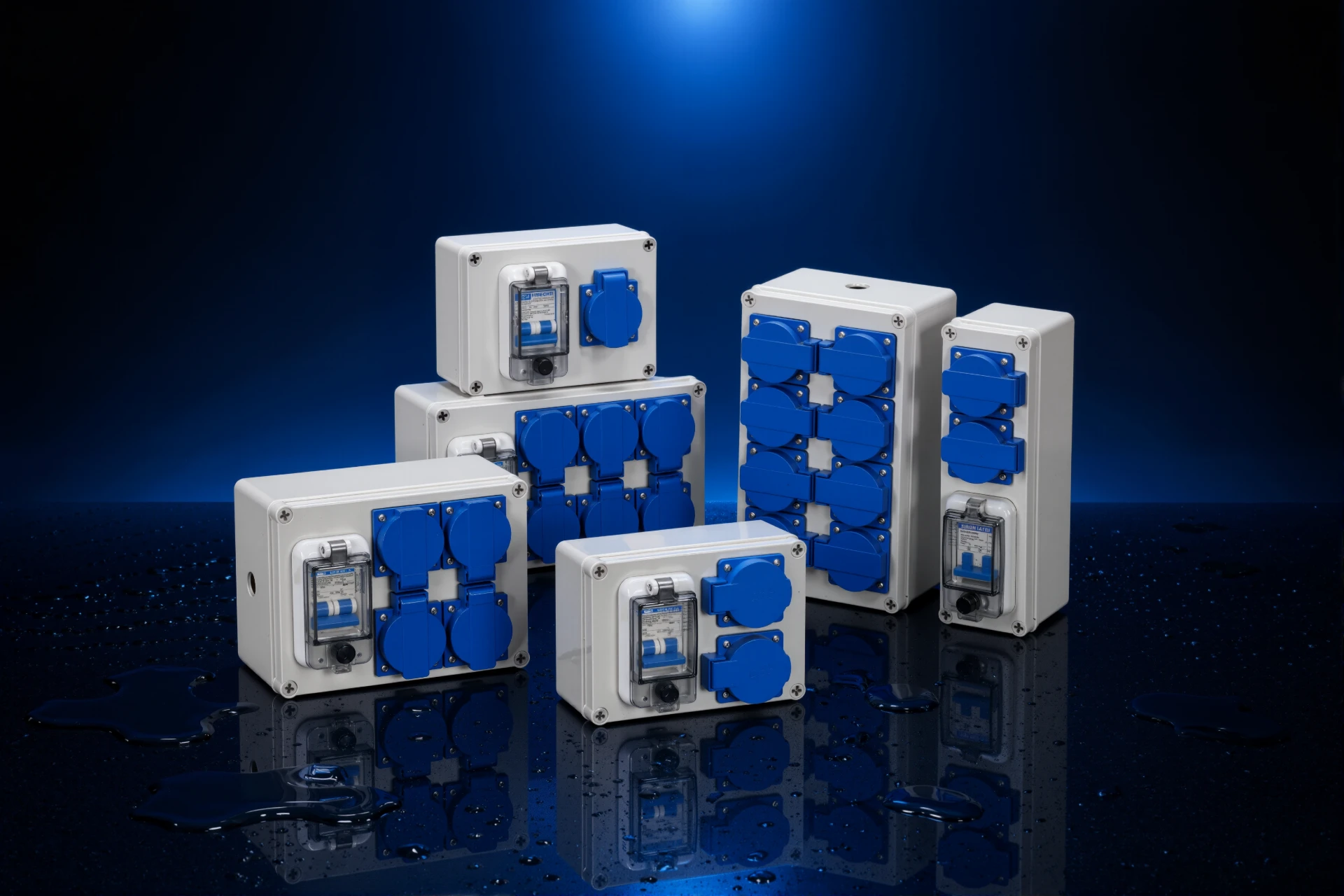
Enclosure + cable glands + DIN rail + terminal blocks + mounting hardware.
The second price should be higher.
It may still represent the lower total project cost.
Cable Glands
If cable glands are included, check:
- Thread type
- Size
- Quantity
- Sealing accessories
- Material
Do not assume “with cable glands” means every supplier has included the same gland specification.
DIN Rail
A DIN rail adds relatively little complexity by itself, but it changes the enclosure from a bare box into a partially prepared assembly.
It also introduces questions about:
- Rail length
- Rail position
- Fixing method
- Component clearance
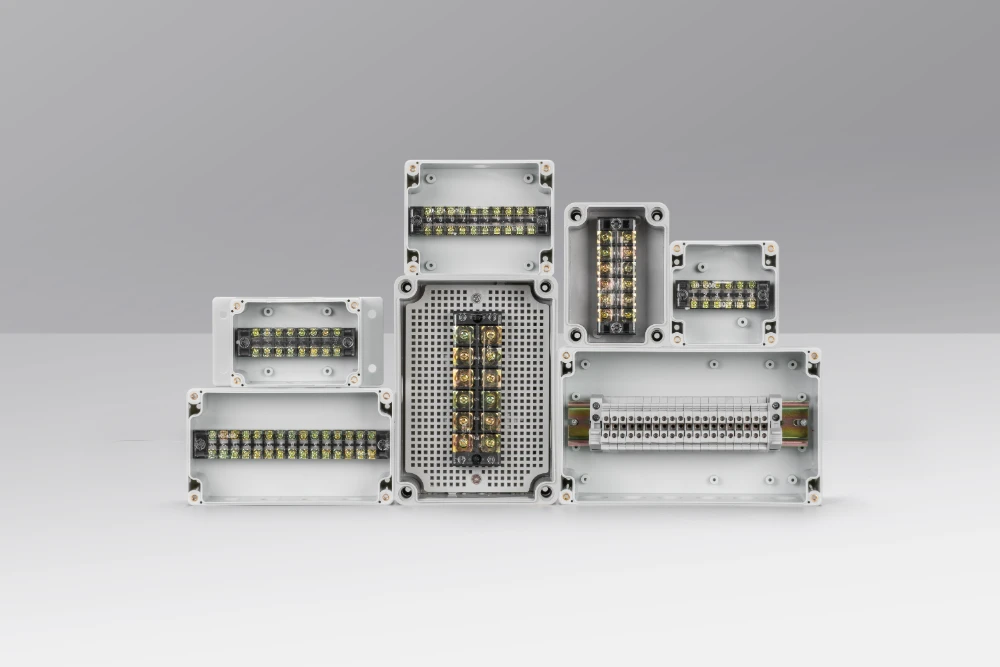
Terminal Blocks
The difference becomes greater when terminals are installed.
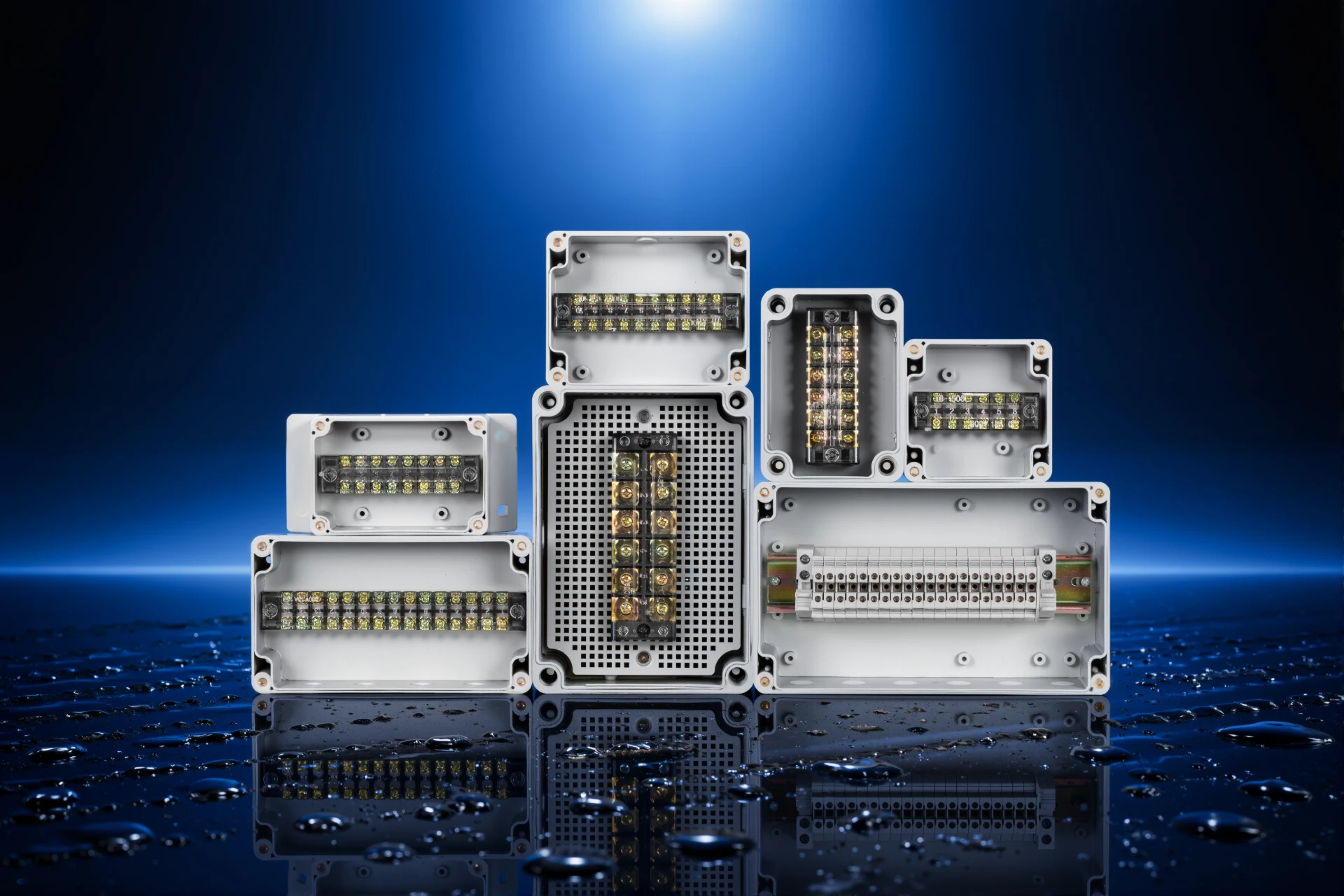
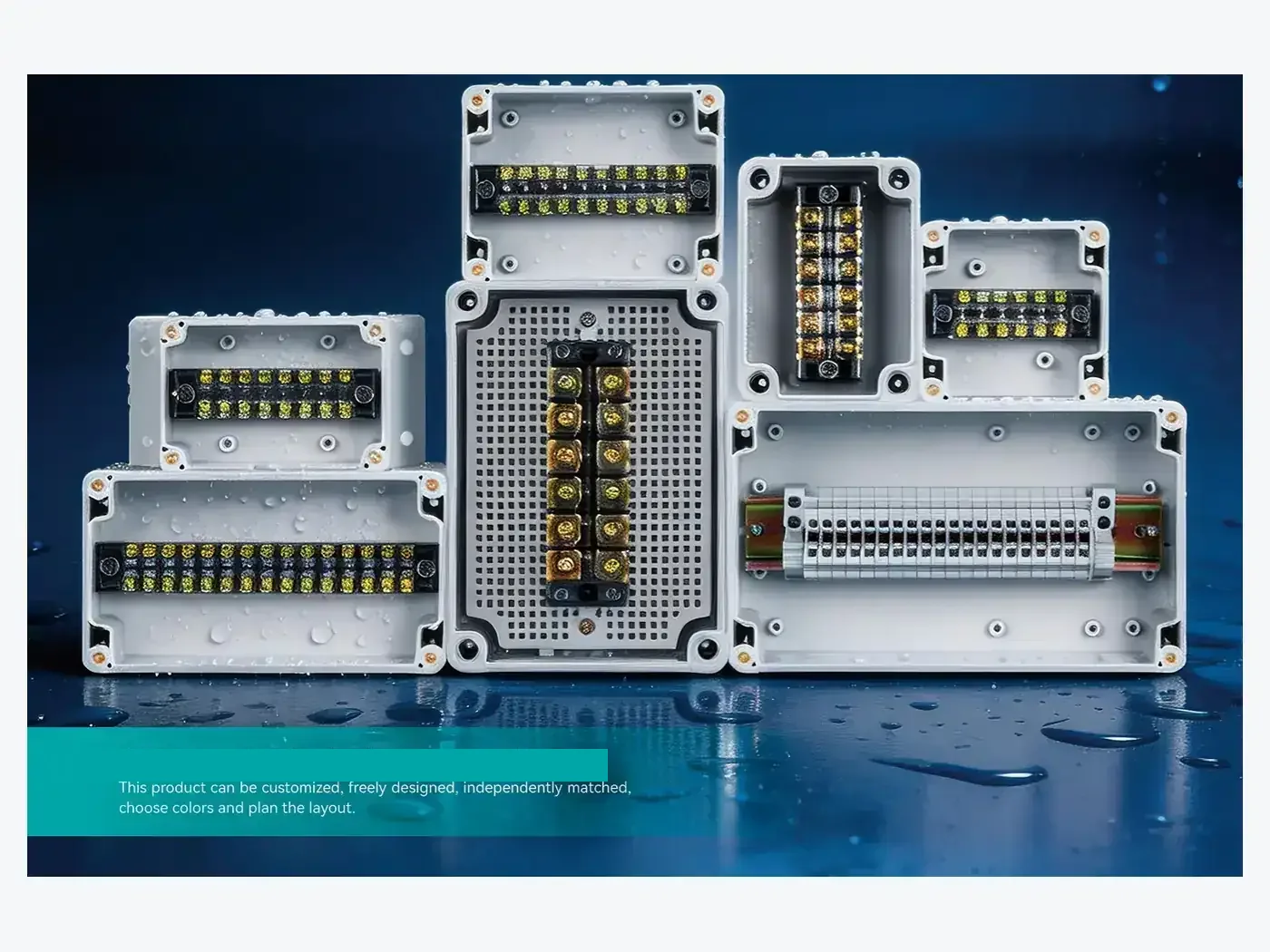
A waterproof terminal block junction box needs to be evaluated according to the terminal quantity, conductor size, internal arrangement, cable-entry direction and usable wiring space.
It should not be compared directly with an empty junction box simply because the outer housing is similar.
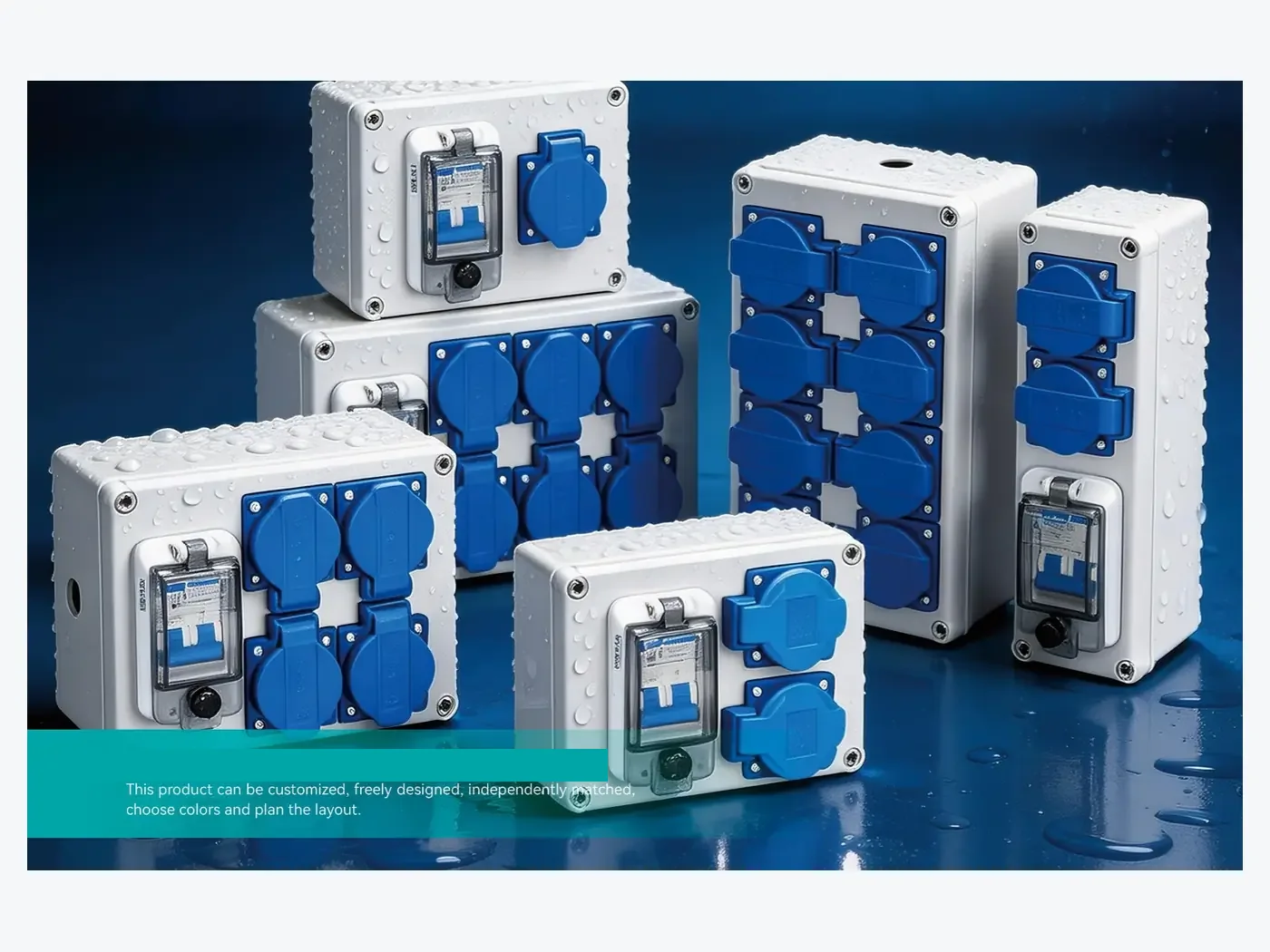
The same principle applies to distribution enclosures.
If an HTC waterproof distribution box quotation includes DIN rail and grounding provisions, compare it with a competing quotation that includes the same internal scope.
A useful purchasing rule is simple:
Empty enclosure vs empty enclosure.
Configured assembly vs configured assembly.
Do not mix the two.
Branding and Packaging Are Often Hidden Inside the “Box Price”
For distributors and OEM customers, the enclosure is sometimes only one part of the finished item.
The quotation may also include:
- Laser marking
- UV printing
- Product labels
- Custom color
- Model identification
- Barcode labels
- Accessory bags
- Individual cartons
- Customized outer cartons
These items are often treated as minor details during early discussions.
Commercially, they matter.
For example, printing a customer logo may require:
- Artwork confirmation
- Positioning confirmation
- Fixture preparation
- Sample approval
- Additional production handling
A custom enclosure color may also have a different quantity requirement from a standard stocked color.
Packaging can create another gap.
There is a meaningful difference between:
20 empty enclosures packed together in one export carton.
and:
Each enclosure individually packed with accessories, model label, barcode and customer-specific carton marking.
Neither method is automatically better.
A factory using the boxes directly on an assembly line may prefer simple bulk packaging.
A distributor reselling individual units may need individual presentation.
The RFQ should specify the required packing method so all suppliers are costing the same requirement.
The IP Rating Should Be Checked Against the Actual Configuration Being Purchased
This point is especially important for customized projects.
An IP rating applies to a defined enclosure configuration and test condition. Buyers should therefore confirm the documentation that applies to the selected model rather than assuming that every version, material or modified configuration is covered in exactly the same way.
This becomes particularly relevant after cable openings are added.
An unmachined enclosure and a finished assembly containing drilled cable entries, cable glands, plugs or connectors are no longer physically identical configurations.
The final protection performance depends not only on the enclosure body but also on the way those openings are designed, machined, fitted and sealed.
For this reason, buyers should ask practical questions:
- Which exact enclosure model does the document refer to?
- Which cover and material configuration is covered?
- Are additional openings part of the supplied configuration?
- Who supplies and installs the cable glands?
- Are unused openings sealed?
- Does the project require model-specific test or certification information?
For procurement purposes, documentation should be checked against the actual model and installation configuration rather than treated as a generic claim that automatically applies to every possible modified enclosure.
Inspection Scope Is Part of the Commercial Scope
Suppose two suppliers offer the same box, the same machining and the same accessories.
Their quotations can still differ because the inspection requirements are different.
For a catalogue enclosure, normal production inspection may be enough.
For a repeat OEM part made against a customer drawing, buyers may require checks such as:
- Enclosure dimensions
- Hole diameter
- Hole position
- Machining appearance
- Logo position
- Color
- Accessory quantity
- Gasket installation
- Packaging label
- Carton quantity
The important issue is not to demand maximum inspection on every order.
It is to decide what the project actually requires.
A low-value standard enclosure does not need the same inspection plan as a customized component going directly into an OEM assembly line.
However, for a drawing-controlled product, a small additional inspection cost can be much cheaper than receiving a batch with incorrect machining.
When quotations differ, ask each supplier:
What inspection is included in this price?
The answer often explains part of the difference immediately.
A Better Way to Compare Waterproof Junction Box Prices
A purchasing spreadsheet containing only these four columns is not enough:
| Supplier | Size | IP Rating | Unit Price |
|---|---|---|---|
| Supplier A | 200 × 150 × 100 mm | IP67 | — |
| Supplier B | 200 × 150 × 100 mm | IP67 | — |
| Supplier C | 200 × 150 × 100 mm | IP67 | — |
Use a scope comparison instead:
| Item to Confirm | Supplier A | Supplier B | Supplier C |
|---|---|---|---|
| Exact model | |||
| External dimensions | |||
| Required usable space | |||
| Body material | |||
| Cover material | |||
| IP requirement | |||
| Closure type | |||
| Cable openings | |||
| CNC drawing revision | |||
| Cable glands | |||
| DIN rail | |||
| Terminal blocks | |||
| Mounting accessories | |||
| Logo / printing | |||
| Packaging | |||
| Inspection scope | |||
| Documentation | |||
| Quantity quoted | |||
| Setup / tooling charge | |||
| Lead time |
Once this table is filled in, many apparent waterproof junction box price differences stop being mysterious.
The suppliers were simply not pricing the same scope.
When the Higher Quotation Makes Sense
A higher quotation may be justified when it includes something the project genuinely needs:
- Application-specific material requirements
- More suitable enclosure structure
- Additional machining
- Cable glands
- DIN rail or terminals
- Custom branding
- Individual packaging
- Additional inspection
- Project-specific documentation
- Low-volume production
But a higher quotation is not automatically better.
Words such as “industrial grade,” “premium” or “heavy duty” have little purchasing value unless they are connected to a defined specification.
Ask the supplier:
What exactly is different?
The reverse is also true.
The lowest quotation is not automatically risky.
If a lower-priced supplier is quoting the same defined product, accessories, machining, documentation and inspection scope, the lower cost may simply be more competitive.
The objective is not to choose the cheapest or the most expensive junction box.
It is to purchase the required configuration at the lowest justified total cost.
How We Review a Waterproof Enclosure RFQ
At BOWO, a useful quotation starts with understanding what will actually be installed inside and around the enclosure.
For a standard order, an existing product may already meet the requirement.
For a customized project, the review becomes more specific.
Enclosure
- Required dimensions
- Required usable internal space
- Body and cover material
- Cover type
- Color
- Required IP level
Internal Layout
- Component list
- Component dimensions
- DIN rail
- Terminals
- Mounting plate
- Minimum service clearance
Cable Entry
- Cable quantity
- Cable diameter
- Gland thread or size
- Hole dimensions
- Entry positions
- Drawing revision
Custom Work
- CNC machining
- Logo or marking
- Custom color
- Labels
- Packaging
Commercial Information
- Sample quantity
- First production quantity
- Expected repeat quantity
- Destination
- Documentation requirements
- Target delivery schedule
The more clearly these requirements are defined before quotation, the easier it is for both sides to identify what is actually included in the price.
Before You Negotiate the Unit Price, Align the Scope
If two IP67 junction box quotations are far apart, negotiating immediately may be the wrong first step.
First send both suppliers the same:
- Drawing
- BOM
- Enclosure specification
- Accessory list
- Packaging requirement
- Inspection requirement
- Quantity
Ask them to confirm each line.
Only after the scope is aligned does the unit-price comparison become meaningful.
This also makes later changes easier to control.
If the customer later adds:
Six CNC holes + DIN rail + four cable glands.
There is a clear commercial reason for the price revision.
Without a controlled specification, every quotation revision becomes difficult to track.
For OEM buyers, distributors and engineering contractors, this simple discipline can save more time than repeatedly asking suppliers for a “better price.”
FAQ
Why Can Two IP67 Waterproof Junction Boxes Have Different Prices?
Because IP67 defines only the required ingress-protection level. Material configuration, enclosure structure, machining, accessories, order quantity, branding, packaging, inspection and documentation can all affect the final quotation.
Is the Cheapest IP67 Junction Box Necessarily Lower Quality?
No. A lower quotation may simply have a different scope or a more competitive cost structure. Compare the exact product specification and included items before making a quality judgment.
How Much Does CNC Machining Affect a Waterproof Junction Box Quotation?
There is no universal fixed percentage. The cost depends on setup, hole quantity, cutout shape, number of machined faces, tolerance, cycle time, inspection and production volume.
Should I Ask Suppliers to Quote Cable Glands Separately?
For comparison purposes, it is often useful. Separating the base enclosure, machining and accessories makes it easier to see where the quotation difference comes from.
What Should I Send to Get an Accurate Custom Waterproof Junction Box Quote?
Send the enclosure dimensions, component layout, cable-entry drawing, material and IP requirements, accessories, customization requirements, quantity, packaging and required documentation. A drawing is particularly useful when CNC machining is involved.
The Practical Takeaway
When two waterproof junction box quotations carry the same IP rating but different prices, the difference is rarely explained by the IP number alone.
Look behind the headline specification.
Material → structure → machining → accessories → quantity → branding → packaging → inspection → documentation.
If those items are not aligned, you are not yet comparing prices.
You are comparing different products.
For a standard or customized enclosure project, send BOWO your enclosure dimensions, internal component layout, cable-entry drawing and expected quantity. We can review whether an existing enclosure platform fits the project or whether machining, accessories or another configuration should be included before the quotation is finalized.