Choosing a Waterproof Enclosure for Harsh Environments: Coastal, Washdown, UV and Chemical Sites
ENGINEERING NEWS / ENCLOSURE SELECTION BY SITE ENVIRONMENT
Coastal salt air, desert ultraviolet, washdown bays and chemical plants attack enclosures in different ways. Match the configuration to the site before comparing prices.
Start from the environment, not the catalogue. Salt air attacks fasteners and hardware, ultraviolet attacks the body and cover material, washdown attacks the gasket and cover closure, and chemical exposure attacks both the polymer and the seal. Identify the dominant stress first, then choose the enclosure family, material, closure and cable entry together.
An enclosure that performs well on a factory wall can be the wrong choice on a jetty, in a desert substation, or beside a chloride-based cleaning line. The published protection rating is a starting point, but the configuration that survives years of service is chosen from the site: what acts on the box, how often it is opened, and what the maintenance team needs to see without opening it.
This guide covers the five site types that most often decide the specification, the enclosure family each one points to, and the material and closure combinations that suit them. If selection is already settled and you are preparing a customized order, the verification and RFQ steps are covered in the companion article on sealing after customization.
1. Identify which stress dominates the site
Most field failures can be traced to one dominant stress rather than to the headline IP number. Making that stress explicit at the beginning of a project is the fastest way to narrow the range.
| Site environment | Dominant stress | Configuration to start from | What to confirm |
|---|---|---|---|
| Coastal or marine | Salt spray, chloride attack on hardware and cut edges | Polymer closure, UV-stabilised body, sealed cable entries | Material and hardware information for the exact model. |
| Washdown or food-processing bay | Powerful jets, cleaning agents, frequent cover opening | Continuously formed gasket, ribbed lid, multi-point closure | Applicable jet-test evidence for the ordered configuration. |
| Desert or high-ultraviolet site | Ultraviolet radiation, large day-night temperature swing, dust | Material selected for UV performance, pressure equalisation where condensation is expected | UV and temperature information, and the condensation strategy. |
| Chemical plant or fume exposure | Specific vapours, splash and residue build-up | Material confirmed against the agent list, polymer closure | Chemical compatibility data for the named agents. |
| Flood-prone, buried or tidal | Temporary immersion and silt | Sealed screw-cover enclosure with sealed connectors | Applicable immersion evidence and the assumed installation conditions. |
2. Which enclosure family suits which job
The range is organised by how the enclosure is opened, mounted and wired, so in practice the site and the maintenance routine point to a family before the size is fixed.
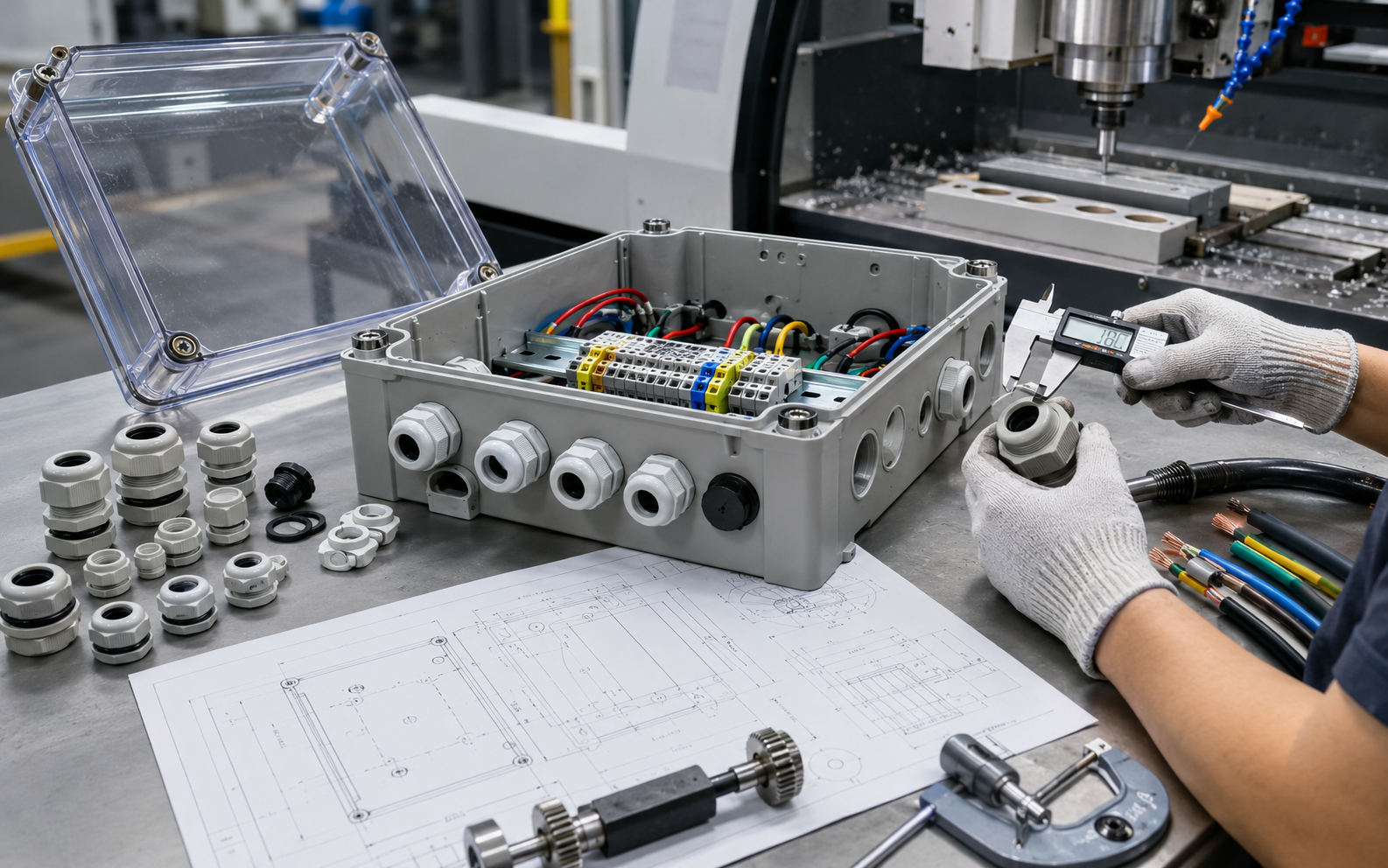
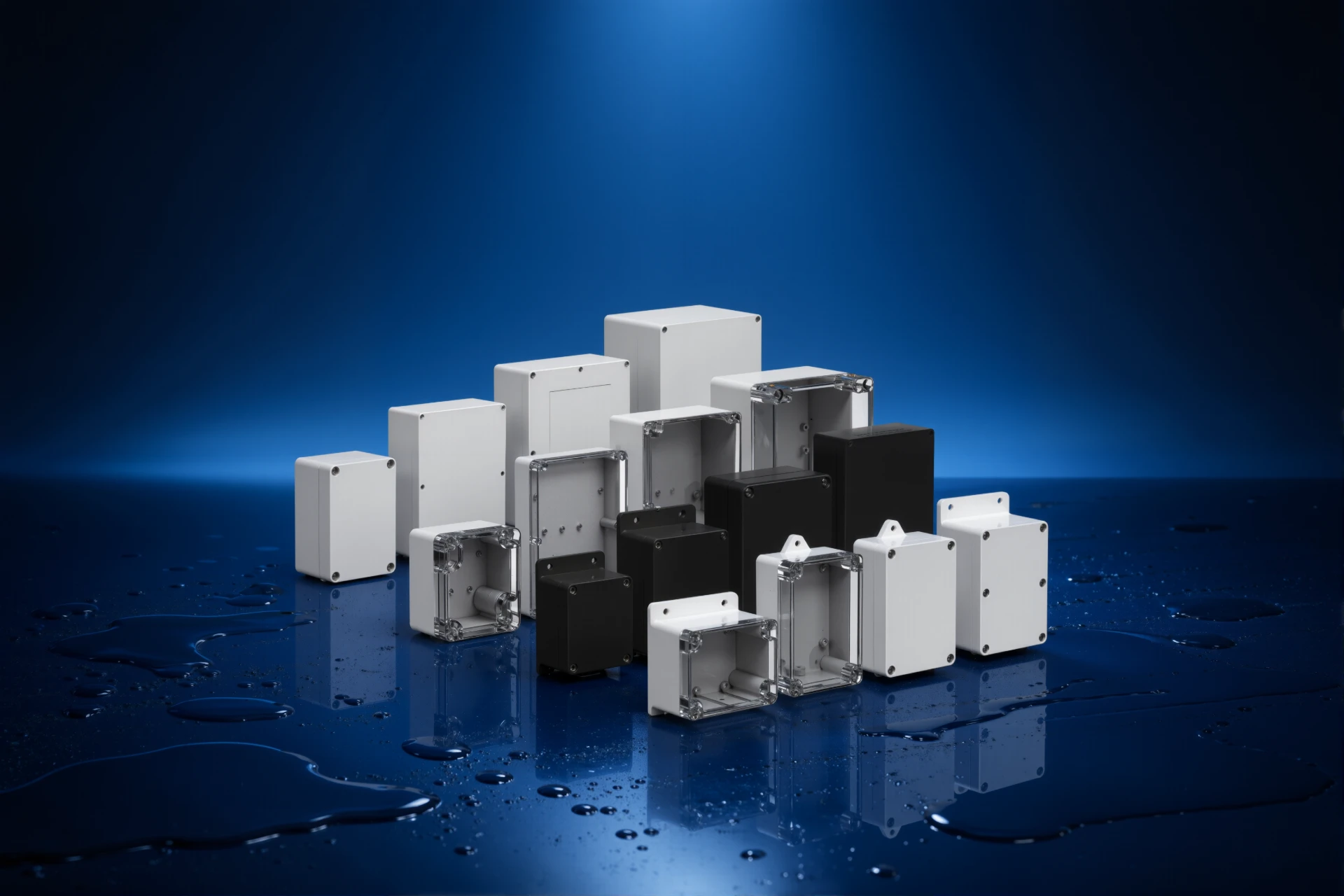
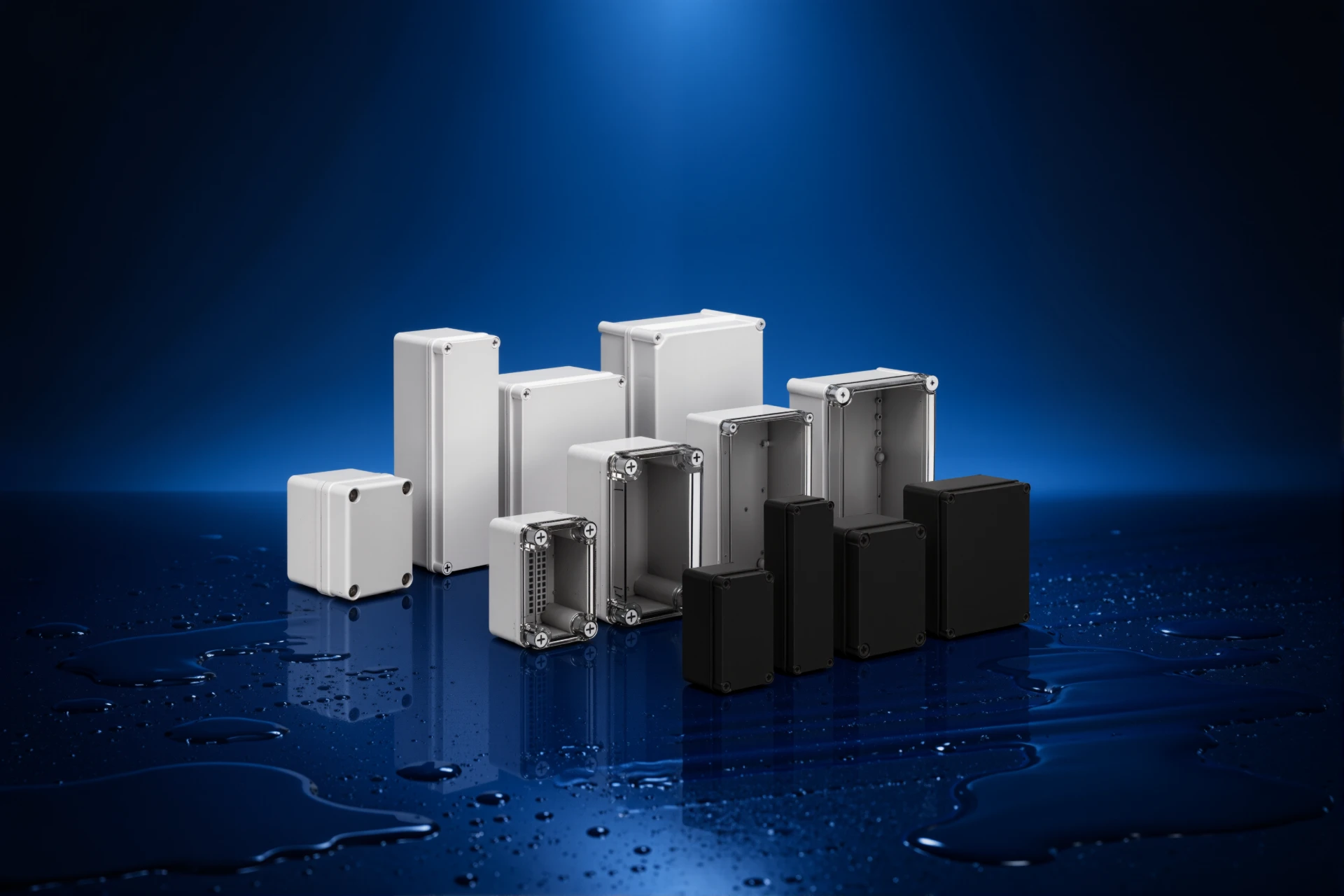
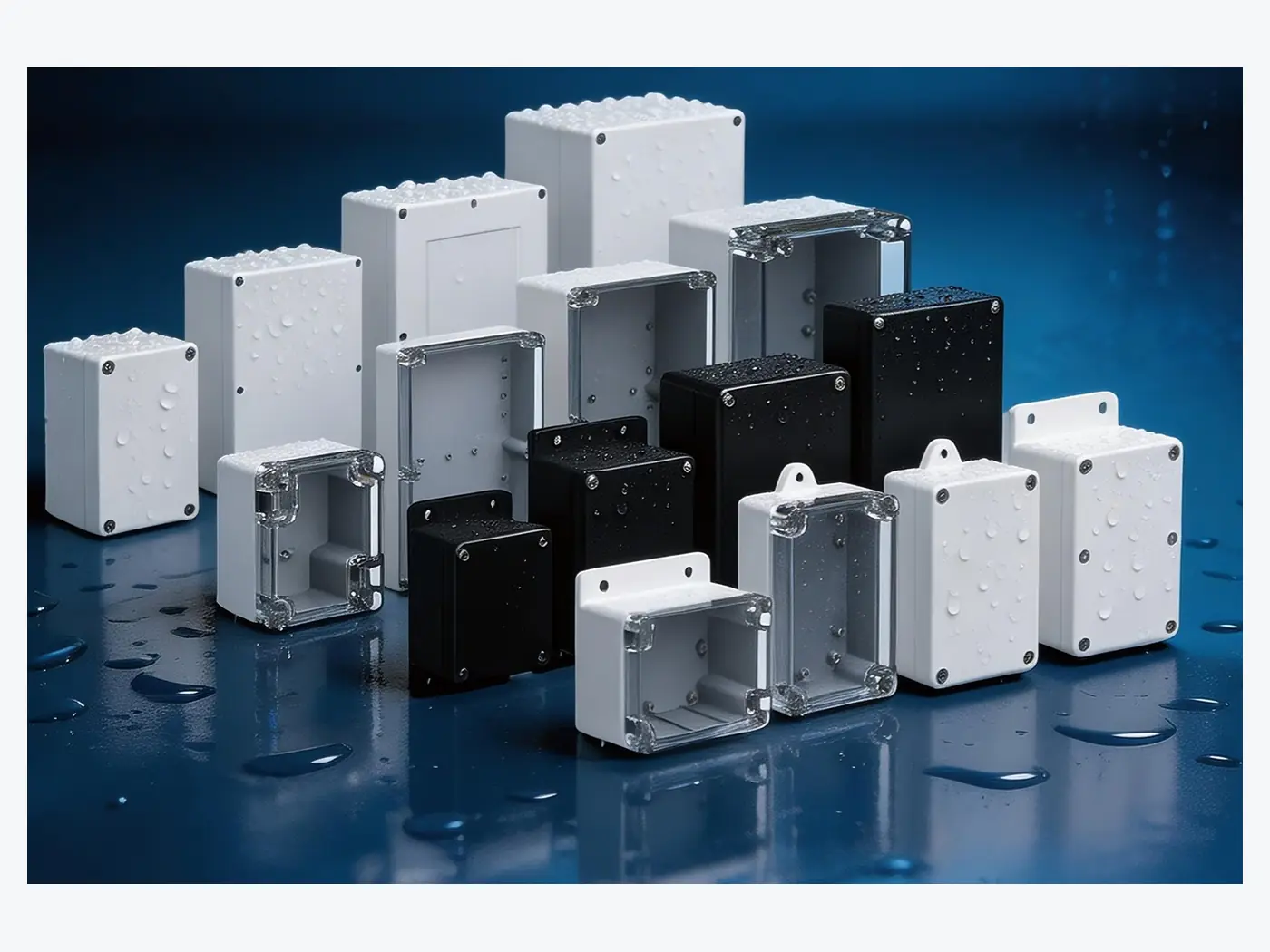
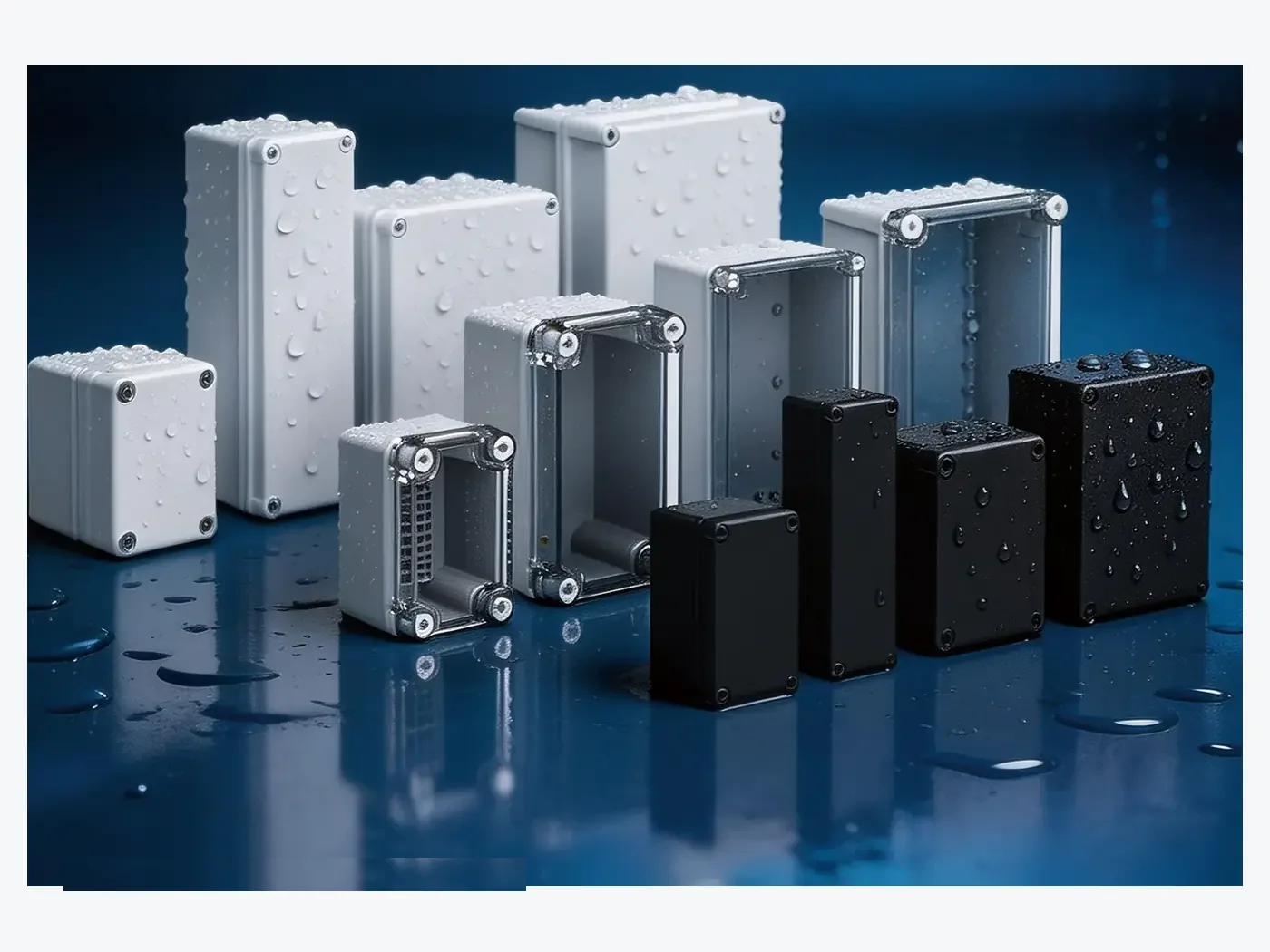
- Screw-cover boxes for wiring junctions that are closed once and inspected rarely. The AG series covers compact to medium sizes, and the F series adds optional external mounting ears for wall, frame and support-plate fixing.
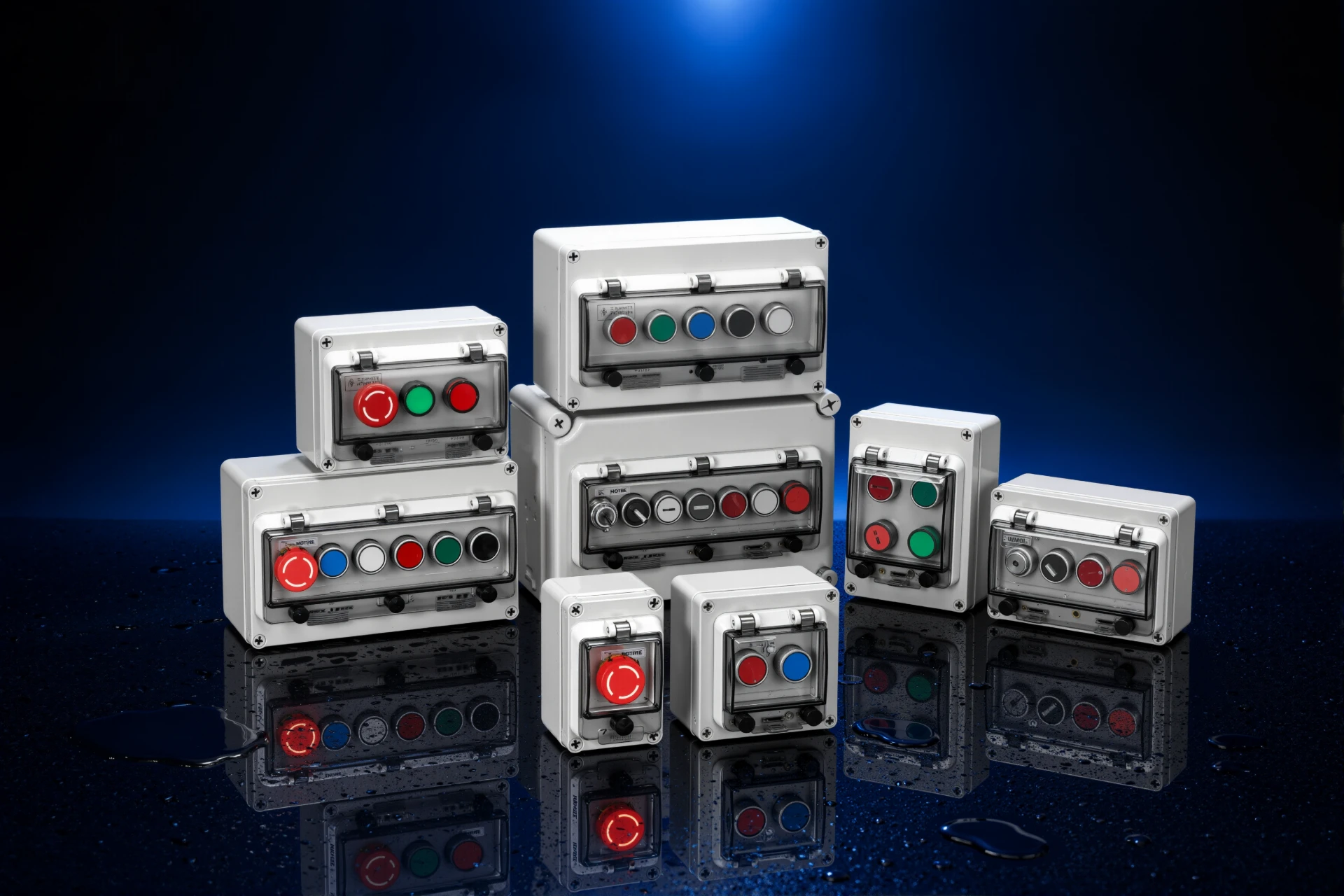
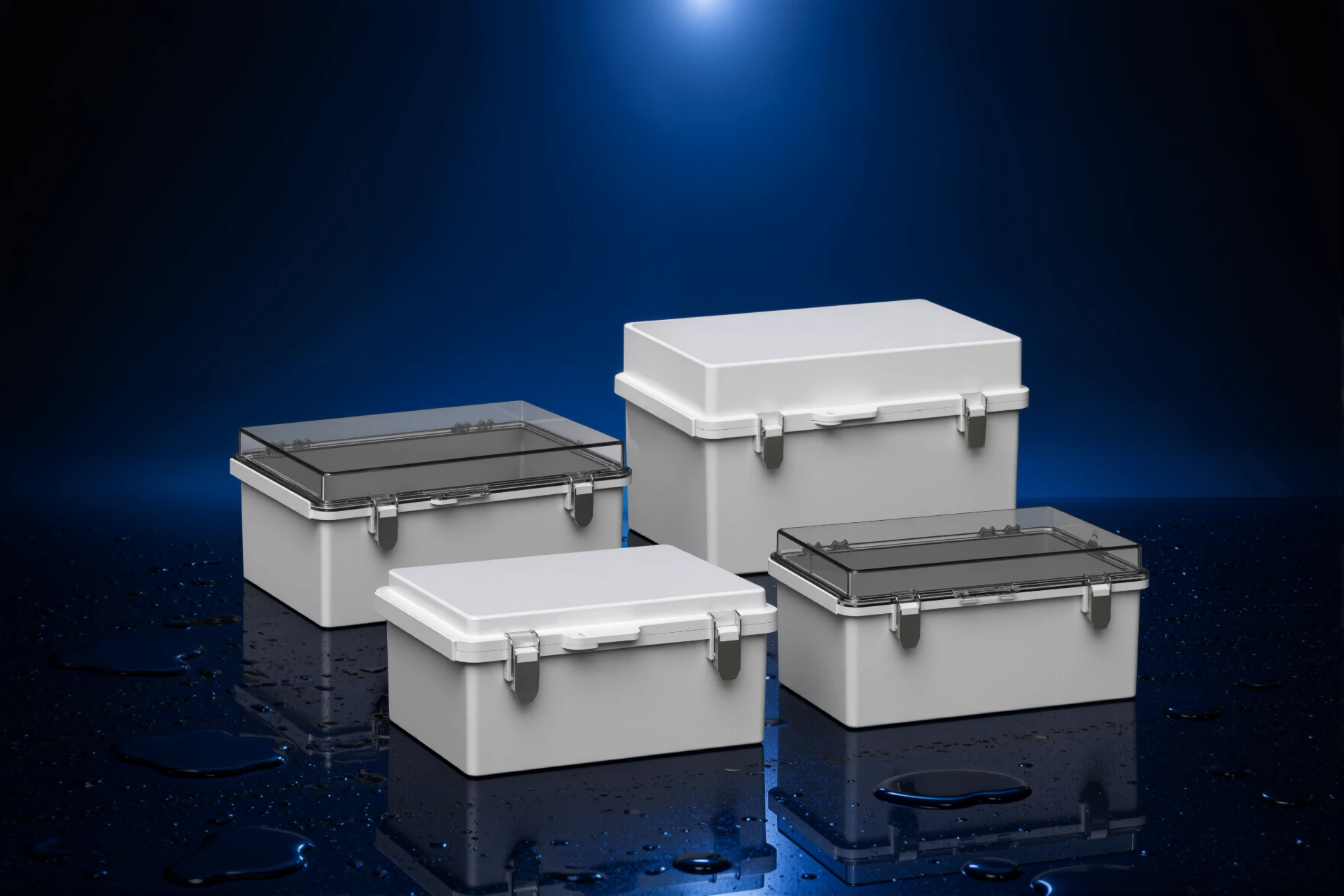
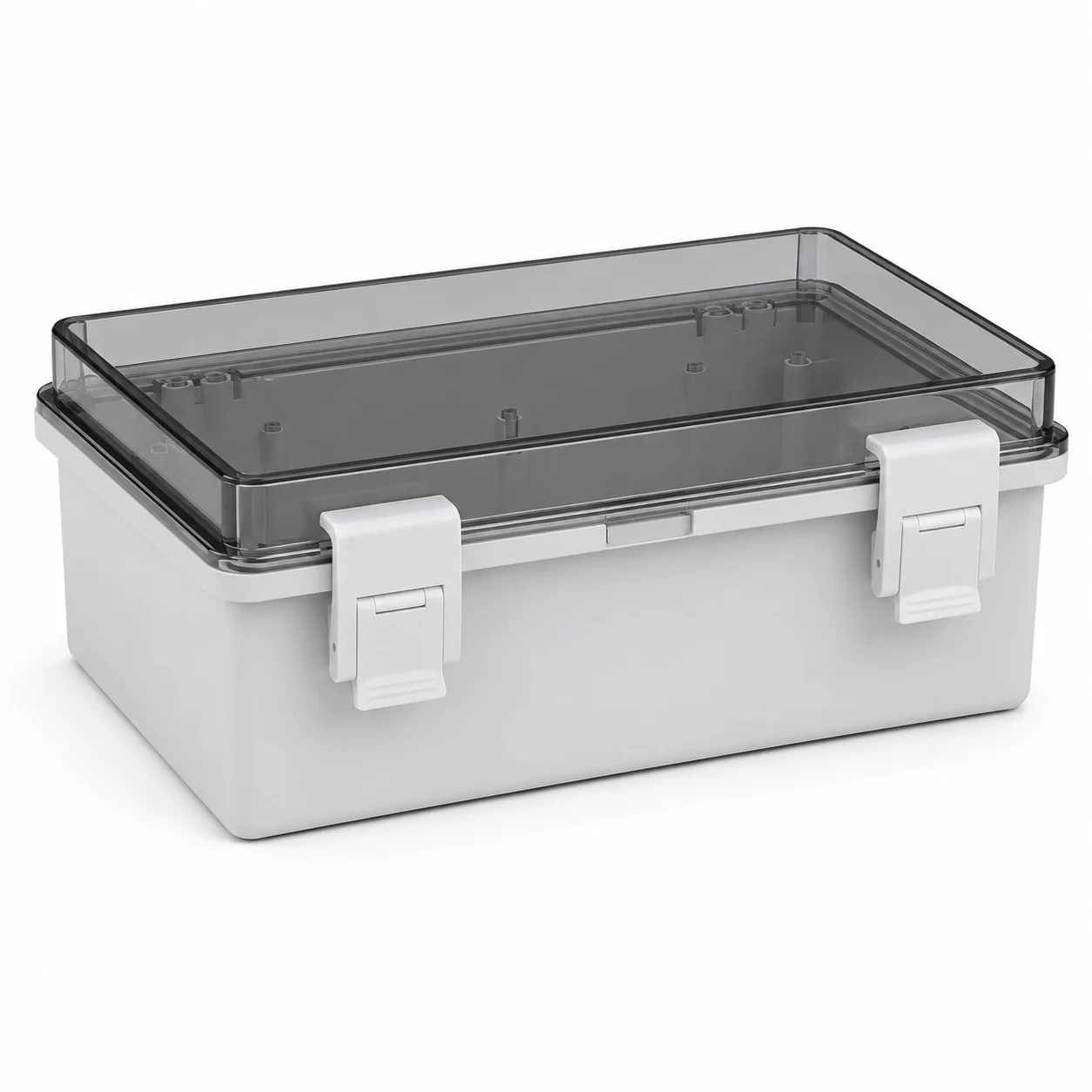
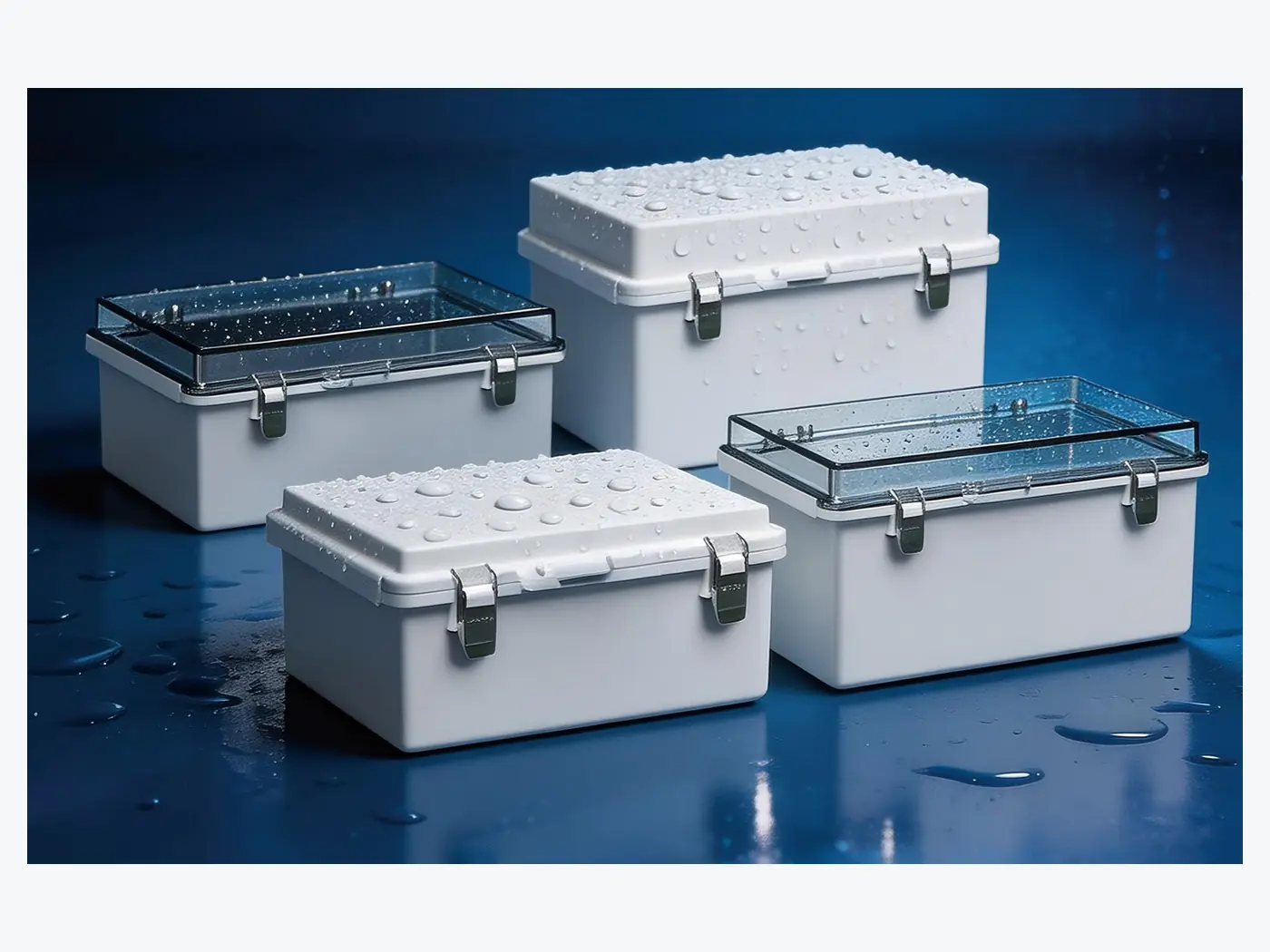
- Hinged boxes with metal latches where the cover is opened for maintenance and higher clamping force or tamper resistance matters, for example machine-mounted junctions and industrial cabinets: metal latch series.
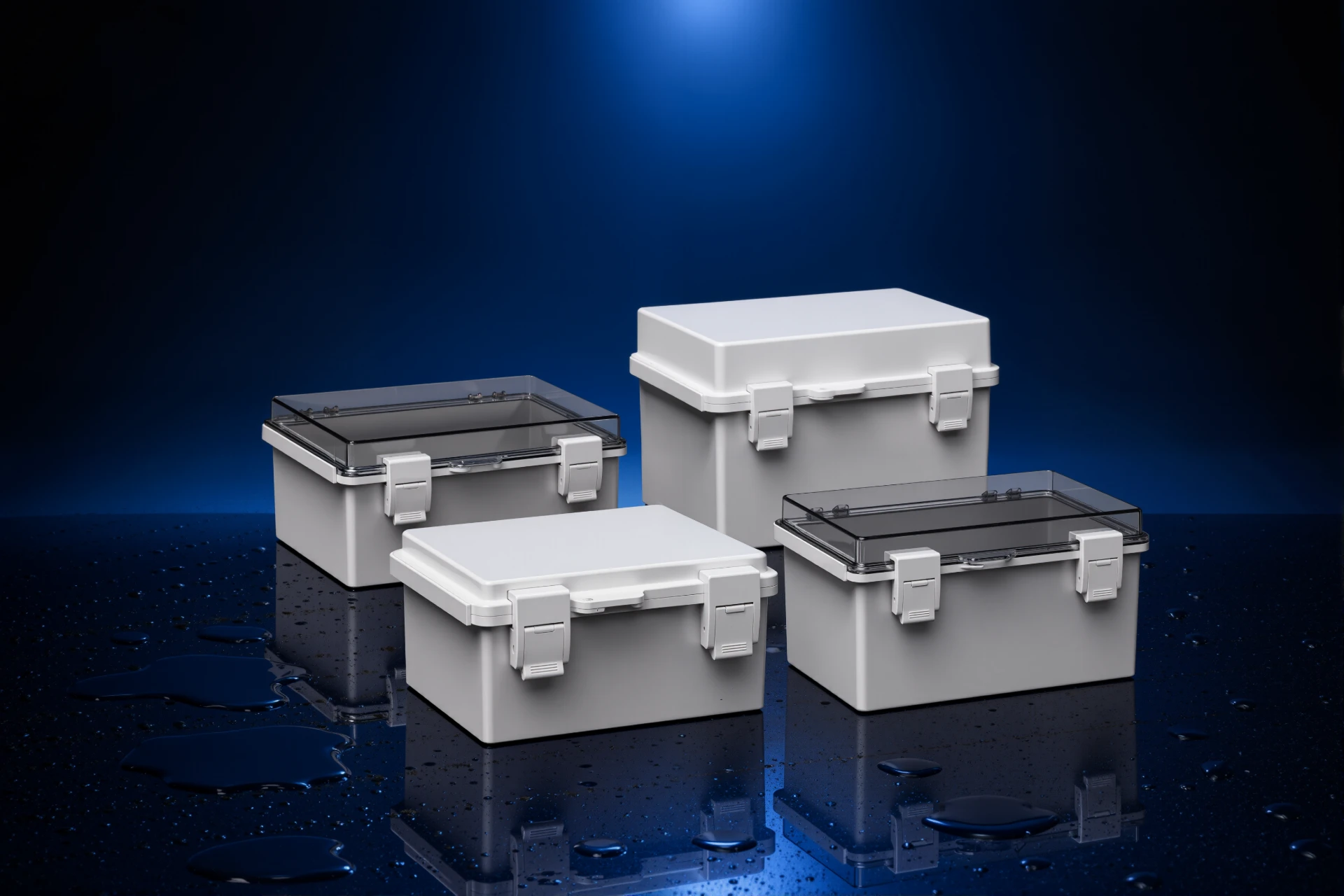
- Hinged boxes with polymer latches for coastal, chemical and roadside sites where a metal fastener would be the first component to corrode: plastic latch series.
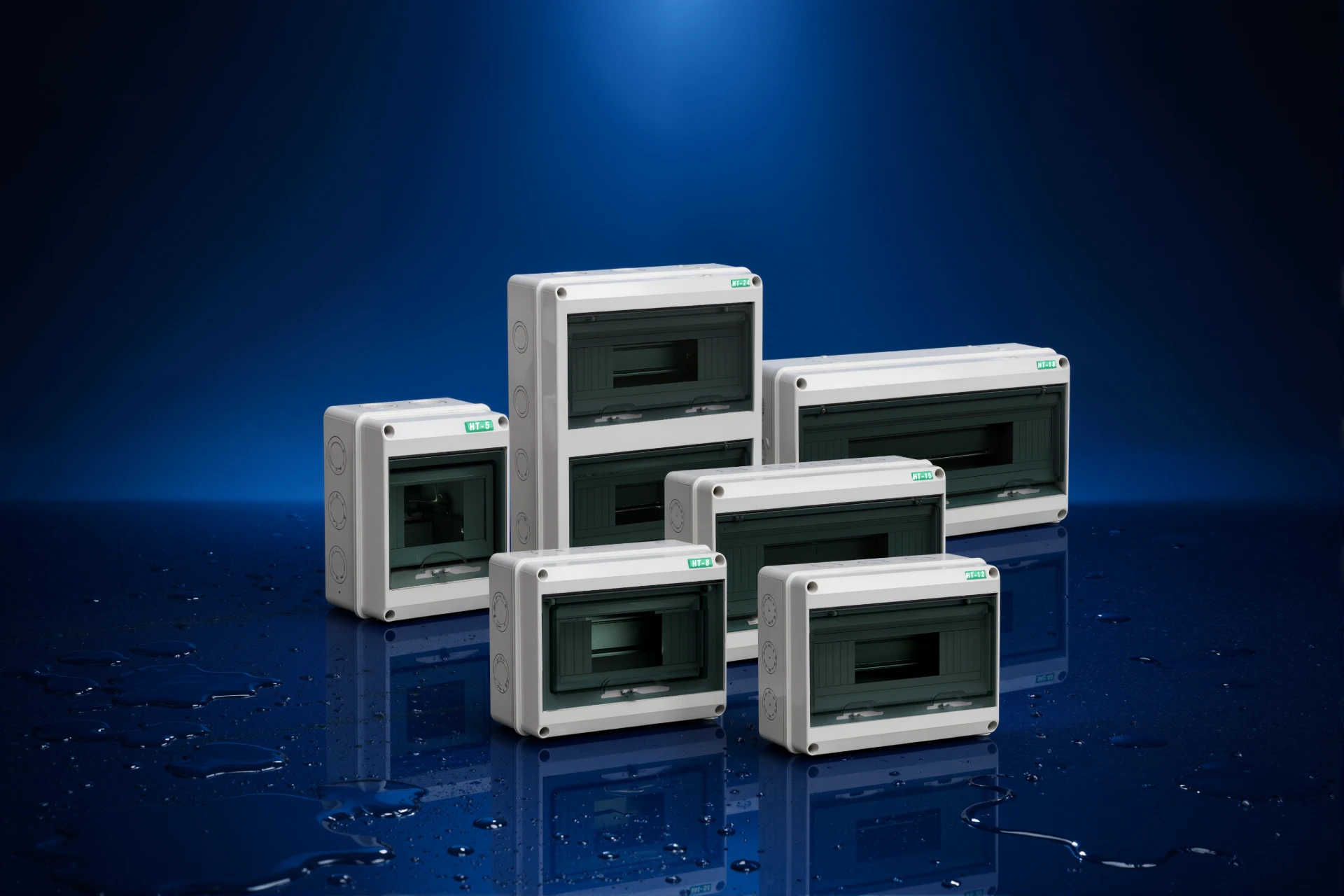
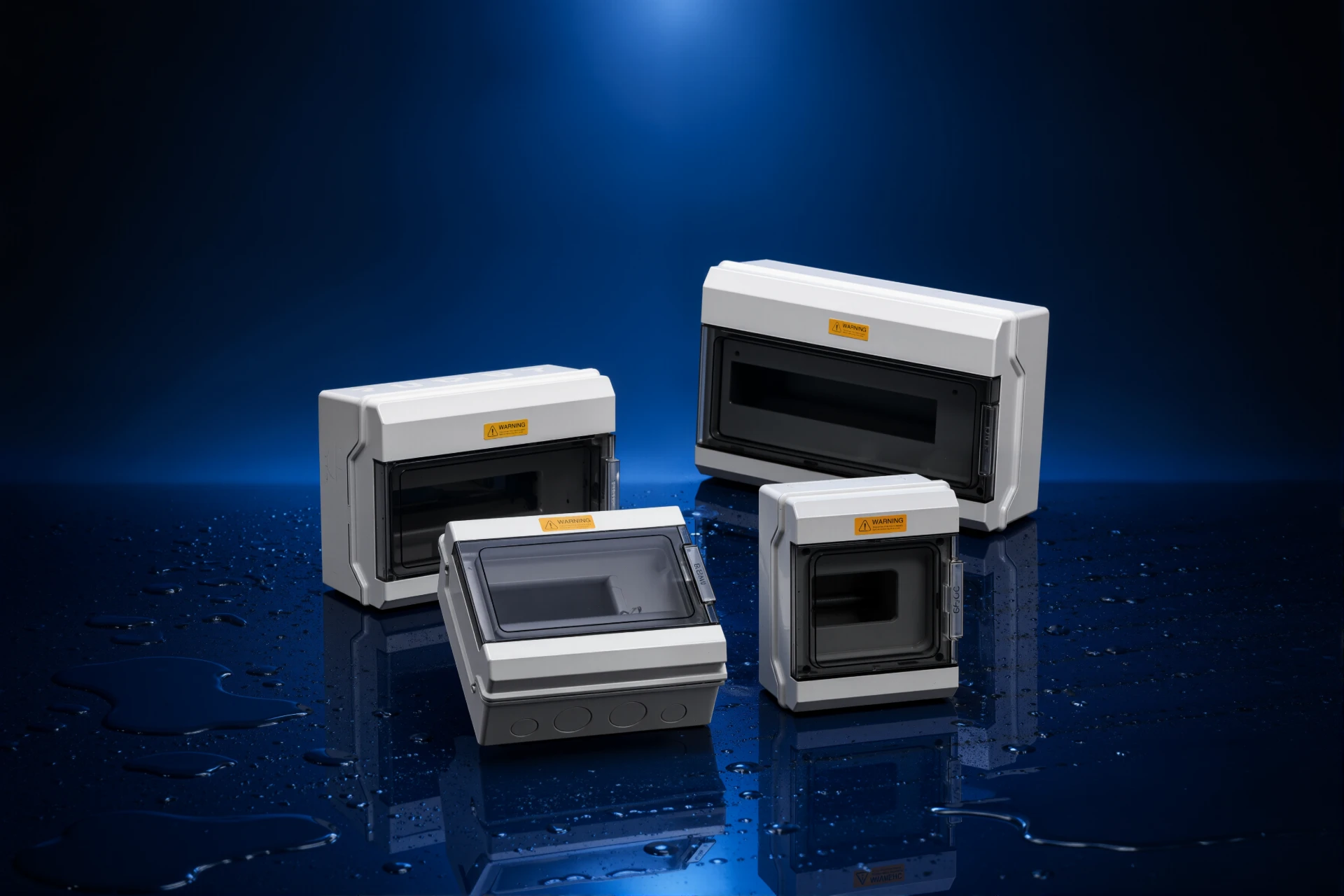
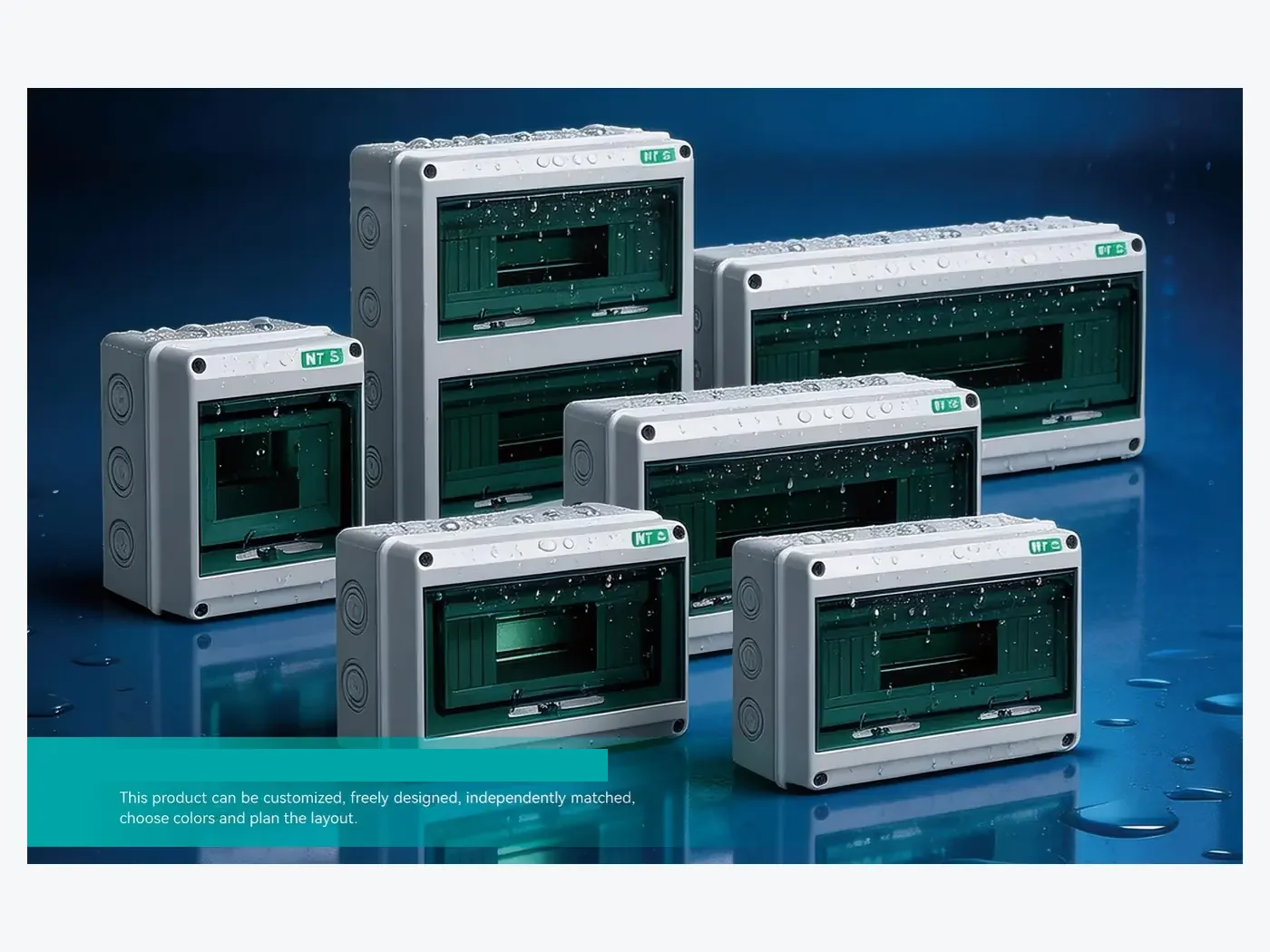
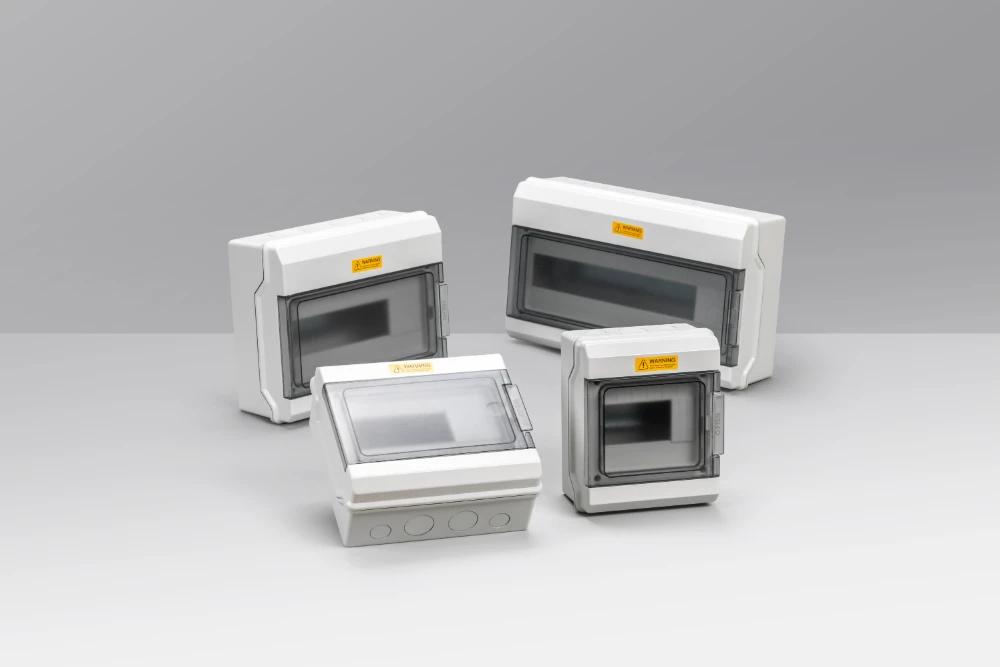
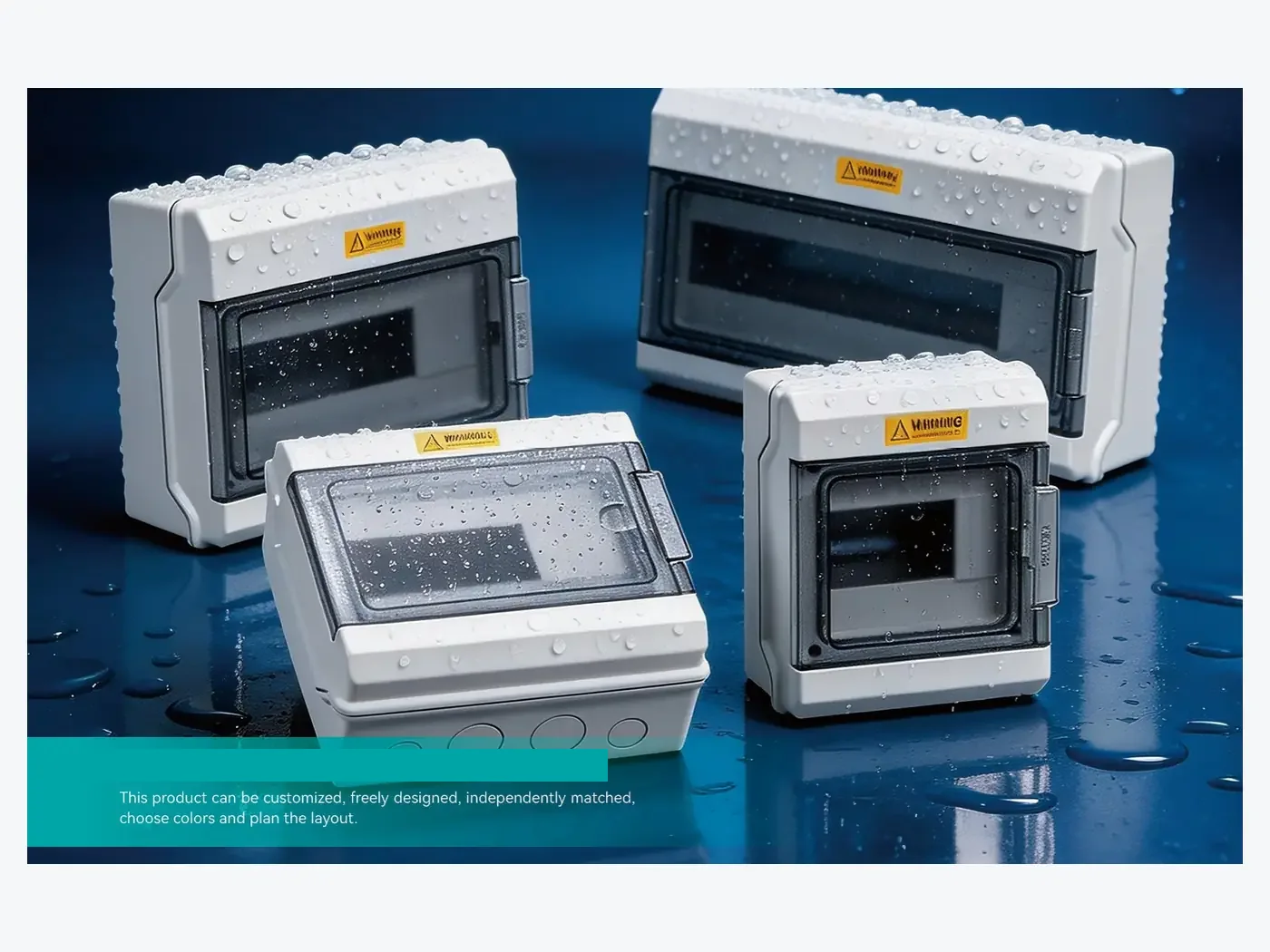
- DIN-rail distribution boxes where the enclosure also carries modular breakers or terminals and the operator needs to read the internal state through the window: HT series and the side-hinged HTC series.
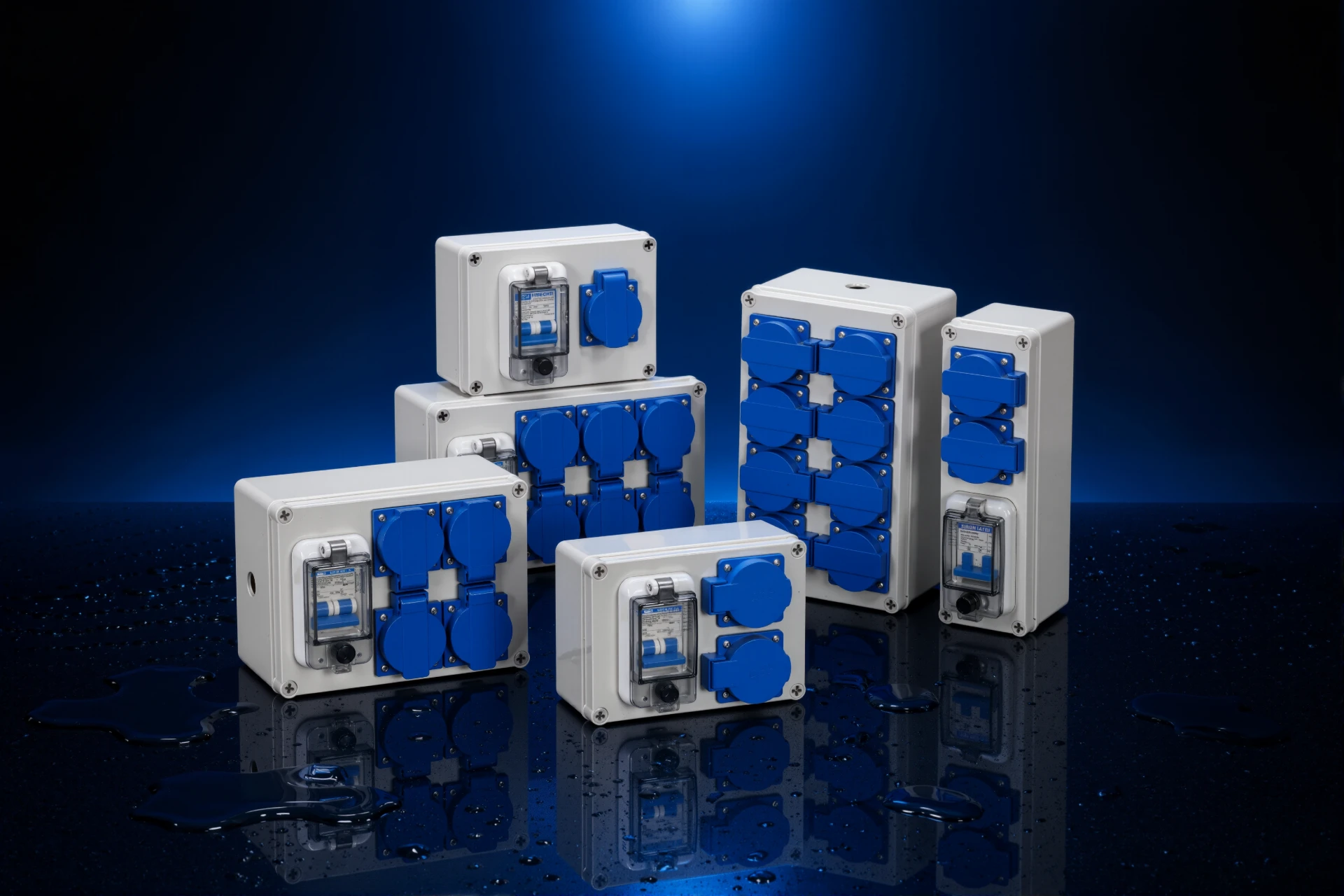
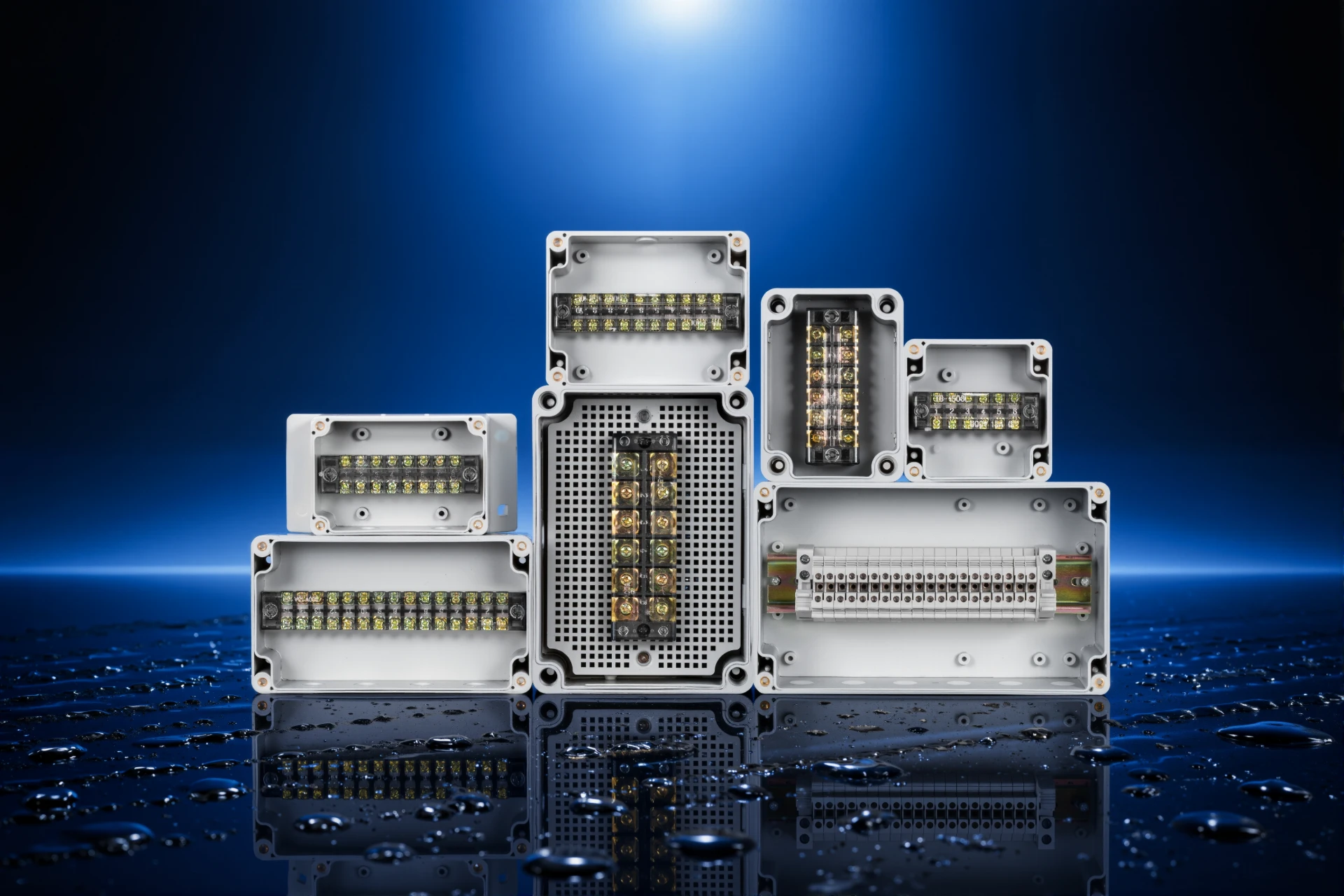
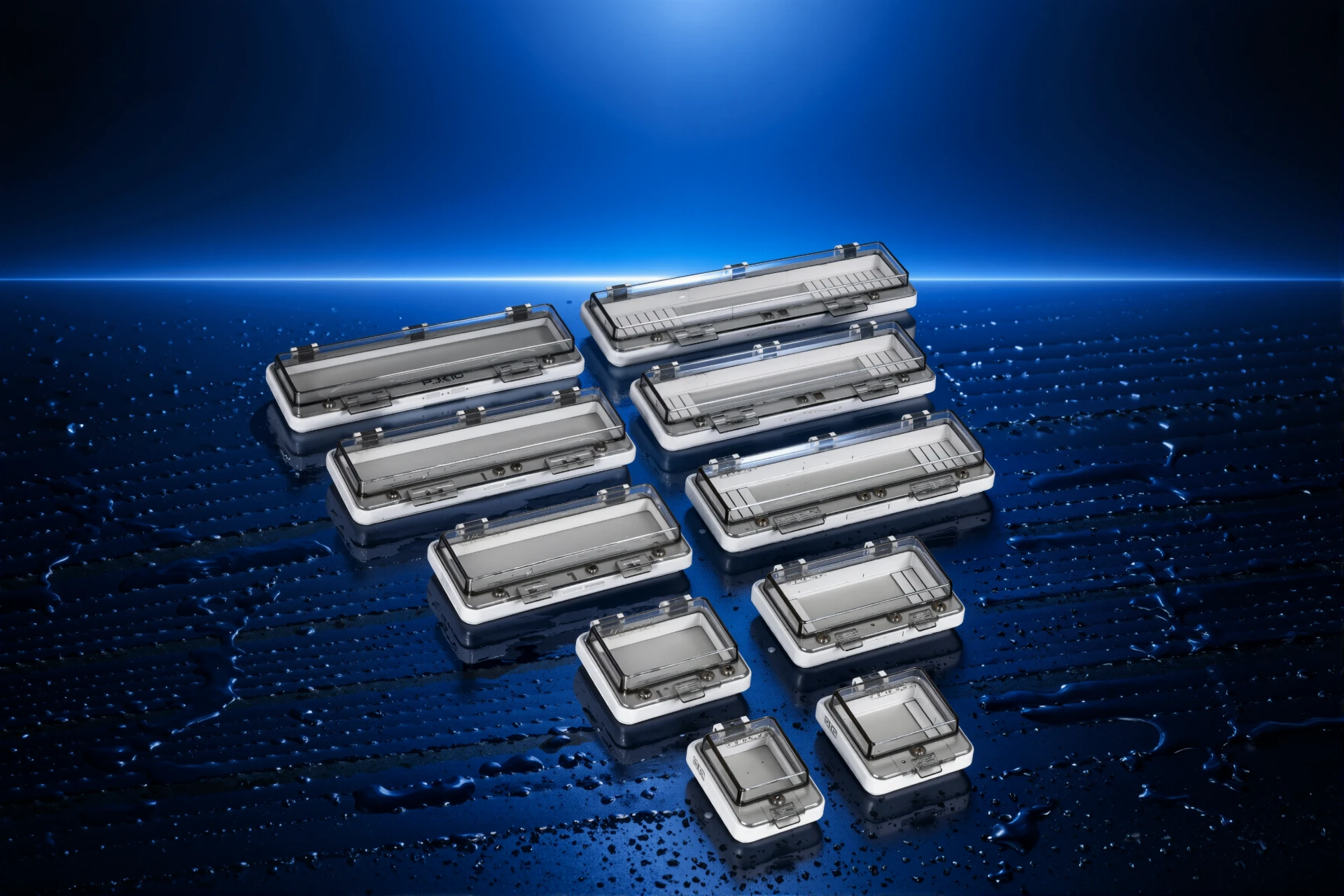
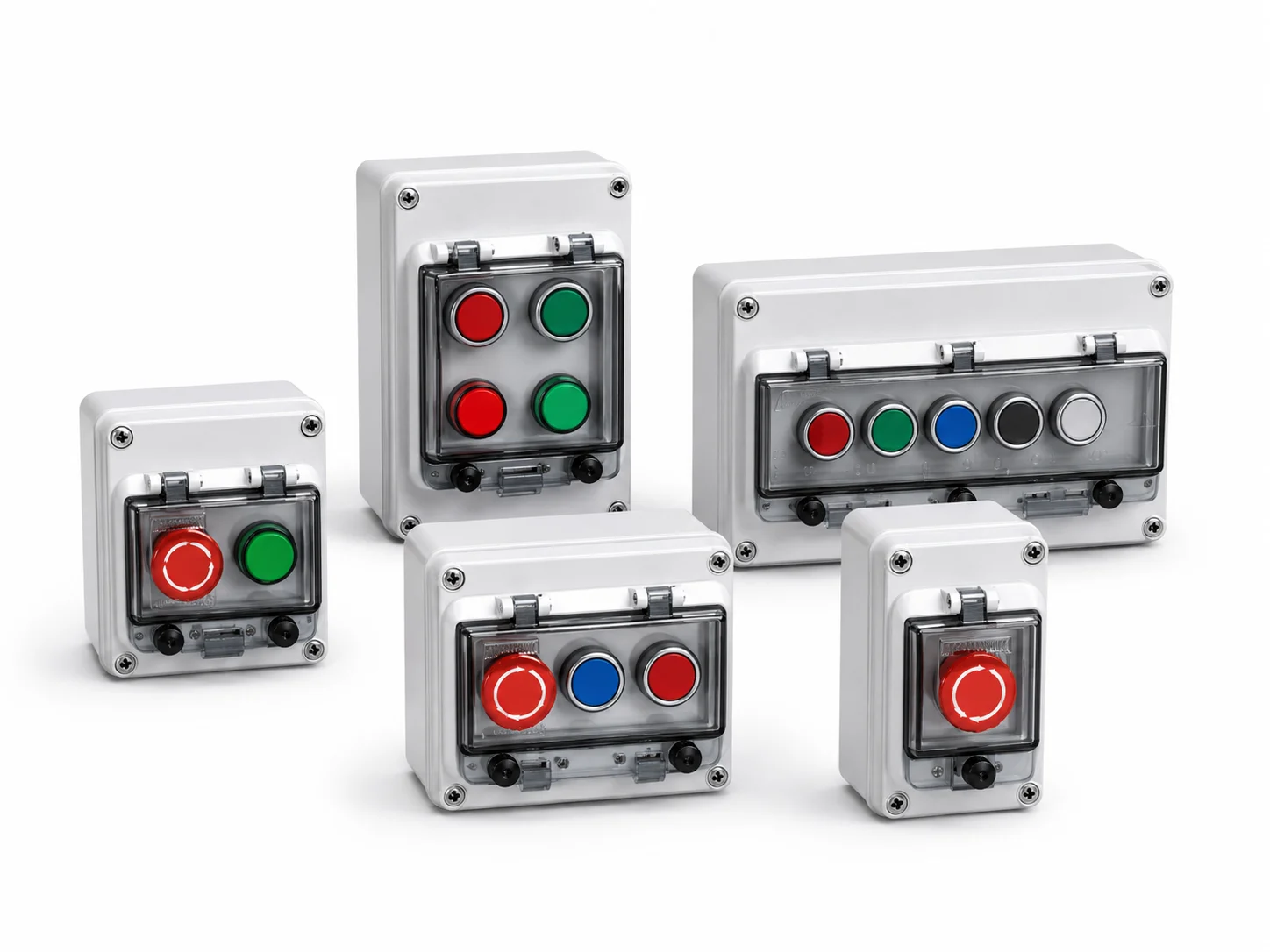
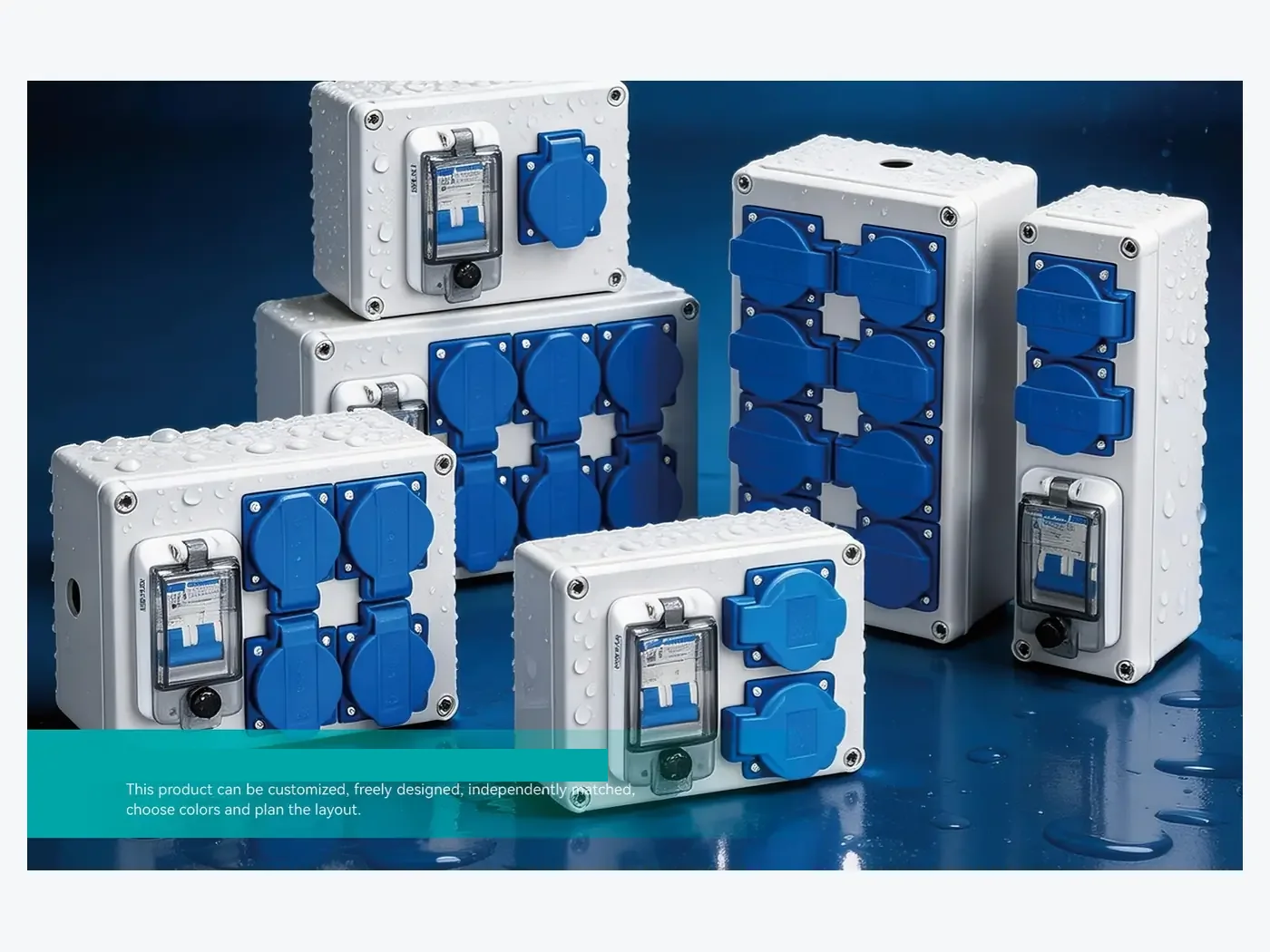
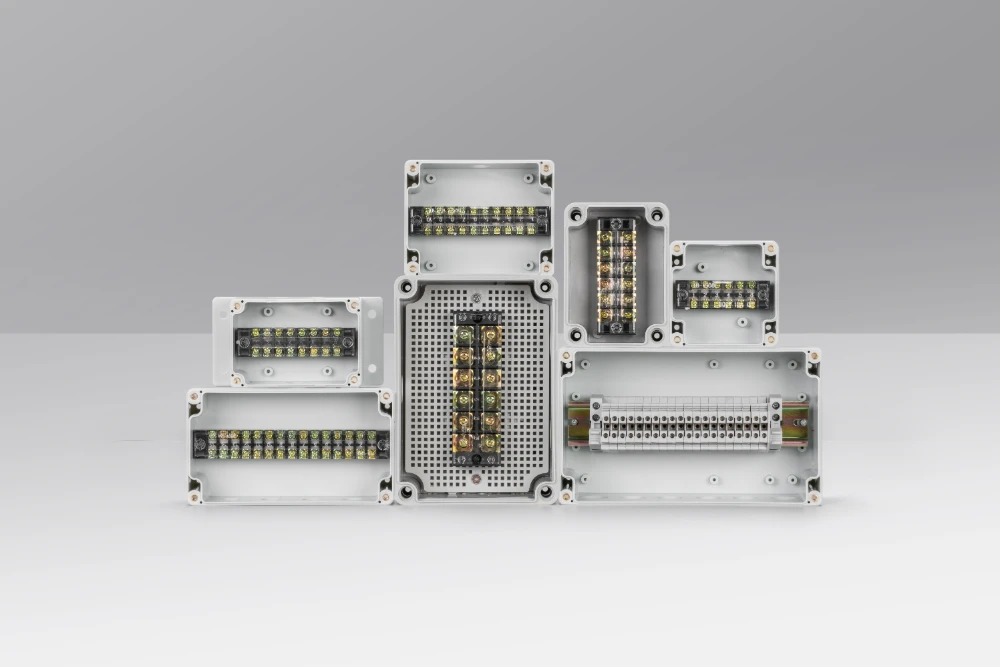
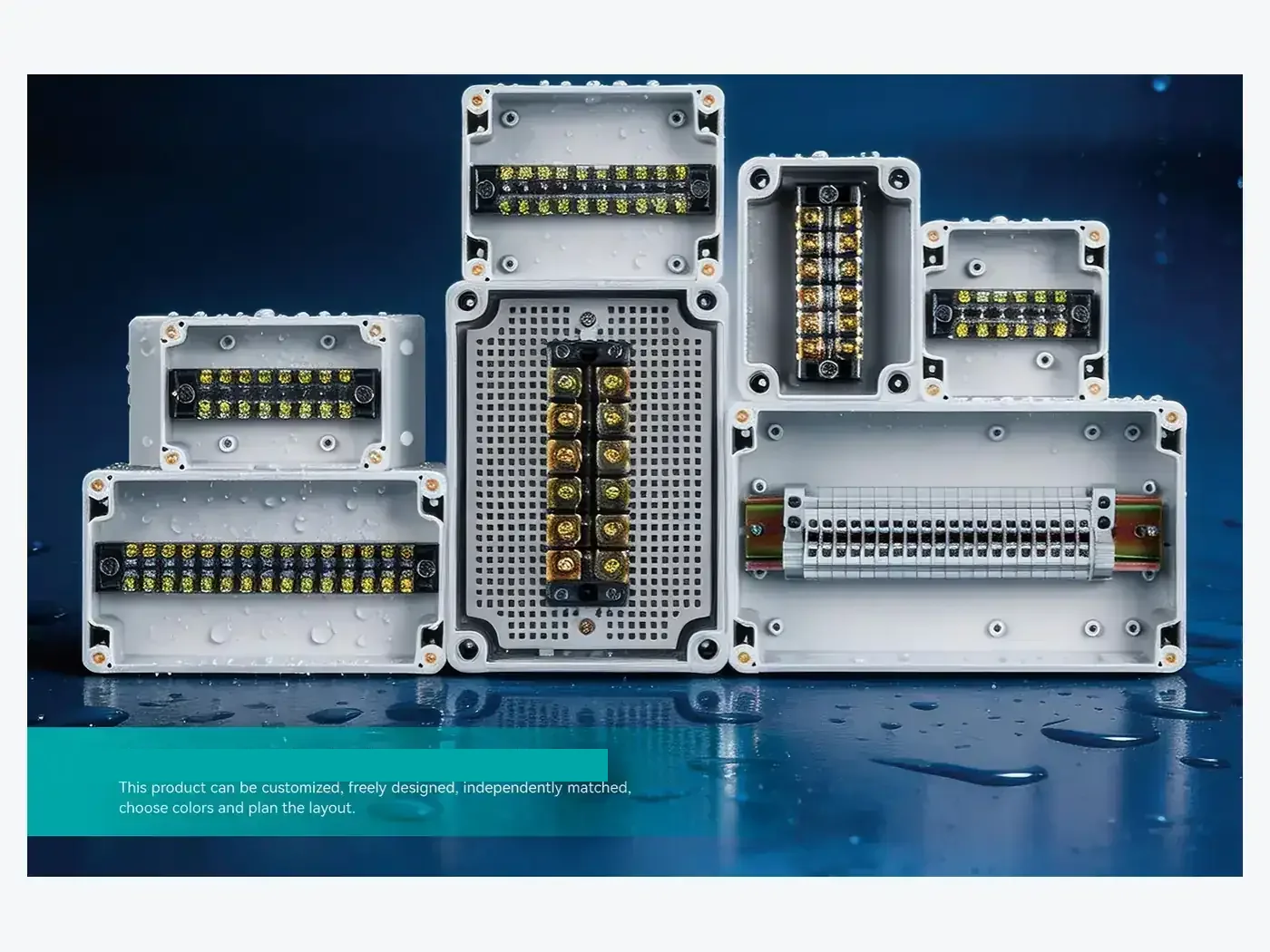
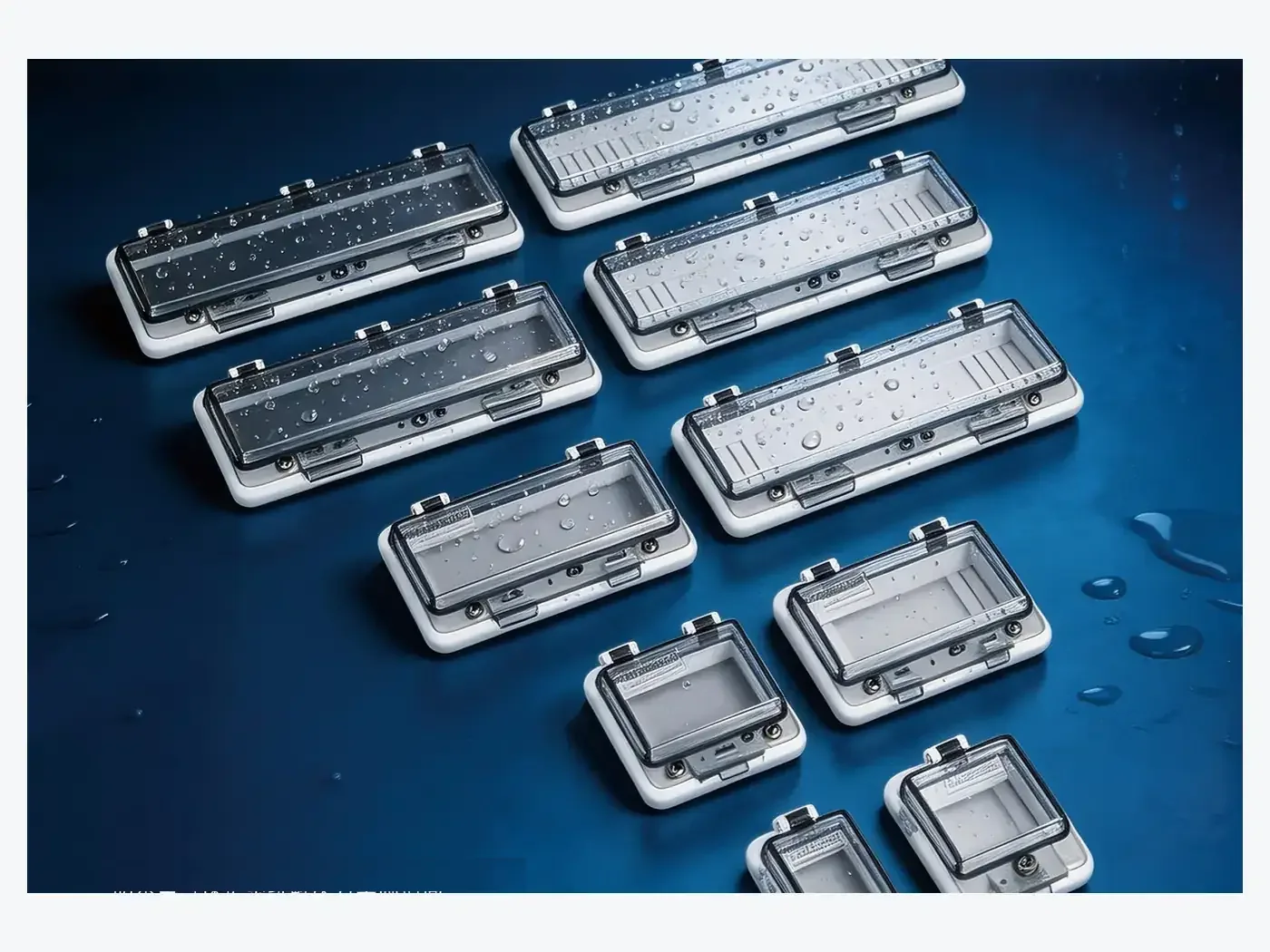
- Interface enclosures where the box carries the operator interface or the connection point itself: terminal block boxes, push button control stations, industrial socket boxes and panel window covers.
3. Body, cover and closure selection by environment
ABS covers most industrial and sheltered outdoor projects and gives good stiffness for the cost. Polycarbonate is the choice where impact resistance and ultraviolet performance matter more, and transparent PC covers are available on selected models when the internal state has to be visible without opening the enclosure. Both materials need model-specific documentation for UV, temperature and chemical performance rather than a general claim.
Closure hardware follows the same logic. Metal latches give higher clamping force and firmer engagement and need a corrosion-resistant finish; fibreglass-reinforced polymer latches remove the corrosion path that affects metal hardware in salt air. Where a metal latch is preferred, confirm the grade and coating instead of treating "stainless steel" as a complete specification.
| Site condition | Body and cover | Closure | Points to confirm |
|---|---|---|---|
| Industrial washdown | ABS with grey or transparent cover | Metal latch for clamping force | Jet-test evidence and the gland sealing method. |
| Coastal or salt-spray exposure | UV-stabilised material for the model | Polymer latch | Material and hardware documentation for the model. |
| Desert or high-ultraviolet installation | Material selected for UV performance | Either, according to access needs | Temperature range and UV information for the model. |
| Chemical plant or cleaning agents | Material confirmed against the specific agents | Polymer latch | Chemical compatibility data, not a general claim. |
4. The two details that decide long-term sealing
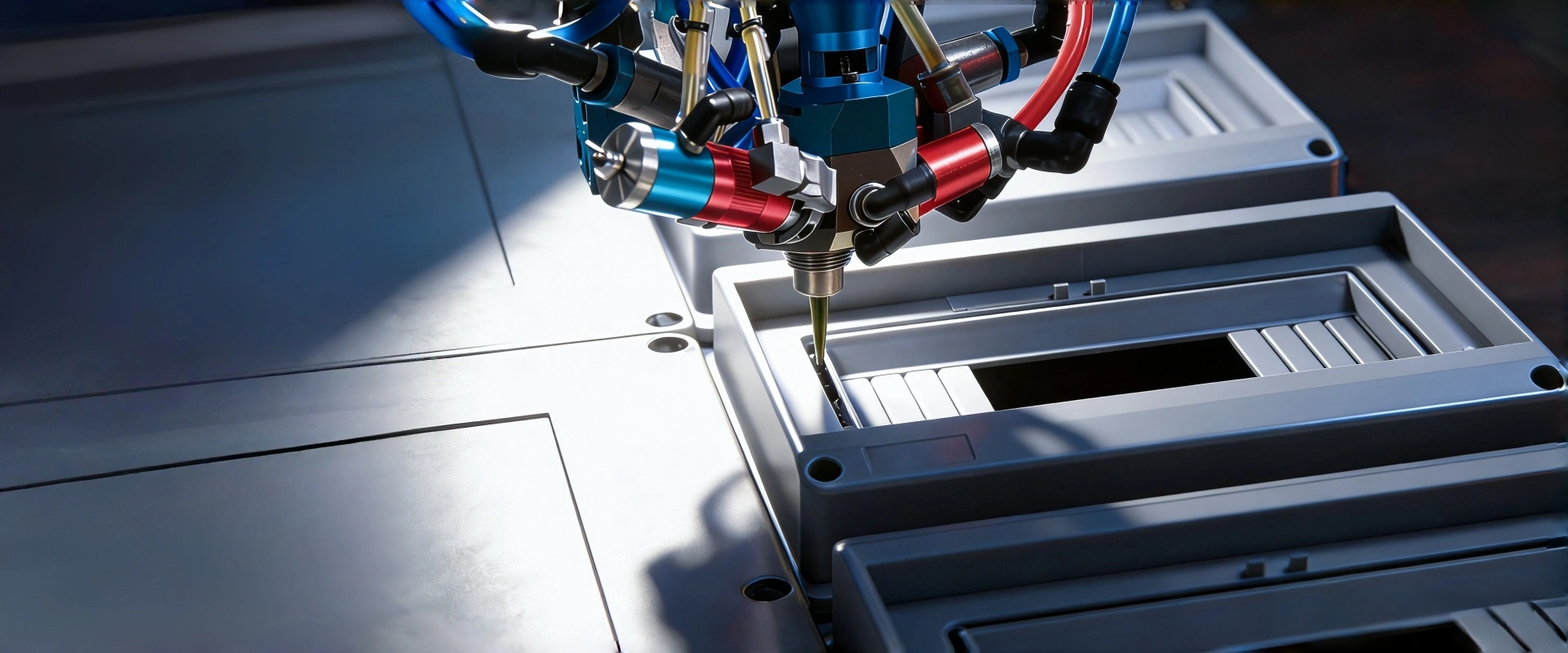
Once the family, material and closure are fixed, two construction details decide whether the protection lasts. The first is the gasket. An extruded cord that is cut to length and pressed into a groove has to close a loop at a corner or an end joint, and it can be displaced or pinched when the cover is closed; a gasket that is dispensed directly into the groove cures in place and removes that joint. For sites where the enclosure is opened regularly, ask which construction the model uses and how the seal is retained.
The second is how closing force reaches the gasket. Screw-fixed covers clamp at fixed points around the perimeter, while hinged covers are clamped by one or two latches per side, so more of the force travels through the cover itself. On long spans, internal ribs and additional latch positions keep the compression even, and cable bundles should be routed so they do not press against the inside of the cover.
Both details, and the acceptance steps that follow them, are set out in the companion checklist for IP66/IP67 enclosures after customization.
Questions buyers ask
Which material suits a coastal installation?
Salt air attacks metal hardware and cut edges first, so the closure and fastener material usually matters more than the body. A polymer latch removes that corrosion path; if a metal latch is required for clamping force, confirm the alloy and coating. Ask for the material and hardware documentation that applies to the exact model.
Is one enclosure family enough for solar, machine control and outdoor power?
Often not. A solar string or outdoor power point usually needs a sealed junction or DIN-rail box that stays closed, while machine-side control needs a hinged or interface enclosure that is opened for maintenance. Choose the family from the access routine, then confirm each model's published protection level and options separately.
Do I need a breather vent or a drain?
Only where the temperature swing makes condensation likely: a large day-night range, a high internal heat load, or a site with persistent humidity. A hydrophobic vent equalises pressure while blocking liquid water, and a bottom drain lets accumulated water leave. Either one changes the enclosure, so assess the component, its position and the complete assembly together.
SEND THE SITE CONDITIONS, GET A SELECTION REVIEW
Request an enclosure selection review
Send BOWO the installation environment, exposure, mounting method, cable-entry requirements and order volume. The engineering team will confirm the suitable series, material, cover type and closure, and the documentation available for the selected model.